
Top External Solid State Drives for Mac and Windows Users

Introduction
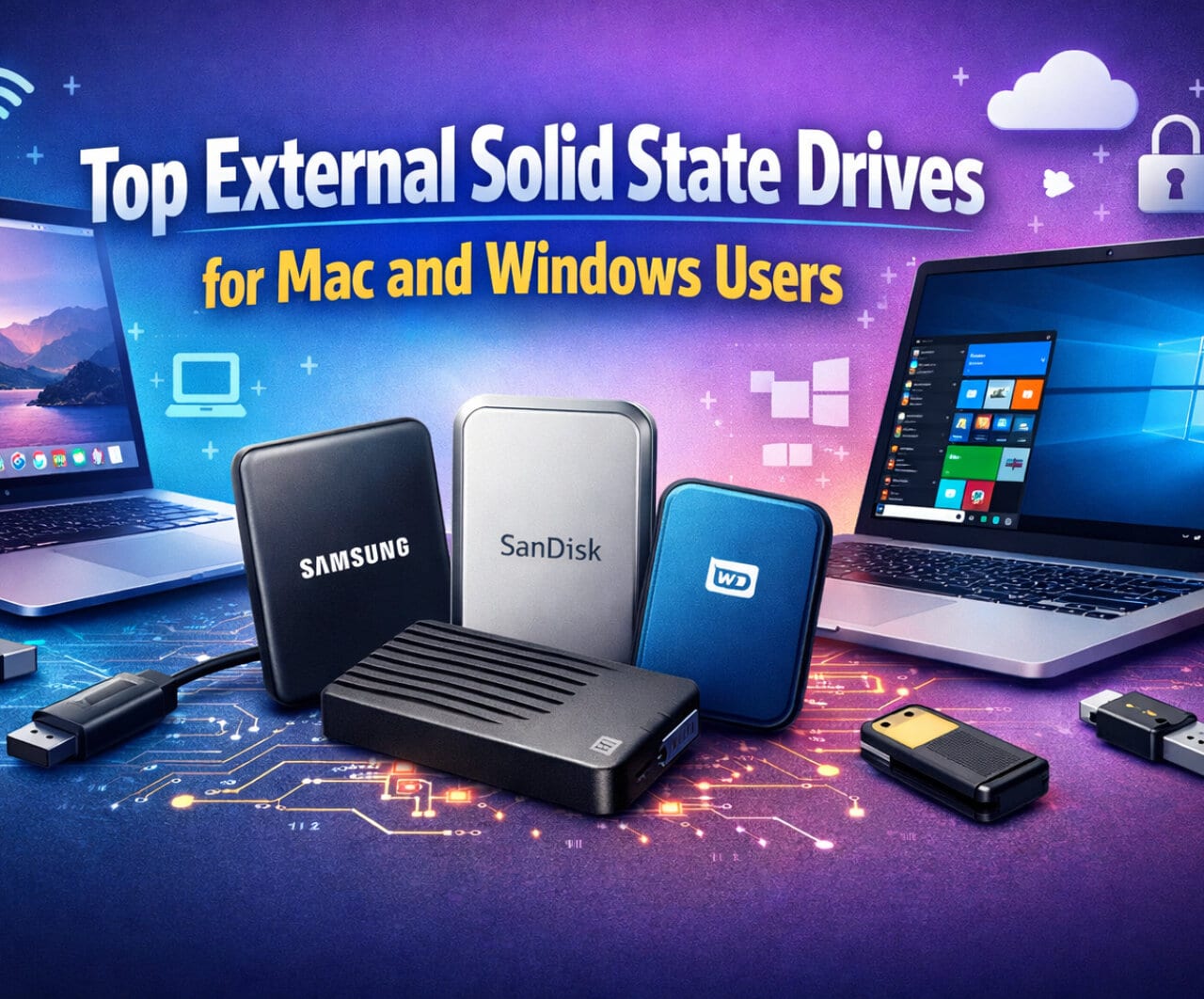
In the rapidly evolving landscape of digital data management, the reliance on robust, high-speed storage solutions has never been more critical. As businesses and creative professionals navigate the complexities of cross-platform workflows, the limitations of traditional mechanical storage are becoming increasingly apparent. The modern workspace demands agility, requiring hardware that bridges the gap between the distinct ecosystems of macOS and Windows. An external solid state drive stands at the forefront of this technological shift, offering a universal solution that provides unparalleled speed, security, and portability. Whether for large-scale file transfers, on-site editing, or comprehensive data backups, the necessity for reliable storage is a universal constant that transcends operating system boundaries.
For B2B buyers, IT administrators, and wholesale distributors, the selection of the right storage technology goes beyond simple capacity measurements. It involves a strategic assessment of performance metrics, durability standards, and the potential for brand integration through customization. The market for an ssd external hard drive has expanded significantly, driven by the need for devices that can withstand the rigors of daily commute and intensive usage patterns. Organizations are increasingly looking for solutions that offer plug-and-play compatibility across both Mac and Windows platforms, thereby reducing technical overhead and simplifying inventory management. This dual-compatibility is essential for maintaining seamless operations in diverse hardware environments.
Furthermore, the role of an external hard disk ssd in business continuity cannot be overstated. Data is the lifeblood of modern enterprise, and ensuring its safety and accessibility is paramount. With the advent of USB 3.2 and Thunderbolt interfaces, the gap between internal and external storage performance has narrowed, allowing professionals to run applications directly from portable drives. This capability transforms the external drive from a simple backup repository into an active workflow component. As we look toward the procurement strategies of 2025 and beyond, understanding the nuances of these powerful devices is key to making informed purchasing decisions that align with long-term organizational goals.
1. Why Businesses Are Transitioning to External Solid State Drives in 2025
The shift toward high-speed data management has become a critical priority for businesses across the globe. As we navigate through 2025, the limitations of traditional spinning hard drives are becoming glaringly obvious in professional environments. An external solid state drive offers a level of efficiency and reliability that mechanical drives simply cannot match. Companies are realizing that speed is not just a convenience but a necessity for maintaining productivity. With file sizes growing due to 4K video, high-resolution photography, and complex software datasets, the need for rapid data access and transfer is paramount. This transition is driven by the requirement to minimize downtime and maximize workflow efficiency, making SSDs the standard for modern business operations.

The financial implications of this technology shift are equally compelling. Recent 2025 market analysis indicates that the total cost of ownership for an ssd external hard drive has decreased significantly, making it a viable investment for businesses of all sizes. While the upfront cost may be slightly higher than older technologies, the return on investment is realized through increased employee productivity and reduced hardware failure rates.
For wholesale buyers and IT procurement managers, this means allocating budget toward storage solutions that offer longevity and speed. The durability of an external hard disk ssd also reduces the risk of data loss due to physical shock, which is a common issue in mobile work environments. This reliability translates to lower long-term maintenance and replacement costs.
Furthermore, the rise of remote work and hybrid business models has accelerated the adoption of portable storage solutions. Employees require reliable media that can travel between home offices, corporate headquarters, and client sites without performance degradation. An external solid state drive provides the necessary portability without sacrificing the speed required for demanding applications. This trend is particularly evident in the creative and engineering sectors, where large assets need to be moved quickly. Businesses are responding by standardizing on SSD technology to ensure their teams can collaborate effectively, regardless of their physical location. The universal compatibility of these drives ensures that teams using different operating systems can share data effortlessly, breaking down technical silos within the organization.
Market projections for 2026 suggest that the demand for customizable storage solutions will continue to surge. As businesses seek to differentiate their brand and streamline their supply chain, the ability to source wholesale external solid state drives with custom branding and specific firmware configurations is becoming a key differentiator. This forward-looking approach allows companies to preemptively address their storage needs before they become bottlenecks. By integrating high-performance storage into their operations now, businesses are positioning themselves to handle the data explosion expected in the coming years. The strategic move toward SSDs is not merely about keeping up with technology but about securing a competitive advantage in a data-driven economy.
1.1. How Market Trends Influence the Demand for SSD External Hard Drives
Current market trends are heavily influenced by the exponential growth of data generation and the need for faster processing capabilities. Industries ranging from media production to financial services are generating terabytes of data daily, necessitating robust storage solutions. The external solid state drive has emerged as the preferred medium for this data, offering read and write speeds that facilitate real-time data processing and analysis. In 2025, data analytics has become a cornerstone of business strategy, and the hardware used to store this data must support instant access. Slow storage solutions create bottlenecks that hinder decision-making processes, whereas high-speed SSDs ensure that data is readily available for critical business insights.
The proliferation of high-bandwidth peripherals is another factor driving the demand for modern storage solutions. With the widespread adoption of USB 4.0 and Thunderbolt 4/5 interfaces, the potential speed of external storage has skyrocketed. An ssd external hard drive that leverages these technologies can now match the performance of internal drives, making them viable for running heavy applications and virtual machines. This capability is particularly beneficial for businesses that require flexible workstations without the need for constant internal upgrades. The trend towards high-performance connectivity means that investing in future-proof storage is essential for maintaining technological relevance. Companies are actively seeking out devices that can utilize the full bandwidth of these new ports to maximize their infrastructure investments.
Additionally, the supply chain dynamics of 2025 are favoring wholesale and bulk procurement strategies. As the global market for NAND flash memory stabilizes, prices for external hard disk ssd units have become more predictable, allowing businesses to plan large-scale deployments. This stability is encouraging enterprises to upgrade their entire fleets of portable storage rather than patching together legacy systems. The trend is also moving towards sustainability, with newer SSD models featuring more energy-efficient components that reduce power consumption during data transfer. For environmentally conscious organizations, this reduction in energy footprint is a significant factor in purchasing decisions, aligning their hardware procurement with broader corporate sustainability goals.
Looking ahead to 2026, industry forecasts predict a shift towards specialized, application-specific external drives. We are seeing the beginning of a trend where storage is optimized for specific tasks, such as direct-to-disk editing or encrypted archival. This specialization requires close collaboration between hardware manufacturers and B2B clients to create tailored solutions. Wholesale suppliers are responding by offering a wider array of customization options, from industrial-grade casings to pre-loaded security software. This evolution in market demand underscores the importance of choosing a storage partner that understands the specific needs of the industry and can provide products that are engineered for targeted professional use cases.
1.2. Which External Solid State Drives Offer the Best Cross-Platform Compatibility
Achieving seamless compatibility between Mac and Windows ecosystems is a primary concern for businesses managing diverse hardware inventories. Historically, formatting issues created significant barriers to data exchange between operating systems. However, modern external solid state drive models are increasingly designed with cross-platform functionality in mind. The key to this compatibility lies in the file system and the interface protocol. ExFAT is the standard file system that allows for read and write access on both macOS and Windows without the need for third-party software. Leading manufacturers now ship their drives pre-formatted in ExFAT, ensuring that an ssd external hard drive is truly plug-and-play right out of the box, which is a critical requirement for mixed-OS environments.
Beyond file systems, the physical connectivity plays a vital role in universal compatibility. USB-C and USB-A interfaces are universally accepted across both platforms, but the implementation of Thunderbolt technology adds a layer of complexity and performance. High-end external hard disk ssd units often feature Thunderbolt 3 or 4 ports, which offer blazing-fast speeds but require the appropriate hardware on the host computer. For wholesale buyers, the challenge is selecting drives that offer the best balance of universal connectivity and high-end performance. Many businesses are opting for dual-cable solutions or hybrid drives that can function at high speeds on Thunderbolt-enabled Macs while maintaining backward compatibility with standard USB ports on Windows machines.
Software integration is another aspect where cross-platform compatibility is tested. Many premium external solid state drives come bundled with utility software for backup, encryption, and drive health monitoring. It is imperative that this software is available for both Mac and Windows to provide a consistent user experience across the organization. In 2025, we are seeing a trend towards cloud-based management utilities that can be accessed via a web browser, circumventing OS-specific limitations. This approach allows IT administrators to manage and monitor the fleet of ssd external hard drive units regardless of the operating system being used, simplifying the administrative burden and ensuring consistent security policies are applied across the board.
For B2B clients focusing on customization, compatibility extends to the branding and the user interface of the drive’s software. Custom firmware solutions can be developed to ensure that the drive behaves identically when plugged into either a Mac or a PC. This includes auto-run features for security setup or specific backup routines that trigger immediately upon connection. As we move into 2026, the expectation is that hardware differentiation will be minimal, and the value will lie in the software ecosystem surrounding the external hard disk ssd. Businesses are advised to partner with manufacturers who can guarantee that their customizations and branded software will function flawlessly across both major operating systems, ensuring a uniform brand experience for all end-users.
2. How to Evaluate Performance Metrics in External Hard Disk SSDs
When assessing the capabilities of an external solid state drive, understanding performance metrics goes beyond simply looking at the storage capacity. The primary indicator of speed is the sequential read and write speed, typically measured in megabytes per second (MB/s) or gigabytes per second (GB/s).
For wholesale buyers catering to media professionals, these numbers are critical as they dictate how quickly large video files can be transferred or edited. In 2025, a high-performance ssd external hard drive should ideally offer sequential speeds exceeding 2000 MB/s, utilizing the bandwidth of USB 3.2 Gen 2×2 or Thunderbolt interfaces. These high speeds ensure that bottlenecks are removed from the workflow, allowing professionals to work directly from the external drive as if it were an internal one.
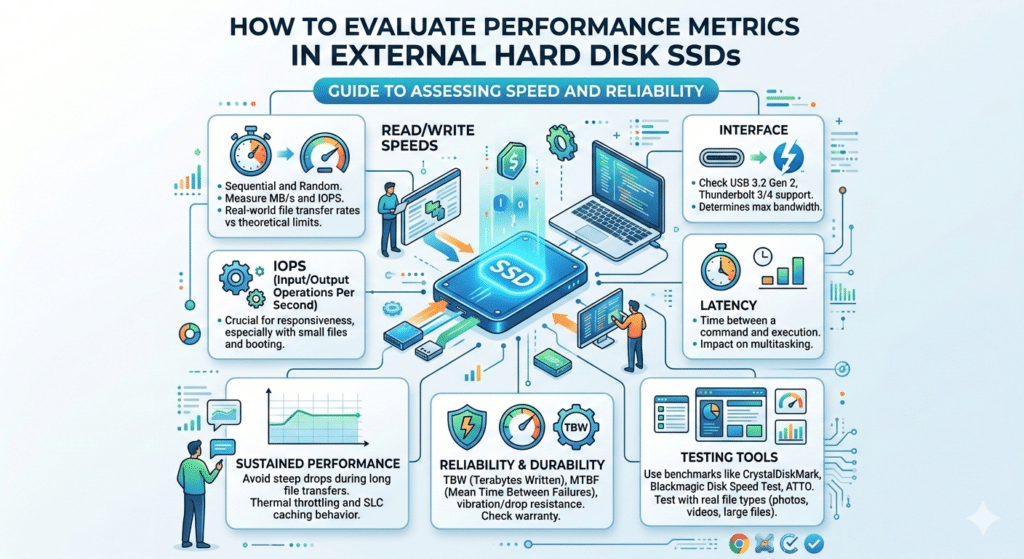
However, sequential speeds do not tell the whole story, especially for business applications involving databases or numerous small files. Random read and write performance is a crucial metric that often gets overlooked in consumer marketing but is vital for B2B applications. This metric measures how quickly the drive can access and write scattered pieces of data, which is essential for running operating systems, virtual machines, or complex software suites from an external hard disk ssd. A drive with high random I/O performance will feel snappier and more responsive in general business use. Companies should evaluate IOPS (Input/Output Operations Per Second) to ensure the selected drives can handle the multi-tasking requirements of a professional office environment.
Endurance and longevity are equally important performance metrics, quantified by the Terabytes Written (TBW) rating. This figure estimates the total amount of data that can be written to the drive before it is likely to fail. For enterprises using drives for heavy data logging or continuous backup processes, a higher TBW rating translates to a longer lifespan and better reliability. An external solid state drive with a high TBW rating represents a better long-term investment, reducing the frequency of replacements. In 2025, advancements in NAND flash technology, such as 3D NAND and QLC (Quad-Level Cell), have improved the endurance of consumer-grade drives, making them more suitable for rigorous professional use than ever before.
Sustained performance is another factor that businesses must scrutinize. Many drives advertise high burst speeds that quickly drop once the drive’s cache is filled. A quality ssd external hard drive will maintain its performance levels even under sustained load, a feature known as thermal throttling management. Overheating can cause drives to slow down significantly to protect their components, disrupting workflows. Professional-grade drives often include better thermal management solutions, such as aluminum casings or internal heat sinks. For wholesale orders, ensuring that the drives can maintain speed over long transfer sessions is vital for customer satisfaction. Testing under sustained load conditions should be a standard part of the quality assurance process for B2B procurement.
2.1. Why Interface Speeds Matter for Mac and Windows Users
The interface serves as the bridge between the computer and the storage, and its bandwidth directly limits the maximum potential speed of the external solid state drive. For Mac users, who often utilize Thunderbolt 3 and 4, the interface offers bandwidth up to 40 Gbps, allowing for phenomenal transfer speeds that were previously impossible. Windows users are increasingly seeing similar high-speed ports with the integration of Thunderbolt 4 and USB4 on modern laptops. Utilizing an ssd external hard drive that matches these interface capabilities is essential for unlocking the full potential of the hardware. If the interface is the bottleneck, even the fastest internal NAND components cannot perform to their standard, leading to wasted potential and user frustration.
The evolution of USB standards has brought about a confusing array of naming conventions, such as USB 3.2 Gen 2 and Gen 2×2. For businesses procuring hardware, it is necessary to distinguish between these standards to ensure compatibility and speed. An external hard disk ssd operating over USB 3.2 Gen 2×2 can reach speeds of 20 Gbps, which is double that of the previous Gen 2 standard. This difference is massive for time-sensitive tasks like data migration or on-site video editing. As we move through 2025, the industry is standardizing around the USB4 naming convention, which simplifies this decision-making process by guaranteeing a minimum performance level and interoperability with Thunderbolt.
Backward compatibility is a significant advantage of modern interfaces but requires careful management of expectations. A cutting-edge external solid state drive designed for Thunderbolt 4 will still work on a computer with an older USB 3.0 port, but it will default to the lower speed of the older port. For wholesale distributors, this means clearly communicating the capabilities of the drive to the end-user. Education is key; a buyer using the drive on legacy hardware will not see the advertised 2000+ MB/s speeds. However, investing in high-interface future-proofs the inventory, ensuring that as the organization upgrades its computer fleet, the storage infrastructure will not need an immediate replacement, thereby protecting the investment over a longer lifecycle.
Looking towards 2026, interface technology will continue to push the boundaries of data transfer. We anticipate the wider adoption of Thunderbolt 5, which promises bandwidths of up to 80 Gbps or 120 Gbps depending on the configuration. This leap in interface speed will allow an ssd external hard drive to rival the fastest internal PCIe Gen 5 SSDs. For businesses dealing with massive datasets, such as 8K raw video or scientific simulations, this next generation of interfaces will be transformative. Procurement strategies should now focus on modular or upgradeable cable solutions where possible, ensuring that the physical connection points can adapt to these rapidly evolving standards without requiring the purchase of entirely new drive units.
2.2. Which Durability Features Are Essential for Wholesale Buyers
Durability is a non-negotiable attribute for storage devices used in fieldwork, logistics, or daily commuting. For wholesale buyers, the physical robustness of an external solid state drive determines the rate of return and warranty claims. Unlike traditional hard drives, SSDs have no moving parts, which inherently makes them more resistant to shock and vibration. However, the casing and internal mounting play a significant role in real-world durability. High-quality B2B drives often feature industrial-grade rubber bumpers, reinforced corners, and shock-absorbing internal structures. These features protect the NAND flash memory and the controller from drops up to several meters, ensuring data integrity even in rough handling scenarios.
Water and dust resistance ratings, certified by the IP (Ingress Protection) standard, are becoming a standard requirement for professional-grade storage. An external hard disk ssd with an IP67 rating is completely dust-tight and can withstand immersion in water up to a meter deep for 30 minutes. For industries like construction, field photography, or disaster recovery, this level of protection is critical. In 2025, we see a trend where ruggedized features are no longer niche but are expected as standard in premium wholesale offerings. This resilience ensures that valuable data remains safe regardless of environmental hazards, providing peace of mind to businesses that operate in unpredictable conditions.
Thermal management is a hidden aspect of durability that affects both performance and lifespan. High-speed data transfer generates significant heat, which can degrade components over time if not dissipated efficiently. An external solid state drive designed for continuous heavy use will incorporate thermal regulation features, such as aluminum alloy casings that act as heat sinks. In a wholesale context, ensuring that the drives have been tested for thermal throttling under load is essential. Drives that overheat and slow down not only disrupt productivity but may also suffer from reduced longevity. B2B customers should prioritize suppliers who engineer their products with effective passive or active cooling solutions to maintain optimal operating temperatures.
Customization also plays a role in durability, particularly for branding and asset management. Wholesale buyers often require custom logos and specific color coding for different departments or clients. It is vital that these customizations do not compromise the structural integrity of the drive. Laser engraving, for example, is preferred over stickers or prints that can peel off, as it does not affect the seal of the device. Furthermore, for 2026 fleet management, integrating features like Kensington lock slots or tamper-evident screws adds a layer of physical security. These features make the ssd external hard drive less susceptible to theft and unauthorized access, which is a crucial consideration for large organizations with high employee turnover.
3. Which Wholesale and Customization Options Are Available in 2025
The demand for bespoke technology solutions has led to a significant expansion in the customization options available for storage devices. In the B2B sector, an external solid state drive is often viewed as an extension of the company brand. Manufacturers now offer extensive custom branding services, ranging from simple logo laser engraving to fully custom molded casings in specific corporate colors. For wholesale clients, this transforms a generic utility tool into a powerful marketing asset or a standardized piece of company equipment. In 2025, the ability to order a batch of drives that perfectly match a company’s visual identity is standard practice, helping businesses reinforce their brand presence every time an employee or client uses the drive.
Beyond aesthetics, firmware customization offers a deeper level of product tailoring. Businesses can work with manufacturers to pre-load specific software, set up automatic backup routines, or configure hardware encryption settings before the drives are shipped. This “plug-and-play” configuration reduces the IT workload required when deploying new storage fleets. An ssd external hard drive can be configured to boot into a specific OS or run a diagnostic tool automatically upon connection. For enterprise clients, this level of control ensures that the storage devices align perfectly with their internal security protocols and workflow requirements. It also minimizes user error, as the drives arrive ready to perform the exact tasks required of them without manual setup.
Packaging customization is another critical area for wholesale buyers. The unboxing experience is an important touchpoint for client gifts or high-end retail products. Suppliers of external hard disk ssd units now offer customizable packaging solutions, including premium boxes, custom inserts, and printed quick-start guides. This attention to detail is particularly important for Managed Service Providers (MSPs) or Value-Added Resellers (VARs) who repackage technology solutions for their end clients. By 2025, sustainable packaging options have also become a priority, with many wholesalers offering eco-friendly materials that appeal to environmentally conscious organizations, enhancing the corporate social responsibility (CSR) profile of the gift or purchase.
Data preloading services are becoming increasingly sophisticated as well. Companies can have their marketing materials, product catalogs, or software installers pre-loaded onto the drives. For an external solid state drive intended as a promotional giveaway, this ensures that the recipient has immediate access to the intended content. In a B2B context, this is invaluable for distributing large datasets to remote teams or distributing software updates to franchise locations. As we look towards 2026, we expect to see “smart” customization, where drives can be serialized and tracked individually through the supply chain. This allows businesses to manage inventory more effectively and ensure that sensitive data can be remotely wiped or managed if a drive is lost or misplaced.
3.1. How to Leverage Custom Branding for B2B Impact
Custom branding transforms a standard storage device into a potent marketing tool. For B2B companies, every interaction with a client or partner is an opportunity to reinforce brand identity. Distributing a high-quality external solid state drive with a professionally laser-etched company logo conveys a message of reliability and technological sophistication. Unlike generic promotional items like pens or USB sticks, a high-speed SSD is a premium, useful tool that recipients will value and use daily. This repeated exposure keeps the brand at the top of the customer’s mind, associating the company name with speed, efficiency, and quality. In 2025, digital branding on physical hardware is recognized as a high-ROI marketing strategy.
The quality of the branding method is directly correlated with the perceived value of the item. While pad printing is cost-effective for large batches, laser engraving and full-color UV printing offer superior durability and finish. For a premium ssd external hard drive intended for C-suite executives or key clients, laser engraving provides a permanent, tarnish-proof finish that looks sophisticated. Wholesale suppliers often provide virtual prototypes to help businesses visualize the final product before mass production. This attention to detail ensures that the brand is represented accurately and professionally. A poorly branded drive can have a negative impact, whereas a high-quality finish elevates the perceived value of the corporate gift or internal equipment.
Strategic color matching is another avenue for leveraging branding. Many manufacturers now offer drives in various colors or allow for custom pantone matching for large orders. An external hard disk ssd that matches a company’s corporate colors creates a cohesive visual identity when deployed across an organization. This is particularly effective for trade shows, conferences, and corporate training events where branded equipment helps create a unified and professional atmosphere. By 2025, the trend has moved away from standard grey and black drives towards vibrant, customized aesthetics that reflect the dynamic nature of modern business. This visual consistency helps in building a strong, recognizable corporate image.
Furthermore, custom branding can include functional elements that enhance the B2B relationship. For instance, companies can include contact information, support numbers, or QR codes directly on the drive casing or the packaging. This adds a layer of utility, making it easier for clients to engage with the business after the initial interaction. In the competitive landscape of 2026, where differentiation is key, these small details can make a significant difference. An external solid state drive that serves as both a high-performance tool and a branded gateway to the company’s services creates a lasting impression. It turns a passive product into an active business development asset, driving engagement and fostering loyalty.
3.2. Why Bulk Procurement Strategies Are Evolving
The approach to bulk procurement of storage technology is shifting from simple cost-per-unit calculations to total value assessment. Historically, businesses sought the cheapest drive with the highest capacity. However, in 2025, the focus is on reliability, speed, and brand alignment. Wholesale buyers are recognizing that sourcing a high-quality external solid state drive reduces the total cost of ownership by minimizing failure rates and data recovery incidents. The evolution of procurement strategies now involves rigorous vetting of suppliers for their quality control processes, component sourcing, and warranty support. The cheapest option is no longer the wisest choice when the cost of potential data loss and operational downtime is factored in.
Supply chain resilience has become a primary driver for bulk purchasing decisions. Global disruptions have taught businesses the importance of holding adequate inventory and partnering with reliable suppliers. Locking in contracts for ssd external hard drive units ensures predictable pricing and availability, which is crucial in a market where component prices can fluctuate. Forward-thinking organizations are entering into strategic partnerships with manufacturers to secure their supply lines for 2026 and beyond. These partnerships often include preferential pricing, priority allocation during shortages, and access to the latest product releases. This strategic approach transforms procurement from a transactional necessity into a competitive advantage.
Sustainability and ethical sourcing are also reshaping procurement strategies. Modern businesses are under increasing pressure to ensure their supply chains are environmentally and socially responsible. Wholesale buyers are now demanding transparency regarding the materials used in an external hard disk ssd, such as the conflict-free status of minerals and the recyclability of components. Suppliers that can certify their manufacturing processes and offer eco-friendly packaging are gaining preference. This shift aligns with the broader corporate sustainability goals that many companies have adopted. By 2025, green procurement is not just a buzzword but a critical criterion for vendor selection, influencing long-term contracts and bulk buying agreements.
Finally, the evolution towards “Just-in-Time” customization is changing how bulk orders are placed. Instead of ordering massive quantities of a single SKU, businesses are leveraging flexible manufacturing processes to order smaller, more frequent batches of customized drives. This allows them to adapt quickly to changing marketing needs or software updates without being stuck with obsolete inventory. An external solid state drive can now be customized and shipped rapidly due to advancements in agile manufacturing. This agility is essential in the fast-paced tech environment of 2026, where relevance is fleeting. Procurement strategies are increasingly focused on flexibility and speed of delivery, ensuring that the storage solutions in hand are always the most current and effective available.
4. How Future-Proofing Your Storage Strategy Saves Money
Future-proofing is a strategic approach to technology investment that focuses on longevity and adaptability. In the context of storage, investing in a high-capacity, high-speed external solid state drive today prevents the need for frequent upgrades. Data growth is exponential; files that were considered large a few years ago are now standard. By choosing drives with capacities that exceed current needs, businesses can accommodate this growth without disrupting their workflows. Furthermore, interfaces like Thunderbolt and USB4 are designed to remain relevant for years. A drive that supports these protocols ensures that as computer hardware evolves, the storage device will continue to perform at optimal levels, protecting the initial investment.
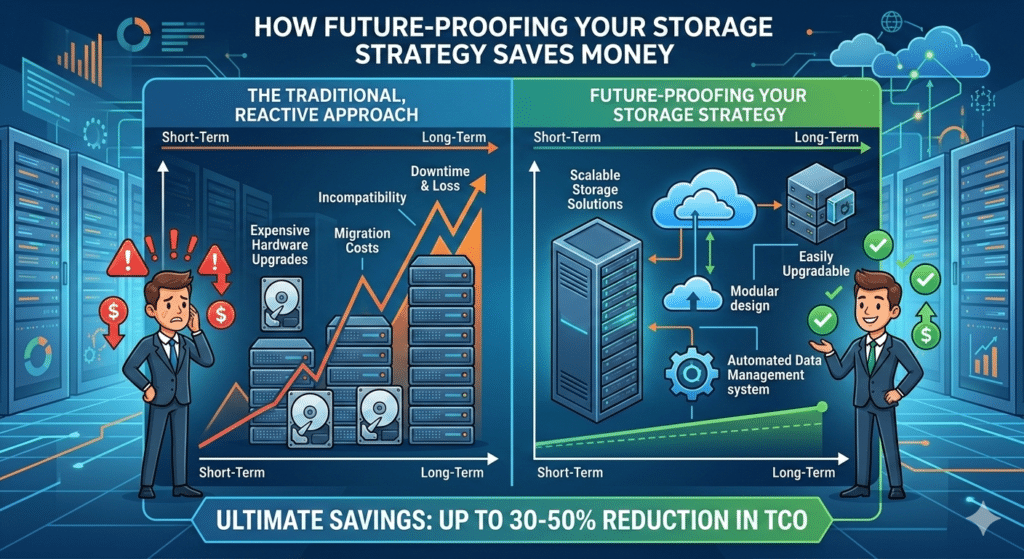
The cost of data migration is often underestimated in IT budgeting. Transferring terabytes of data from slower, older drives to newer ones consumes significant man-hours and system resources. By investing in superior ssd external hard drive technology now, businesses extend the usable life of their storage infrastructure. High-quality components also mean that the hardware failure rate is lower, reducing the expense and downtime associated with warranty claims and replacements. A robust storage strategy involves buying hardware that is slightly over-specified for current needs, ensuring it can handle increased loads in the future. This “buy once, buy well” philosophy is far more economical in the long run compared to a cycle of constant replacement and upgrades.
Software compatibility is another dimension of future-proofing. Operating systems are constantly updating, and older storage devices often lack the firmware updates required to maintain compatibility with the latest versions of Windows and macOS. A modern external hard disk ssd from a reputable manufacturer will receive regular firmware updates that ensure continued compatibility and security patches. This support is crucial for B2B environments where OS upgrades are mandatory for security compliance. Ensuring that the drives in use are supported by the manufacturer for the long term avoids the scenario where functional hardware becomes obsolete simply because it no longer communicates correctly with newer computers or operating systems.
Looking ahead to 2026, the integration of AI and machine learning into storage management is on the horizon. Future-proof drives are likely to feature smarter controllers that can optimize data placement and predict drive health more accurately. By establishing a relationship with a wholesale supplier that is at the cutting edge of these innovations, businesses ensure they have first access to these advancements. An external solid state drive purchased today should be viewed as a platform that can evolve. Whether through modular components or firmware updates, the ability to enhance the drive’s capabilities post-purchase is the ultimate form of future-proofing, offering maximum value and flexibility over the product’s lifecycle.
4.1. Why Data Security Is Paramount in External Storage
With the increasing mobility of data comes the heightened risk of data breaches and loss. An external solid state drive often contains sensitive corporate information, client databases, or intellectual property. If such a device is lost or stolen, the repercussions can be severe, ranging from financial loss to reputational damage. Consequently, hardware-level encryption has become a standard requirement for B2B storage. AES 256-bit encryption ensures that even if the physical drive is compromised, the data remains inaccessible without the correct decryption key. For wholesale buyers, sourcing drives that meet FIPS 140-3 standards (Federal Information Processing Standards) is often a mandatory compliance requirement for government and defense contracts.
The convenience of portable storage must be balanced with rigorous access controls. Password protection is the first line of defense, but advanced ssd external hard drive models now offer biometric authentication, such as fingerprint readers. This provides a higher level of security by ensuring that only authorized personnel can access the drive’s contents. In a business environment, this eliminates the risk of shared or weak passwords compromising data security. Furthermore, some drives offer a “brute force” defense mechanism that permanently locks the drive after a certain number of failed attempts. This feature is critical for preventing unauthorized access attempts in high-security environments, providing peace of mind to IT security managers.
Compliance with data protection regulations such as GDPR, CCPA, and HIPAA is a driving force behind secure storage adoption. Businesses are legally obligated to protect personal and sensitive data. Using an unencrypted external hard disk ssd can lead to heavy fines and legal liabilities in the event of a data breach. Therefore, the procurement process must prioritize drives that facilitate compliance. This includes features like secure erase, which permanently sanitizes the drive when it is decommissioned or repurposed. As regulations become stricter in 2025 and 2026, the default standard for external storage used in business will inevitably shift towards mandatory, uncompromising encryption, making non-compliant drives a liability for any organization.
Remote management capabilities are becoming increasingly important for security. IT administrators need the ability to monitor and manage storage devices across the network. Some enterprise-grade external solid state drives connect to management consoles that allow admins to enforce password policies, audit access logs, and remotely wipe drives if they are reported lost. This centralized control is essential for large organizations with distributed workforces. As the perimeter of the corporate network expands to include home offices and remote sites, the ability to secure and manage endpoint storage devices remotely is a critical component of a comprehensive cybersecurity strategy, ensuring that data remains secure regardless of where it physically resides.
4.2. Which Emerging Technologies Will Shape 2026 Storage Solutions
The landscape of storage technology is on the cusp of several transformative changes that will redefine capabilities by 2026. One of the most anticipated developments is the widespread adoption of PCIe Gen 5 technology in external form factors. This interface standard doubles the bandwidth of Gen 4, potentially allowing an external solid state drive to reach speeds of 10,000 MB/s or more. For industries that deal with massive data throughput, such as 8K video post-production and real-time 3D rendering, this leap in performance will eliminate the distinction between internal and external storage entirely. Wholesale buyers should monitor these developments closely, as early adoption of Gen 5 technology will provide a significant competitive edge.
Another emerging trend is the integration of intelligent data management directly into the drive’s firmware. Future ssd external hard drive units will likely feature AI-driven algorithms that automatically prioritize frequently accessed data, effectively learning the user’s habits to optimize performance. This “self-optimizing” storage reduces the need for manual defragmentation or file management. Additionally, we may see the rise of drives that automatically tier data, moving critical files to the fastest flash memory and archiving older data to denser, slower storage layers within the same device. For B2B users, this intelligence translates to consistent performance without the need for specialized IT intervention, simplifying storage management across the organization.
Sustainability technology will also play a major role in 2026 storage solutions. Manufacturers are actively researching lower-power NAND flash memory and biodegradable or highly recyclable materials for drive casings. An external hard disk ssd that consumes less power not only reduces electricity costs but also generates less heat, improving longevity and reliability. We might also see the introduction of modular drives where the flash storage module can be replaced independently of the controller and interface casing. This circular economy approach significantly reduces electronic waste and appeals to the growing market demand for sustainable technology solutions. Businesses that prioritize green procurement will find these next-generation drives highly attractive.
Finally, the convergence of storage and cloud connectivity will reach new heights. While cloud storage is prevalent, latency and bandwidth costs remain issues. Future external drives may feature built-in LTE or 5G connectivity, allowing them to sync data to the cloud automatically without being tethered to a computer. This “IoT for Storage” approach ensures that data is always backed up and accessible from anywhere.
For an external solid state drive in a B2B context, this means field workers can offload data to the cloud as soon as they have a signal, without needing a laptop. This seamless integration between local edge storage and the cloud will be a defining characteristic of the 2026 storage ecosystem, blending the speed of local access with the ubiquity of the cloud.
Conclusion
The selection of the right storage infrastructure is a pivotal decision that impacts the efficiency, security, and scalability of any modern business. Throughout this analysis, we have explored why the transition to an external solid state drive is not merely a trend but a necessary evolution for Mac and Windows users alike. The unparalleled speed, robust durability, and cross-platform compatibility of these devices make them indispensable tools for the professional landscape of 2025 and beyond.
From the creative industries requiring rapid file transfers to corporate sectors demanding rigorous data security, the versatility of the SSD addresses a multitude of challenges. By investing in this technology, businesses are not just purchasing hardware; they are investing in operational continuity and competitive agility.
For wholesale buyers and B2B clients, the opportunities for customization add a significant layer of value to these products. The ability to tailor an ssd external hard drive to specific branding requirements, security protocols, and workflow needs transforms a commodity item into a strategic asset. As we look toward the market insights of 2026, the importance of partnering with manufacturers who understand these nuances cannot be overstated. The focus must remain on quality, compliance, and future-proofing to ensure that the storage solutions deployed today will continue to serve the organization’s needs well into the future. Strategic bulk procurement and thoughtful customization will yield the highest return on investment, solidifying the brand’s presence and ensuring operational excellence.
The external hard disk ssd market is dynamic, driven by relentless innovation and the ever-increasing demand for data. Organizations that stay ahead of these curves—adopting new interfaces, prioritizing security, and leveraging custom branding—will position themselves as leaders in their respective fields. The insights provided here underscore the critical nature of these decisions. By choosing high-performance, reliable, and customizable storage solutions, businesses empower their workforce, protect their digital assets, and project a professional image that resonates with clients and partners. The future of data storage is fast, secure, and personalized, and there is no better time to align your business with these standards.
Frequently Asked Questions
1. What are the primary benefits of using an external solid state drive over traditional hard drives?
The primary benefits of an external solid state drive revolve around speed, durability, and efficiency. Unlike traditional hard disk drives (HDDs) that use spinning platters, SSDs use flash memory, which results in significantly faster read and write speeds. This allows for rapid file transfers, quicker boot times, and the ability to run heavy applications directly from the drive. Additionally, because there are no moving parts, an external solid state drive is much more resistant to shock and vibration, making it a far more reliable option for businesses that operate in mobile or rugged environments. This durability translates to a lower risk of data loss and a longer lifespan for the hardware.
2. How does an SSD external hard drive improve workflow efficiency for Mac and Windows users?
An SSD external hard drive improves workflow efficiency by eliminating data bottlenecks. For professionals working with large files, such as 4K video editors or software developers, the high-speed data transfer rates of modern SSDs—often exceeding 1000 MB/s—drastically reduce the time spent waiting for files to copy or save. Furthermore, the cross-platform compatibility of these drives, particularly when formatted as ExFAT, allows for seamless file sharing between Mac and Windows ecosystems. This interoperability ensures that creative teams and project managers can collaborate effortlessly without worrying about formatting errors or slow transfer speeds interrupting their productivity.
3. Why is wholesale customization important for businesses purchasing external storage?
Wholesale customization is vital because it transforms standard storage hardware into a branded business tool. For B2B clients, ordering an external solid state drive with custom logos, specific color schemes, or pre-loaded corporate software reinforces brand identity with every use. It also allows IT departments to configure drives with specific security settings or backup protocols before they are distributed to employees. This “plug-and-play” readiness reduces the technical burden on staff and ensures consistency across the organization. Customization also adds value for promotional purposes, turning a high-tech utility into a premium corporate gift that clients and partners will use and appreciate daily.
4. Which interface should I choose for maximum speed and future-proofing?
For maximum speed and future-proofing, you should prioritize drives with Thunderbolt 4 or USB4 interfaces. Thunderbolt 4 offers bandwidth up to 40 Gbps, which is ideal for data-intensive tasks like 8K video editing and large-scale data migrations. USB4 is an excellent standard that offers similar high speeds and broad compatibility across both Mac and Windows platforms. While USB 3.2 Gen 2 is sufficient for general office tasks, investing in a drive that supports Thunderbolt or USB4 ensures that your hardware remains compatible with next-generation computers expected to hit the market in 2026, protecting your investment for years to come.
5. How can I ensure data security on a portable external hard disk SSD?
Ensuring data security on a portable external hard disk SSD involves utilizing hardware-level encryption and access controls. Look for drives that feature AES 256-bit hardware encryption, which scrambles data making it unreadable without the correct password or key. For higher security, many business-grade drives now include biometric authentication, such as fingerprint scanners, to prevent unauthorized access. It is also important to choose drives that offer management software for IT administrators, allowing features like remote wipe and password complexity enforcement to be implemented across the company fleet, ensuring compliance with data protection regulations like GDPR and HIPAA.
6. Are external solid state drives compatible with both Mac and Windows out of the box?
Many modern external solid state drives are designed to be compatible with both Mac and Windows, but it often depends on the file system they are formatted with. Drives formatted as ExFAT are generally readable and writable on both operating systems immediately upon connection. However, some drives may come formatted as NTFS (Windows native) or HFS+/APFS (Mac native), requiring reformatting or third-party software for full cross-platform access. For B2B buyers, it is highly recommended to request wholesale shipments pre-formatted to ExFAT to ensure a seamless, plug-and-play experience for users working in mixed-OS environments.
7. What should wholesale buyers look for in terms of durability and reliability?
Wholesale buyers should prioritize drives that meet military-grade standards (MIL-STD-810H) for shock and drop resistance. An essential feature to look for is an IP rating, such as IP67, which certifies the drive’s ability to withstand dust ingress and temporary immersion in water. Internal components should be mounted with shock-absorbing materials to protect the NAND flash memory from physical impact. Additionally, reliability is ensured by checking the Terabytes Written (TBW) rating, which indicates the drive’s endurance, and choosing suppliers that offer robust warranties and responsive after-sales support to handle any hardware failures efficiently.
8. How does the total cost of ownership (TCO) of an SSD compare to an HDD?
While the upfront purchase price of an SSD external hard drive is typically higher than that of a traditional HDD, the Total Cost of Ownership (TCO) is often lower due to several factors. SSDs are more energy-efficient, reducing power costs over time. Their durability and lack of moving parts result in significantly lower failure rates, which minimizes costly data recovery incidents and downtime. Furthermore, the dramatic increase in productivity gained from faster data access speeds offers a tangible return on investment. For businesses, the longevity and reliability of SSDs make them a more cost-effective choice in the long run compared to cheaper, fragile mechanical drives.
9. Can external solid state drives be used for running applications or operating systems?
Yes, high-performance external solid state drives can absolutely be used for running applications or even entire operating systems. Thanks to the high bandwidth provided by Thunderbolt and USB4 interfaces, the speed difference between an external SSD and an internal drive has become negligible for many tasks. This capability is particularly useful for users wishing to expand their storage without opening their computer chassis, or for booting into different OS environments for testing purposes. Businesses often utilize this feature for portable workstations, allowing employees to carry their specific software environment and data securely on a single drive that can be booted on any compatible hardware.
10. What are the key market trends for external storage in 2026?
Key market trends for 2026 include the widespread adoption of PCIe Gen 5 technology, which will double transfer speeds, and the integration of AI-driven data management directly into drive firmware for automatic optimization. Sustainability will also be a major focus, with a shift towards eco-friendly manufacturing materials and energy-efficient components. Additionally, we expect to see “smart” external drives that feature built-in wireless connectivity for seamless cloud syncing, blurring the lines between local and cloud storage. For B2B buyers, the trend will move towards highly specialized, application-specific storage solutions that offer deeper customization and enhanced remote management capabilities.