
Solid State Drive for PC Explained Why Your Computer Needs an SSD

Introduction
The modern computing landscape demands speed, reliability, and efficiency, driving a massive shift from traditional storage solutions to advanced flash memory. Businesses and individual users alike are finding that the bottleneck in high-performance computing is rarely the processor anymore, but rather the speed of data access. A solid state drive for pc has become the standard for those seeking to maximize productivity and ensure system longevity. This transition is not merely a trend but a fundamental shift in how data is managed and accessed in professional environments.
As we move further into the decade, the necessity for robust storage solutions has never been more apparent. The reliance on cloud computing, data-intensive applications, and real-time processing requires hardware that can keep pace with the software demands. Investing in the right storage technology is no longer optional for businesses that aim to maintain a competitive edge. It is a critical infrastructure decision that impacts everything from boot times to complex data analysis tasks.
For wholesalers, OEMs, and system integrators, understanding the nuances of flash storage is key to offering the right products to the market. The demand for customized, high-volume storage solutions is rising as enterprises seek to tailor their hardware to specific operational needs. This article delves into the specifics of why upgrading is necessary, how different interfaces play a role, and what buyers should look for in a wholesale market.
1. Why a Solid State Drive for PC is Essential for Modern Business Efficiency
The adoption of a solid state drive for pc is driven by the urgent need for faster data processing and operational continuity in business settings. Unlike older mechanical drives, flash-based storage uses no moving parts, resulting in nearly instantaneous data access and significantly reduced latency. This speed translates directly to improved workflow efficiency, as employees spend less time waiting for files to load or applications to launch. In a professional B2B environment, where time is money, the cumulative performance gains provided by SSDs can lead to substantial productivity increases across an entire organization.
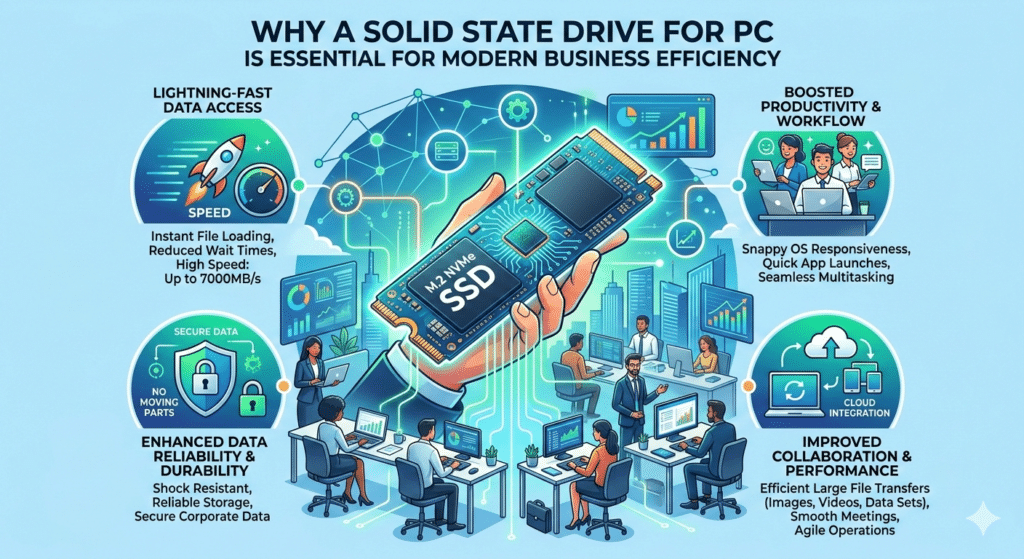
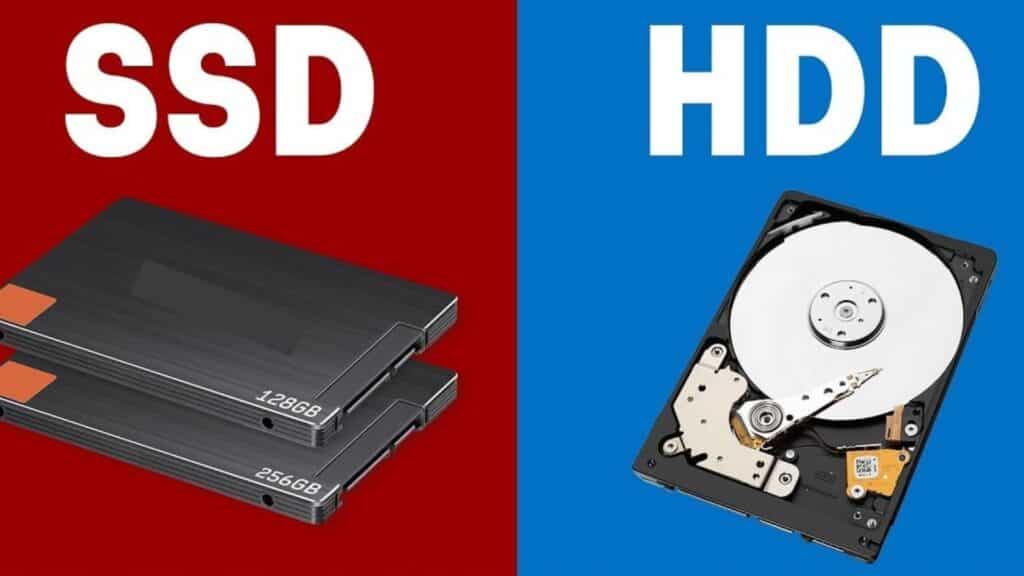
Reliability is another compelling factor driving the shift away from Hard Disk Drives (HDDs). The absence of spinning platters and read/write heads means that a solid state drive for pc is far less susceptible to mechanical failure caused by drops, vibrations, or general wear and tear. For businesses managing mobile workforces or industrial computing, this durability ensures that data remains safe even in challenging physical environments. The reduction in drive failure rates also lowers the total cost of ownership, as IT departments spend less time and resources on data recovery and hardware replacement.
Energy efficiency is a often-overlooked benefit that plays a crucial role in large-scale deployments. A solid state drive for pc consumes significantly less power than its mechanical counterparts, which leads to lower electricity bills and a cooler operating environment. In data centers or large office setups with hundreds of computers, this reduction in power consumption and heat generation can result in meaningful operational cost savings. Furthermore, cooler systems require less aggressive cooling solutions, allowing for quieter and more compact computer designs that are highly desirable in modern office spaces.
Looking ahead, market projections for 2025 indicate that the global SSD market is expected to continue its rapid growth, driven by enterprise demand and the proliferation of AI and machine learning applications. As software becomes more resource-intensive, the hardware that supports it must evolve accordingly. Relying on outdated storage technology creates a bottleneck that hampers the potential of modern CPUs and GPUs. Therefore, integrating a solid state drive for pc is not just an upgrade; it is a strategic necessity to ensure that business infrastructure remains relevant and capable well into 2026 and beyond.
1.1 How Performance Impacts Operational Workflow
The immediate impact of upgrading to a solid state drive for pc is most visible in the drastic reduction of boot and load times. Systems that previously took minutes to start up can now be ready in seconds, allowing employees to begin their work immediately without the frustration of long wait periods. This responsiveness extends to application launching and file transfers, where the speed difference can be tenfold compared to traditional hard drives. For businesses, this means that workflows involving large video files, complex databases, or high-resolution images become seamless rather than cumbersome.
Multitasking capabilities are significantly enhanced when a solid state drive for pc is utilized, as the drive can handle multiple read and write requests simultaneously without the performance degradation seen in HDDs. When a user switches between heavy applications like a CRM system, a spreadsheet, and email clients, the system remains snappy and responsive. This fluidity prevents the micro-pauses that disrupt thought processes and workflow efficiency, thereby maintaining a steady pace of productivity throughout the workday. The psychological benefit of a responsive system should not be underestimated, as it reduces user frustration and fatigue.
In the context of virtualization and server environments, the I/O operations per second (IOPS) provided by a solid state drive for pc are transformative. Virtual machines, which require rapid access to shared storage resources, perform exceptionally better on SSDs, allowing more virtual instances to run on a single physical host without contention. This efficiency is critical for B2B clients looking to maximize their hardware investments and reduce the physical footprint of their IT infrastructure. The ability to consolidate servers without sacrificing performance is a key driver for the widespread adoption of SSD technology in enterprise environments.
Furthermore, the 2025 market insights suggest that software developers are increasingly optimizing their applications specifically for flash storage, assuming that end-users have moved beyond mechanical drives. This means that running modern business software on an HDD may result in a subpar experience, regardless of the computer’s processor power. By adopting a solid state drive for pc now, businesses ensure compatibility with the latest software innovations and avoid obsolescence. This forward-looking approach protects the investment in both hardware and software, ensuring that the IT ecosystem functions harmoniously.
1.2 Which Industries Benefit Most from Upgrades
The creative industry, including video production, graphic design, and animation, reaps immense rewards from the implementation of a solid state drive for pc. These professionals work with massive file sizes that require high bandwidth for smooth editing and rendering. An SSD eliminates the stuttering and frame drops that occur when traditional drives cannot keep up with the data throughput required for 4K and 8K video workflows. By streamlining the data transfer process, creative professionals can focus on the quality of their output rather than the limitations of their equipment, leading to faster turnaround times and higher client satisfaction.
Financial institutions and data analysis firms also benefit profoundly from the low latency and high speed of a solid state drive for pc. High-frequency trading platforms and real-time analytics tools require data to be processed and retrieved in milliseconds to provide actionable insights. The delay introduced by mechanical storage can result in missed opportunities or outdated information, whereas SSDs ensure that data is available instantaneously. This speed is crucial for maintaining a competitive edge in the financial sector, where the value of information decays rapidly over time.
Healthcare and medical administration are sectors where reliability and speed are paramount for patient care and data management. Electronic Health Records (EHR) systems, which contain vast amounts of patient data, images, and test results, must be accessible instantly to facilitate quick decision-making. A solid state drive for pc ensures that doctors and nurses can retrieve patient histories and imaging scans without delay, thereby improving the quality of care. Additionally, the durability of SSDs means that critical patient data is less likely to be lost due to hardware failure, a vital consideration for compliance with data protection regulations.
Looking toward 2026, the education sector is also poised for a transformation as digital learning environments become the norm. Schools and universities deploying computer labs and student devices will find that a solid state drive for pc extends the lifespan of older hardware, making it viable for modern educational software. The robustness of SSDs is particularly beneficial in educational settings where equipment may be handled frequently by students. By investing in durable and fast storage, educational institutions can reduce maintenance costs and provide a more responsive learning experience for students and faculty alike.
1.3 Why Reliability Matters for Data Integrity
Data integrity is the cornerstone of business operations, and a solid state drive for pc offers superior protection against data corruption compared to mechanical alternatives. Traditional HDDs are prone to head crashes and platter damage, which can result in catastrophic data loss if the drive is jostled while operating. SSDs, being solid-state, are immune to such mechanical failures, ensuring that data remains intact even if the computer is subjected to physical shock or vibration. This reliability is essential for businesses that operate in mobile or industrial environments, such as logistics or field services.
The advanced error correction algorithms found in modern a solid state drive for pc further enhance data integrity by detecting and correcting bit errors that may occur over time. These drives constantly monitor the health of the memory cells and relocate data from potentially failing sectors to preserve information. For B2B clients, this level of automated maintenance reduces the risk of silent data corruption, which can go unnoticed until it causes a significant problem. This proactive approach to data health is a critical component of a comprehensive disaster recovery strategy.
Long-term data retention is another factor where solid state drives excel, particularly in controlled environments. While all storage media has a lifespan, high-quality SSDs are designed to retain data for years under normal operating conditions. Wholesale suppliers now offer enterprise-grade a solid state drive for pc options with enhanced endurance ratings, ensuring that they can withstand the rigorous write cycles of business applications. This endurance is measured in Terabytes Written (TBW), providing a clear metric for buyers to estimate the lifespan of the drive under their specific workload.
Industry forecasts for 2025 highlight a growing emphasis on data security and compliance, making the reliability of storage hardware a top priority for executives. A storage failure can lead to regulatory fines, reputational damage, and loss of customer trust. By integrating a solid state drive for pc into their infrastructure, businesses mitigate these risks by utilizing a storage medium that is statistically less likely to fail. This peace of mind is invaluable, allowing leaders to focus on growth and innovation rather than constantly worrying about the stability of their data storage systems.
2. How SATA Solid State Drive Technology Bridges the Gap Between Legacy and Performance
The sata solid state drive represents a crucial evolutionary step for businesses and individuals looking to upgrade existing systems without overhauling their entire hardware infrastructure. By utilizing the ubiquitous SATA interface, these drives offer a drop-in replacement for traditional hard drives, making them an ideal solution for legacy PC upgrades. This compatibility ensures that older computers, which may still be perfectly functional in terms of processing power, can gain a new lease on life with modern storage speeds. For wholesalers, this segment remains a high-volume market as enterprises seek cost-effective ways to extend the lifecycle of their office equipment.
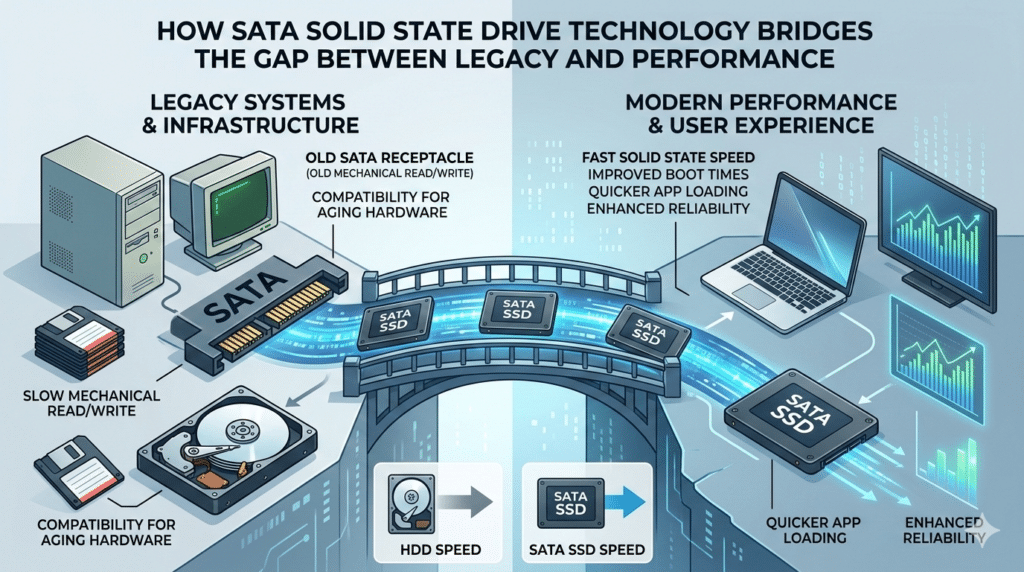
While newer interfaces like NVMe offer higher raw speeds, the sata solid state drive still provides performance that is significantly superior to HDDs. With maximum sequential read speeds typically reaching around 550 MB/s, these drives eliminate the bottlenecks that slow down everyday computing tasks. For the vast majority of business applications—including word processing, web browsing, and light database management—the speed of a SATA SSD is more than sufficient. This balance of performance and compatibility makes it a versatile choice for bulk procurement where budget constraints are a primary consideration.
Cost-effectiveness is a defining characteristic of the sata solid state drive market, particularly when purchased in wholesale quantities. The manufacturing maturity of SATA technology allows for lower price points per gigabyte compared to newer form factors. This affordability enables system integrators to maximize the storage capacity of their builds without exceeding budget limits, providing better value to their clients. For B2B buyers deploying hundreds or thousands of workstations, these cost savings can be substantial, allowing for reallocation of funds to other critical areas of IT infrastructure.
Looking ahead to 2026, industry analysts predict that the sata solid state drive will continue to dominate the budget and replacement markets. While NVMe is rising, the sheer volume of legacy systems in operation ensures a sustained demand for SATA-compatible storage. Manufacturers are continuing to innovate within this form factor, improving power efficiency and reliability. This ongoing commitment ensures that SATA remains a viable and profitable product category for distributors and resellers catering to a diverse clientele base.
2.1 What Makes SATA a Viable Bulk Solution
The primary advantage of a sata solid state drive in a wholesale context is its universal compatibility with the vast installed base of computers worldwide. Almost every desktop and laptop computer manufactured in the last decade features a SATA port, meaning these drives can be deployed immediately without compatibility checks or adapter requirements. This universality simplifies inventory management for wholesalers, as they can stock a single SKU that serves a wide array of customer needs. Reducing SKU complexity while maximizing addressable market is a key strategy for efficient distribution.
From a logistical standpoint, the standard 2.5-inch form factor of the typical sata solid state drive is designed for ease of integration. The physical dimensions and mounting points are standardized across the industry, ensuring that the drive fits seamlessly into existing drive bays and caddies. This ease of installation reduces the labor time required for technicians during large-scale rollout upgrades, further lowering the total cost of deployment for enterprise clients. For B2B service providers, this translates to faster turnaround times and higher margins on upgrade contracts.
Reliability testing has shown that a modern sata solid state drive offers a low failure rate, which reduces the overhead associated with warranty claims and returns. When purchasing in bulk, the consistency of quality is paramount, as a single batch of faulty drives can damage a supplier’s reputation. Reputable manufacturers implement rigorous quality control measures for their SATA lines, ensuring that bulk orders meet stringent performance and durability standards. This consistency is crucial for maintaining trust between wholesalers, system integrators, and end-users.
Furthermore, the 2025 market data suggests that the demand for sata solid state drive products in emerging markets is particularly strong. In regions where the latest computer hardware is less accessible due to cost, the upgrade market is a primary driver of technology adoption. Wholesale suppliers targeting these regions can achieve significant volume by offering reliable SATA storage that revitalizes older machines. This global demand underscores the continued relevance of SATA technology in a diverse and fragmented global PC market.
2.2 How Cost-Effectiveness Drives Procurement Decisions
Budget constraints are a reality for most IT departments, and the sata solid state drive offers the best return on investment for performance upgrades. By significantly improving system responsiveness at a relatively low cost, these drives allow businesses to defer the expensive purchase of new computers. This fiscal prudence is especially important for small to medium-sized enterprises (SMEs) that need to maximize the utility of every capital expenditure. The ability to breathe new life into an existing fleet of PCs for a fraction of the replacement cost is a compelling value proposition.
In the wholesale channel, the pricing structure of the sata solid state drive allows for flexible margin strategies. Because the manufacturing costs are well-understood and stable, wholesalers can negotiate volume discounts that protect their margins while offering competitive prices to their resellers. This price stability aids in long-term planning and forecasting, allowing businesses to schedule upgrades strategically throughout the fiscal year. Predictable pricing is a significant advantage when managing large-scale procurement projects over extended periods.
The total cost of ownership (TCO) calculations often favor the sata solid state drive when factoring in energy savings and productivity gains. Although the upfront cost is higher than an HDD, the reduction in power draw and the increase in employee productivity quickly offset the initial investment. Studies have shown that employees using SSD-equipped computers complete tasks faster, effectively paying for the hardware upgrade in saved labor hours. For B2B buyers, presenting a TCO analysis is an effective way to justify the procurement of SATA SSDs to financial stakeholders.
As we look toward 2026, the widening price gap between SATA and NVMe drives will likely make the sata solid state drive even more attractive for cost-conscious buyers. While NVMe prices are dropping, SATA technology is approaching commodity pricing levels. This trend ensures that SATA will remain the go-to solution for bulk storage where ultimate speed is not the primary requirement. Wholesalers can leverage this price differential to offer tiered product lines, catering to both budget-sensitive clients and performance-oriented segments.
2.3 Which Form Factors Suit Legacy Hardware
The 2.5-inch form factor is the industry standard for a sata solid state drive designed to replace traditional laptop and desktop hard drives. This form factor matches the physical dimensions of the vast majority of HDDs on the market, ensuring a hassle-free swap. It is the primary choice for IT departments performing upgrade cycles on office computers, as it requires no modification to the computer chassis. This physical compatibility is the foundation of the SATA upgrade market, enabling a seamless transition from mechanical to solid-state storage.
For even smaller devices like ultra-books and mini-PCs, the mSATA and M.2 SATA form factors provide the functionality of a sata solid state drive in a much smaller footprint. While these drives use different connectors, they still operate via the SATA interface, maintaining compatibility with legacy system BIOS and operating systems. This versatility allows wholesalers to cater to a wider range of hardware profiles, including slim-profile laptops that cannot accommodate a 2.5-inch drive. Stocking these variations ensures that a supplier can meet the specific form factor requirements of any client.
Industrial embedded systems often require more ruggedized versions of the sata solid state drive, sometimes in custom form factors with reinforced casings. These specialized drives are essential for manufacturing, transportation, and military applications where standard consumer drives might fail. Wholesalers serving the industrial B2B sector must maintain a catalog of these specialized SATA solutions to meet the demanding environmental specifications of their clients. This niche market often commands higher margins due to the specialized nature of the hardware.
The 2025 trends indicate a consolidation around the M.2 form factor even for SATA drives, as the industry moves away from bulky cabling. However, the 2.5-inch sata solid state drive remains a dominant force in the retrofit market. A savvy procurement strategy involves stocking both form factors to cover the entire spectrum of legacy hardware. By understanding the specific physical constraints of their clients’ equipment, wholesalers can provide expert guidance and ensure that the correct drive type is selected for every unique application.
3. Which Solid State Disk Drive Specifications Should Bulk Buyers Prioritize
When navigating the wholesale market for a solid state disk drive, buyers must look beyond capacity and prioritize specifications that determine long-term reliability and performance consistency. The type of NAND flash memory used—whether SLC, MLC, TLC, or QLC—plays a pivotal role in the drive’s endurance and speed. For professional B2B applications, MLC and TLC are often preferred for their balance of cost and durability. Understanding these technical distinctions allows buyers to source drives that truly meet the operational demands of their end-users, rather than simply opting for the cheapest option.
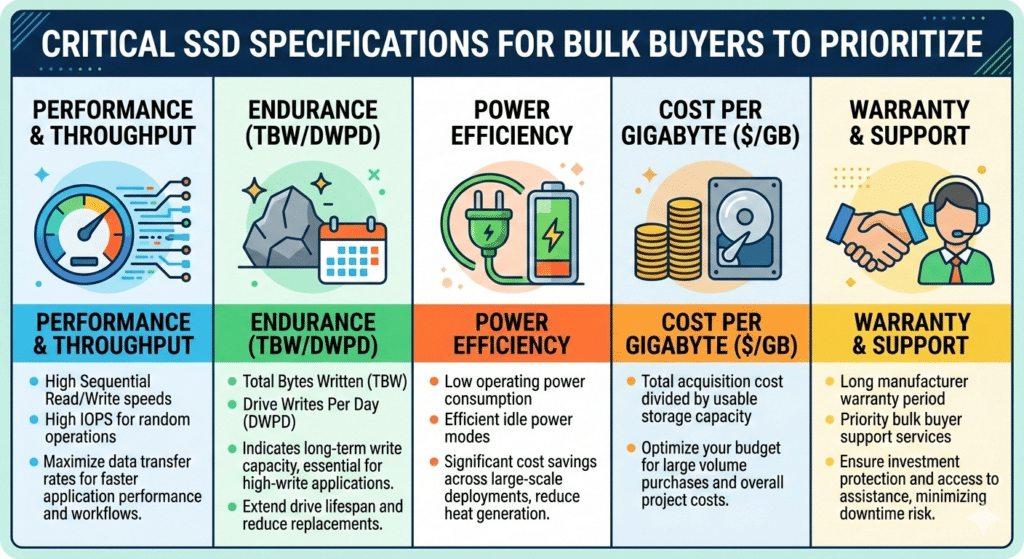
The controller architecture within a solid state disk drive is equally critical, as it manages data storage and retrieval processes. High-quality controllers ensure that the drive maintains consistent performance even under heavy loads and that wear leveling algorithms effectively prolong the drive’s lifespan. Bulk buyers should favor manufacturers that design their own controllers or use reputable third-party solutions, as this often correlates with better firmware support and fewer compatibility issues. A robust controller is the brain of the drive, ensuring stability and performance over years of use.
Endurance ratings, typically measured in Terabytes Written (TBW), provide a quantitative metric for the lifespan of a solid state disk drive. For enterprise environments with heavy write workloads, selecting a drive with a high TBW rating is essential to prevent premature failure. Wholesale buyers should carefully match the endurance rating of the drive to the intended use case, avoiding the costly mistake of deploying consumer-grade drives in business-critical servers. This specification matching is a key value-added service that wholesalers can provide to their B2B clients to ensure satisfaction.
As we approach 2026, the industry is seeing new standards and interfaces emerge, but the fundamental specifications of NAND type, controller quality, and endurance remain the primary indicators of value. A solid state disk drive that excels in these areas will offer a lower total cost of ownership despite a potentially higher upfront price. Buyers must resist the temptation to commoditize these products strictly based on gigabyte price, recognizing that performance and reliability variances are significant. Prioritizing these core specs ensures that the deployed storage infrastructure is robust, reliable, and ready for future challenges.
3.1 Why Component Quality Determines Longevity
The longevity of a solid state disk drive is inextricably linked to the quality of its internal components, particularly the NAND flash chips and the DRAM cache. Manufacturers who use bin-tested, high-grade NAND chips produce drives that can sustain more program/erase cycles before degradation occurs. In contrast, lower-quality drives may use downgraded silicon that fails unpredictably under stress. For bulk buyers, ensuring that the sourced drives contain top-tier components is the first line of defense against field failures and the associated logistical headaches.
The presence of a DRAM cache in a solid state disk drive significantly affects both performance and longevity by reducing the strain on the NAND flash memory. A DRAM cache acts as a high-speed buffer for mapping data, which speeds up access times and minimizes unnecessary write operations. Drives that omit this component to cut costs may offer a lower price point but often suffer from reduced performance consistency and a shorter lifespan. B2B buyers should recognize the DRAM cache as a critical feature for drives intended for intensive business use.
Firmware quality is another invisible but vital component that dictates the long-term reliability of a solid state disk drive. Well-written firmware manages complex tasks such as garbage collection, error correction, and wear leveling, ensuring that the drive operates efficiently over time. Manufacturers that invest in robust firmware development provide drives that maintain performance and data integrity throughout their lifecycle. Buyers should prioritize brands with a proven track record of firmware stability and a history of releasing updates to address potential vulnerabilities.
Market insights for 2025 suggest that the supply chain for high-quality NAND components remains tight, leading to a bifurcation in the market between premium and budget drives. Wholesale buyers must be vigilant in vetting their suppliers to ensure they are receiving genuine, high-quality solid state disk drive units and not counterfeits or inferior repackaged goods. Establishing direct relationships with reputable manufacturers or authorized distributors is the most effective strategy for securing components that meet the stringent quality standards required by professional clients. This diligence protects the buyer’s brand and ensures end-user satisfaction.
3.2 How Controller Types Influence Speed
The controller is the traffic cop of a solid state disk drive, orchestrating the flow of data between the host computer and the flash memory. Advanced controllers utilize multiple channels and sophisticated queuing protocols, such as NVMe or advanced SATA command sets, to maximize throughput. In a wholesale context, drives equipped with high-performance controllers are capable of sustaining high read/write speeds even when the drive is nearly full. This sustained performance is crucial for business applications where slowdowns are unacceptable during peak usage hours.
Parallel processing capabilities within the controller allow a solid state disk drive to handle multiple data requests simultaneously, improving responsiveness in multitasking environments. A superior controller can effectively manage random I/O operations, which are common in database queries and virtual machine operations. Bulk buyers serving the enterprise market should focus on drives with controllers specifically optimized for high random IOPS, as this metric correlates closely with user perceived performance in business settings. The efficiency of the controller dictates how well the drive performs under real-world pressure.
Thermal management is another function controlled by the drive’s controller, which is vital for maintaining performance in compact or poorly ventilated systems. High-performance controllers monitor temperature and implement throttling mechanisms to prevent overheating, which can degrade the NAND cells. A solid state disk drive with an intelligent thermal management system will deliver consistent performance without risking data loss due to thermal shutdowns. For B2B clients deploying drives in all-in-one PCs or dense server racks, thermal performance is a key selection criterion.
Looking towards 2026, we see the integration of AI and machine learning algorithms directly into SSD controllers. These smart controllers can predict data access patterns and pre-load frequently used data, further accelerating system performance. Wholesale buyers should keep an eye on these innovations, as a solid state disk drive with an AI-enhanced controller offers a tangible competitive advantage. Sourcing these next-generation drives positions wholesalers as forward-thinking partners capable of delivering cutting-edge storage solutions to their most demanding clients.
3.3 Why Endurance Ratings Are Critical for Enterprise
Endurance, measured in Terabytes Written (TBW), is the specification that quantifies how much data a solid state disk drive can write over its lifetime. For enterprise clients who run databases, virtualization hosts, or content delivery networks, the daily write volume is immense. Selecting a drive with an inadequate TBW rating can lead to premature drive failure, resulting in costly downtime and data recovery procedures. Bulk buyers must calculate the projected workload of their clients and specify drives with endurance ratings that comfortably exceed those requirements to ensure a safety margin.
The relationship between drive capacity and endurance is an important consideration for procurement strategies. Generally, higher capacity solid state disk drive models have higher endurance ratings because the data can be spread across more NAND cells, reducing wear on individual cells. This means that sometimes purchasing a larger drive than strictly necessary for capacity can be a cost-effective strategy for increasing longevity. B2B buyers can leverage this relationship to recommend solutions that offer better durability and value over the long term, rather than just meeting immediate storage needs.
Warranty support is often tied directly to the endurance rating of the solid state disk drive. Manufacturers use TBW as a benchmark for warranty validity, and exceeding the write limit may void the coverage. For businesses that rely on their hardware warranties for risk management, understanding and adhering to these limits is essential. Wholesale suppliers should provide clear documentation on endurance ratings and warranty terms to enable informed decision-making. This transparency builds trust and helps clients align their procurement policies with manufacturer guidelines.
As we move through 2025, the distinction between “Read Intensive” and “Write Intensive” drives becomes more defined in the solid state disk drive market. Write Intensive drives feature higher endurance ratings and are designed for caching and logging applications, while Read Intensive drives are optimized for content delivery and boot drives. Helping clients navigate these categories ensures that they do not overpay for excessive endurance they don’t need, or conversely, under-specify critical components. This consultative approach to specification selection is a hallmark of a high-value B2B wholesale partner.
4. Why Customization and Wholesale Partnerships Are Key in 2025
The competitive landscape of 2025 demands that businesses differentiate themselves, and customized hardware solutions offer a powerful way to achieve this. Wholesale partnerships that offer solid state drive for pc customization allow B2B buyers to tailor products to their specific brand and technical requirements. This can range from simple cosmetic changes, such as logo printing and custom packaging, to deep technical customization, including firmware tuning and specialized connectors. By offering these services, wholesalers transform from simple commodity sellers into strategic solution providers for their clients.
Custom firmware is a growing trend in the wholesale market, enabling specific performance optimizations for a sata solid state drive or NVMe drive. Clients may require drives that prioritize read speeds over write speeds, or that feature specific encryption protocols for government contracts. A manufacturer that can provide these bespoke firmware adjustments adds immense value, allowing systems integrators to fine-tune the hardware to match the software environment perfectly. This level of customization ensures that the final product performs optimally for its intended purpose, enhancing the end-user experience.
Supply chain resilience is another critical factor driving the move toward strategic wholesale partnerships. The global semiconductor shortage highlighted the risks of relying on spot markets for critical components like a solid state disk drive. By establishing long-term contracts with reliable wholesale partners, businesses can secure allocation and buffer against market volatility. These partnerships provide predictability in pricing and availability, which is essential for companies planning large-scale product launches or infrastructure upgrades in 2026 and beyond.
Furthermore, the trend towards vertical integration in the tech industry means that companies are increasingly looking for private-label solutions. A solid state drive for pc branded with the company’s own logo strengthens brand identity and fosters customer loyalty. Wholesale suppliers that offer white-label or OEM services enable their clients to capture more value in the supply chain. This capability is particularly attractive to system builders and resellers who want to build a recognizable brand without investing in their own manufacturing facilities.
4.1 How Branding Enhances Market Presence
In the crowded B2B technology market, brand recognition is a significant competitive advantage. Customizing a solid state drive for pc with a company’s logo, part numbers, and specific packaging turns a generic component into a branded asset. For system integrators and OEMs, this branding consistency across all internal components reinforces the perception of quality and attention to detail. When a technician opens a computer and sees branded components, it instills confidence in the integrity of the system and the professionalism of the builder.
White-label solutions allow resellers to market a sata solid state drive under their own name, effectively creating a proprietary product line without the overhead of manufacturing. This strategy enables smaller players to compete with established global brands by offering comparable quality with a unique value proposition. The ability to control the brand narrative allows resellers to highlight specific features or service guarantees that differentiate them from the competition. Branding is not just about aesthetics; it is a powerful tool for market positioning and customer retention.
The unboxing experience is becoming increasingly important even in B2B transactions, as it sets the tone for the customer relationship. Customized packaging for a wholesale solid state disk drive order can include installation guides, branding materials, and warranty information tailored to the reseller’s requirements. This attention to detail enhances the perceived value of the product and strengthens the partnership between the distributor and the end-client. In 2025, where customer experience is paramount, these touches can significantly influence buying decisions.
Market data suggests that private-label hardware is gaining traction as businesses seek to tighten control over their supply chains and brand image. A solid state drive for pc that carries the reseller’s brand creates a direct connection with the end-user, bypassing the component manufacturer. This direct relationship is invaluable for gathering feedback, upselling related services, and building long-term loyalty. Wholesale partners that facilitate this branding empower their clients to build stronger, more profitable businesses.
4.2 Which Customization Options Add Value
Performance tuning via custom firmware is one of the highest-value customization options available for a solid state disk drive. Manufacturers can adjust the over-provisioning ratio, which reserves a portion of the drive’s capacity for background maintenance tasks, thereby improving endurance and sustained performance. Clients operating in write-heavy environments can benefit significantly from this tailored approach, as the drive is configured specifically to handle their workload. This technical customization moves beyond one-size-fits-all solutions, offering precise engineering for specific business challenges.
Physical customization, such as modifying the casing or connector type, is essential for specialized industrial applications. A standard sata solid state drive may not fit into the ruggedized or compact enclosures used in military or aerospace hardware. Wholesale suppliers with flexible manufacturing lines can produce drives with custom housings, extended temperature ranges, or vibration resistance. These specialized modifications are critical for B2B clients in niche markets, where off-the-shelf components simply cannot meet the stringent environmental requirements.
Encryption and security features are increasingly demanded by corporate and government clients, and customization can address these needs directly. A solid state drive for pc can be configured with hardware-based encryption that meets specific regulatory standards, such as FIPS 140-2. Providing these security features as standard or customizable options allows wholesalers to serve highly regulated industries like finance and healthcare. This capability opens doors to lucrative contracts where data security is a non-negotiable requirement.
Looking ahead to 2026, we anticipate a rise in demand for “smart” drives that integrate with specific cloud management platforms. Customization will extend to the software layer, where a solid state disk drive might come pre-configured to report health metrics and usage statistics to a centralized dashboard. This level of integration adds significant value for managed service providers (MSPs) and large IT departments, simplifying asset management and predictive maintenance. Wholesale partners that offer these advanced customization options will be well-positioned to lead the market.
4.3 Why Supply Chain Flexibility Is a Competitive Advantage
The ability to scale production up or down rapidly is a defining characteristic of a valuable wholesale partner in 2025. Market demand for a solid state drive for pc can fluctuate based on product launch cycles and economic conditions. A flexible supplier can accommodate sudden spikes in order volume without compromising delivery times. This agility is crucial for B2B clients who need to react quickly to market opportunities or supply chain disruptions. It ensures that their production lines keep moving and their inventory levels remain optimized.
Logistics and inventory management services provided by wholesale partners add another layer of flexibility. Drop-shipping capabilities, where the sata solid state drive is shipped directly from the manufacturer to the end-user, reduce handling costs and lead times for resellers. Vendor-managed inventory (VMI) systems allow the supplier to monitor stock levels and replenish them automatically, ensuring that the client never faces a stock-out. These streamlined logistics solutions free up capital and resources for the buyer, allowing them to focus on sales and core operations.
Geographic diversification of manufacturing and distribution hubs is a key strategy for mitigating risk in the solid state disk drive supply chain. Wholesale partners with facilities in multiple regions can offer shorter lead times and lower shipping costs, while also reducing the impact of regional geopolitical events. For global B2B buyers, this localized presence ensures compliance with local content requirements and simplifies customs procedures. It is a practical necessity for managing a complex, international supply chain efficiently.
The 2026 market outlook emphasizes the importance of sustainability in the supply chain, driving demand for partners who can certify the ethical sourcing and environmental impact of their products. A solid state drive for pc that comes with verifiable green credentials is increasingly preferred by corporations with ESG (Environmental, Social, and Governance) mandates. Wholesale suppliers who can provide this transparency and adapt their processes to meet evolving sustainability standards will become preferred partners. This forward-thinking approach to supply chain management is becoming a competitive differentiator in its own right.
Conclusion
The transition to flash storage is not merely a technological upgrade but a fundamental shift that enhances the speed, reliability, and efficiency of computing infrastructure. Integrating a solid state drive for pc is essential for any business looking to maintain a competitive edge in 2025 and beyond. The performance benefits, coupled with the durability of the technology, provide a return on investment that justifies the procurement costs for enterprises of all sizes. As the digital landscape evolves, the reliance on fast, dependable storage will only continue to grow.
Wholesale buyers and system integrators play a pivotal role in this ecosystem, bridging the gap between component manufacturing and end-user deployment. By understanding the nuances of the sata solid state drive and other form factors, B2B professionals can tailor their offerings to meet specific market needs. The emphasis on customization and strategic partnerships ensures that businesses can secure the exact hardware configurations required to thrive in their respective industries. This depth of knowledge and service is what distinguishes a commodity supplier from a true value-added partner.
Looking forward, the innovations in solid state disk drive technology promise even greater performance and integration with intelligent systems. Staying abreast of these trends and maintaining a flexible supply chain will be crucial for long-term success. Businesses that prioritize quality, customization, and strategic sourcing will be well-positioned to navigate the complexities of the modern tech market. The future of computing is solid-state, and the opportunities for growth in this sector are substantial.
For businesses ready to upgrade their infrastructure or expand their product portfolio, the time to act is now. Contact us today to explore our comprehensive range of wholesale and customizable solid state solutions. Let us help you find the perfect storage products to meet your specific business objectives and drive your growth in 2025.
Frequently Asked Questions
1. Why should businesses upgrade to a solid state drive for pc?
Upgrading to a solid state drive for pc is essential for businesses because it drastically reduces boot times and accelerates application loading, leading to immediate gains in employee productivity. Unlike mechanical hard drives, SSDs have no moving parts, which makes them more durable and less prone to failure in demanding office environments. For B2B clients, this reliability translates to lower maintenance costs and less downtime, ensuring that operations run smoothly.
2. How does a sata solid state drive benefit older computer systems?
A sata solid state drive serves as a perfect bridge for legacy systems because it fits into the standard 2.5-inch or 3.5-inch bays found in older PCs and uses the existing SATA interface. This compatibility allows businesses to revitalize aging hardware without the expense of a complete system overhaul, extending the lifecycle of IT assets. It offers a significant speed boost over traditional HDDs while maintaining a cost-effective price point for bulk upgrades.
3. Is a solid state disk drive more reliable than traditional hard drives?
Yes, a solid state disk drive is significantly more reliable because it lacks the mechanical spinning platters and read/write heads found in HDDs, which are the most common points of failure. This makes SSDs resistant to physical shock, vibration, and temperature fluctuations, which is crucial for mobile workforces and industrial computing. The advanced error correction and wear-leveling algorithms in modern SSDs further enhance data integrity and longevity.
4. What specifications should wholesale buyers prioritize when sourcing a solid state drive for pc?
Wholesale buyers should prioritize the type of NAND flash memory (such as TLC or MLC for a balance of performance and endurance), the quality of the drive controller, and the Terabytes Written (TBW) rating. These technical specifications determine the drive’s lifespan and performance consistency under heavy workloads. Ensuring high-quality components in a solid state drive for pc reduces the risk of early failure and protects the buyer’s brand reputation.
5. How does customization add value to a sata solid state drive for B2B clients?
Customization allows B2B clients to offer a sata solid state drive under their own brand name through white-label services, including logo printing and custom packaging. Additionally, technical customization, such as firmware tuning for specific read or write intensive tasks, ensures the drive meets the exact needs of specialized industries. This level of differentiation helps resellers and system integrators stand out in a competitive market and build stronger customer loyalty.
6. Why is the controller type important in a solid state disk drive?
The controller acts as the brain of the solid state disk drive, managing how data is read, written, and distributed across the memory cells. A high-quality controller ensures sustained performance, efficient thermal management, and accurate error correction, which prevents data corruption during heavy use. For enterprise applications, a robust controller is critical to maintaining high IOPS and ensuring the drive can handle multi-tasking without slowing down.
7. Is a solid state drive for pc cost-effective for large-scale deployments?
Absolutely, while the upfront cost of a solid state drive for pc may be higher than an HDD, the total cost of ownership is lower due to energy efficiency and reduced failure rates. The productivity gains from faster data access and system responsiveness often offset the initial investment within months. For large enterprises, the extended lifespan of the hardware also delays the need for capital expenditures on new PC fleets.
8. Which form factors are available for a sata solid state drive in the wholesale market?
The wholesale market primarily offers the 2.5-inch form factor, which is the standard replacement for laptop and desktop hard drives, but also includes mSATA and M.2 SATA options for compact devices. Stocking a variety of form factors allows wholesalers to cater to a wider range of hardware profiles, from standard office towers to ultra-slim notebooks and industrial embedded systems.
9. What are the market trends for solid state disk drive technology in 2025 and beyond?
Industry forecasts for 2025 and 2026 indicate a trend toward higher capacities and the integration of AI-driven controllers within the solid state disk drive to optimize data management. There is also a growing bifurcation between “Read Intensive” and “Write Intensive” drives, allowing buyers to select products tailored to specific workload requirements. Furthermore, supply chain strategies are shifting towards customization and regional diversification to mitigate global disruptions.
10. How do I choose the right endurance rating for a solid state drive for pc?
The right endurance rating, measured in Terabytes Written (TBW), should be selected based on the daily write volume of the specific application the drive will support. For general office use, a standard TBW rating is sufficient, but for database servers or caching drives, a high TBW “Write Intensive” drive is necessary. Wholesale buyers must carefully match the solid state drive for pc endurance to the client’s usage patterns to ensure the drive lasts through its warranty period.