
SSD, Understanding TLC, QLC, and SLC NAND for Enterprise SSDs

In 2025, enterprise SSD storage decisions hinge on understanding the balance between performance, cost, and reliability. At the heart of those decisions are the NAND types that power modern SSDs, the SSD endurance ratings that define long-term usability, and the unique requirements of enterprise flash memory deployments. Choosing the right SSD architecture is no longer just a technical choice—it’s a business-critical decision that influences scalability, efficiency, and total cost of ownership.
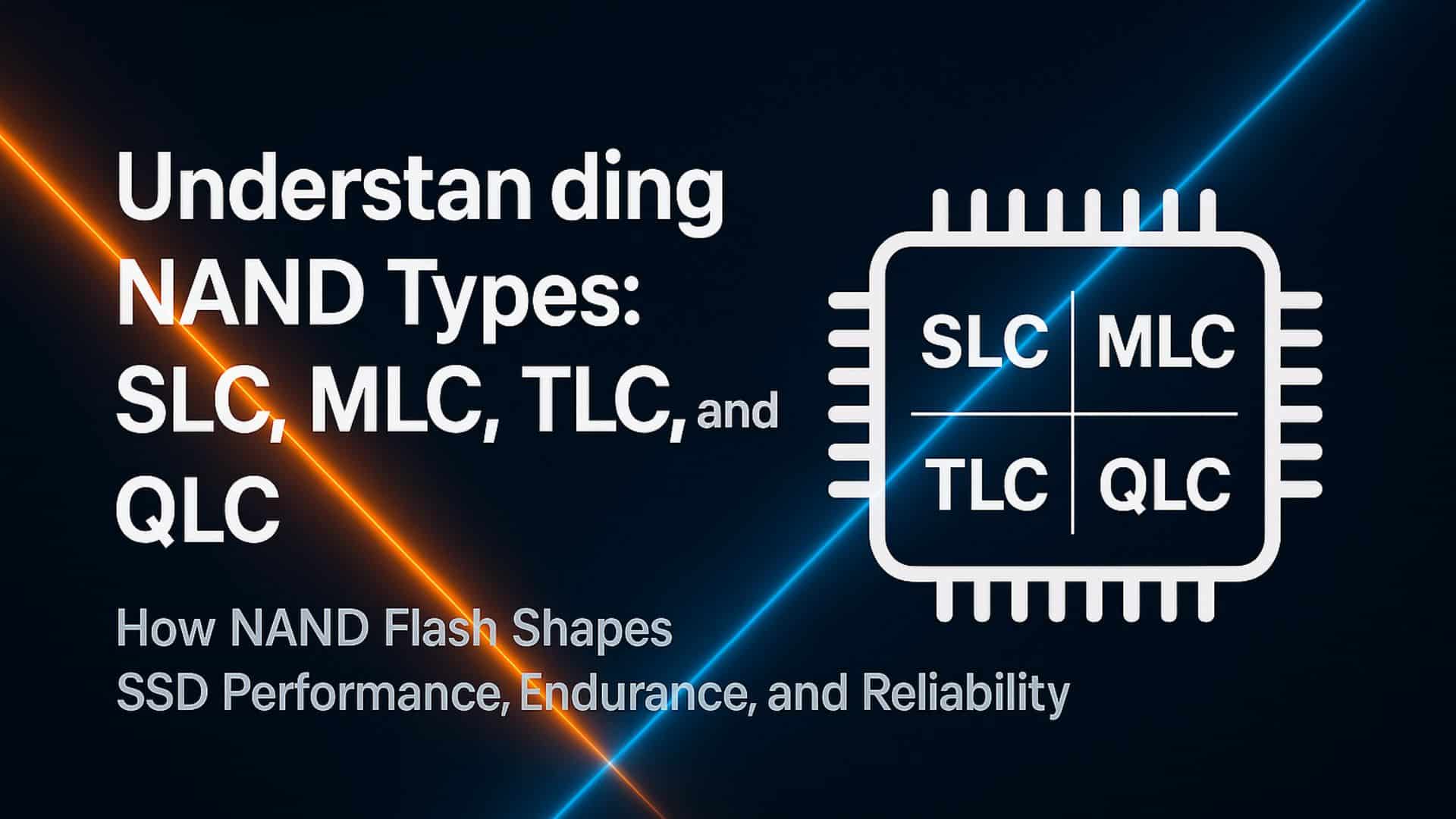
This article breaks down the differences between SLC, TLC, and QLC NAND, explains their impact on endurance and performance, and explores how organizations can align NAND types with workload requirements in the evolving enterprise flash memory market.
Why NAND Types Matter More Than Ever
The backbone of every SSD is NAND flash, and the NAND types used determine the balance between speed, durability, and density. In simple terms:
- SLC (Single-Level Cell): Stores one bit per cell. Fast, durable, but expensive.
- TLC (Triple-Level Cell): Stores three bits per cell. Balanced cost and performance.
- QLC (Quad-Level Cell): Stores four bits per cell. High density and cost savings but lower SSD endurance.
In the enterprise flash memory market, these distinctions are critical. A financial database running millions of transactions daily cannot rely on QLC, while an archival storage tier may find it ideal.
Deep Dive: SLC NAND
SLC (Single-Level Cell) is the original NAND design, and despite its age, it remains a gold standard in reliability.
- Performance: Extremely fast read/write cycles.
- SSD Endurance: Highest durability, often exceeding 100,000 program/erase (P/E) cycles.
- Use Case: Mission-critical enterprise flash memory applications such as high-frequency trading, caching, or aerospace systems.
The downside? Cost. SLC drives are significantly more expensive per gigabyte, which limits adoption to specialized workloads. Still, when absolute reliability is needed, SLC remains unmatched among all NAND types.
Deep Dive: TLC NAND
TLC (Triple-Level Cell) is the most widely used NAND today, striking a balance between performance, affordability, and capacity.
- Performance: Solid, though slower than SLC, especially in sustained writes.
- SSD Endurance: Typically 3,000–5,000 P/E cycles. More than enough for most enterprise flash memory needs.
- Use Case: General enterprise workloads, including virtual machines, databases, and file storage.
What makes TLC attractive is its balance. It is affordable enough for large-scale deployments but still provides the durability and reliability enterprises demand. In fact, most data centers today rely heavily on TLC for everyday workloads, making it the most dominant of all NAND types.
Deep Dive: QLC NAND
QLC (Quad-Level Cell) packs four bits into each cell, pushing density to new levels.
- Performance: Strong for read-intensive workloads but slower for heavy writes.
- SSD Endurance: Around 1,000 P/E cycles or less. This is its biggest limitation.
- Use Case: Cold storage, content delivery, AI dataset archives, and backup tiers in enterprise flash memory environments.
The advantage of QLC lies in cost per terabyte. Enterprises handling petabytes of data, particularly in archival or analytics workloads, find QLC an attractive choice. However, its lower SSD endurance means it should not be used for write-heavy applications.
Comparing NAND Types Side by Side
To make sense of these distinctions, let’s line up the three major NAND types:
| Feature | SLC | TLC | QLC |
| Bits per cell | 1 | 3 | 4 |
| SSD Endurance | ~100,000 P/E cycles | 3,000–5,000 P/E cycles | ~1,000 P/E cycles |
| Cost per GB | Highest | Moderate | Lowest |
| Performance | Fastest | Good, balanced | Read-focused |
| Enterprise Fit | Mission-critical | General workloads | Archival, cold data |
This table illustrates why understanding NAND types is crucial for enterprise flash memory buyers: no single NAND solution fits every use case.
How SSD Endurance Shapes Enterprise Strategy
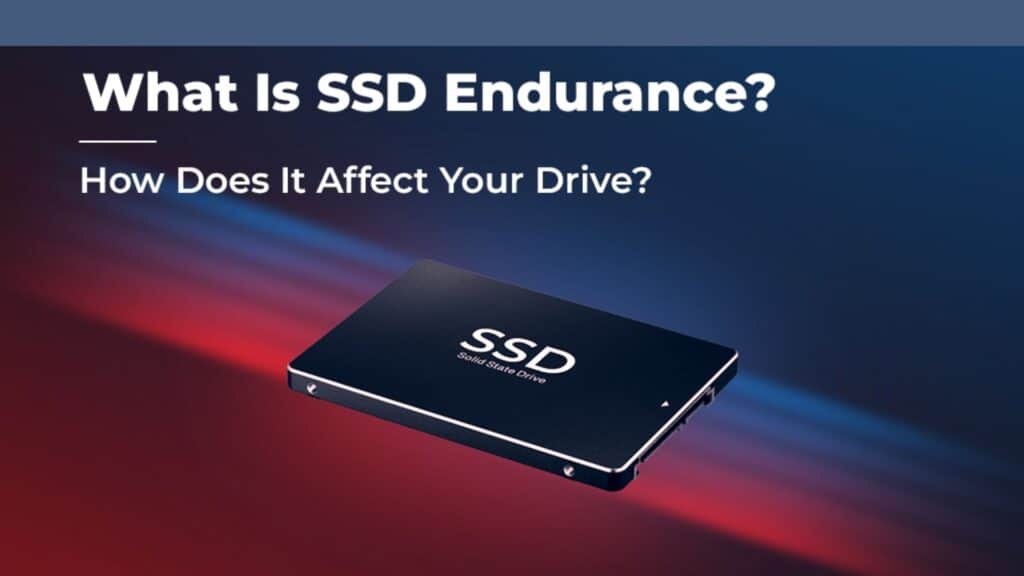
SSD endurance is not just a spec sheet number—it directly determines lifespan under heavy workloads. For enterprises, endurance defines how long flash drives can sustain intensive read/write cycles before performance degradation or failure.
- High-Endurance Needs: Real-time analytics, financial trading, and core databases demand SLC or high-grade TLC to ensure constant reliability.
- Balanced Needs: Most enterprise workloads fall comfortably within TLC’s endurance window. This makes TLC the most versatile NAND for enterprise flash memory.
- Low-Endurance Needs: Archive and backup workloads rarely stress NAND. Here, QLC shines, enabling massive storage pools with minimal costs.
Organizations that misjudge NAND types often face premature SSD failures, forcing costly replacements. This is why endurance evaluation is central to procurement decisions.
Enterprise Flash Memory in 2025
The enterprise flash memory market has shifted dramatically in recent years. Companies are no longer choosing between HDDs and SSDs; they are choosing between NAND architectures. With workloads becoming more specialized, enterprises often mix NAND types to balance costs and reliability.
- Tiered Storage Architectures: SLC or TLC SSDs for hot data, QLC SSDs for cold data.
- AI and Big Data: Heavy reliance on TLC for training datasets but QLC for long-term model storage.
- Hybrid Environments: Combining HDDs for ultra-cold archives with QLC SSDs for mid-tier retention.
In this landscape, understanding NAND types and their impact on SSD endurance is not optional—it’s essential for cost-effective scalability.
Trends Driving NAND Development
In 2025, new trends continue to shape enterprise flash memory innovation:
- 3D NAND Expansion: Increasing layers (200+ layers) improve density while slightly enhancing endurance across all NAND types.
- AI-Optimized Storage: Enterprises are demanding storage solutions tuned for AI workloads, often balancing TLC’s endurance with QLC’s affordability.
- Zoned Storage: Software-driven management extends SSD endurance by optimizing write cycles, especially useful in QLC deployments.
- Energy Efficiency: Sustainability initiatives push manufacturers to improve performance-per-watt in next-gen NAND.
These advancements are blurring the lines between NAND types, allowing even QLC to support more demanding enterprise flash memory use cases.
Best Practices for Choosing the Right NAND
For IT leaders, matching NAND types with workload requirements ensures both performance and ROI. Consider these best practices:
- Assess Workload Intensity: Heavy-write databases = SLC/TLC; cold storage archives = QLC.
- Plan for Endurance: Factor in SSD endurance beyond just initial capacity needs.
- Adopt Tiered Approaches: Mix NAND types for hot, warm, and cold data tiers.
- Engage Vendors: Partner with enterprise flash memory suppliers who can customize solutions to your use case.
- Monitor Usage: Use real-time monitoring tools to track wear levels and avoid early failures.
With these practices, enterprises can avoid overpaying for performance they don’t need while ensuring reliability where it matters.
The Future of NAND Types
Looking ahead, innovations may soften the trade-offs between NAND types:
- QLC endurance will likely improve with error correction and advanced controllers.
- TLC may remain the workhorse of the enterprise flash memory sector.
- SLC may persist only in ultra-specialized markets but will always serve as the endurance benchmark.
As workloads diversify, enterprises will increasingly adopt a “fit-for-purpose” mindset, deploying multiple NAND types across their storage architectures to optimize cost and performance.
Final Thoughts
In 2025, understanding NAND types, SSD endurance, and the needs of enterprise flash memory workloads is critical for smart storage strategies. While SLC, TLC, and QLC each have strengths and weaknesses, the future lies in thoughtful deployment rather than one-size-fits-all solutions.
Enterprises that align NAND architectures with workload demands will gain not only cost advantages but also greater reliability, scalability, and performance. The key is simple: know your NAND, respect endurance limits, and deploy flash memory with intent.