
What Makes the Best Internal SSD for Professional Applications?

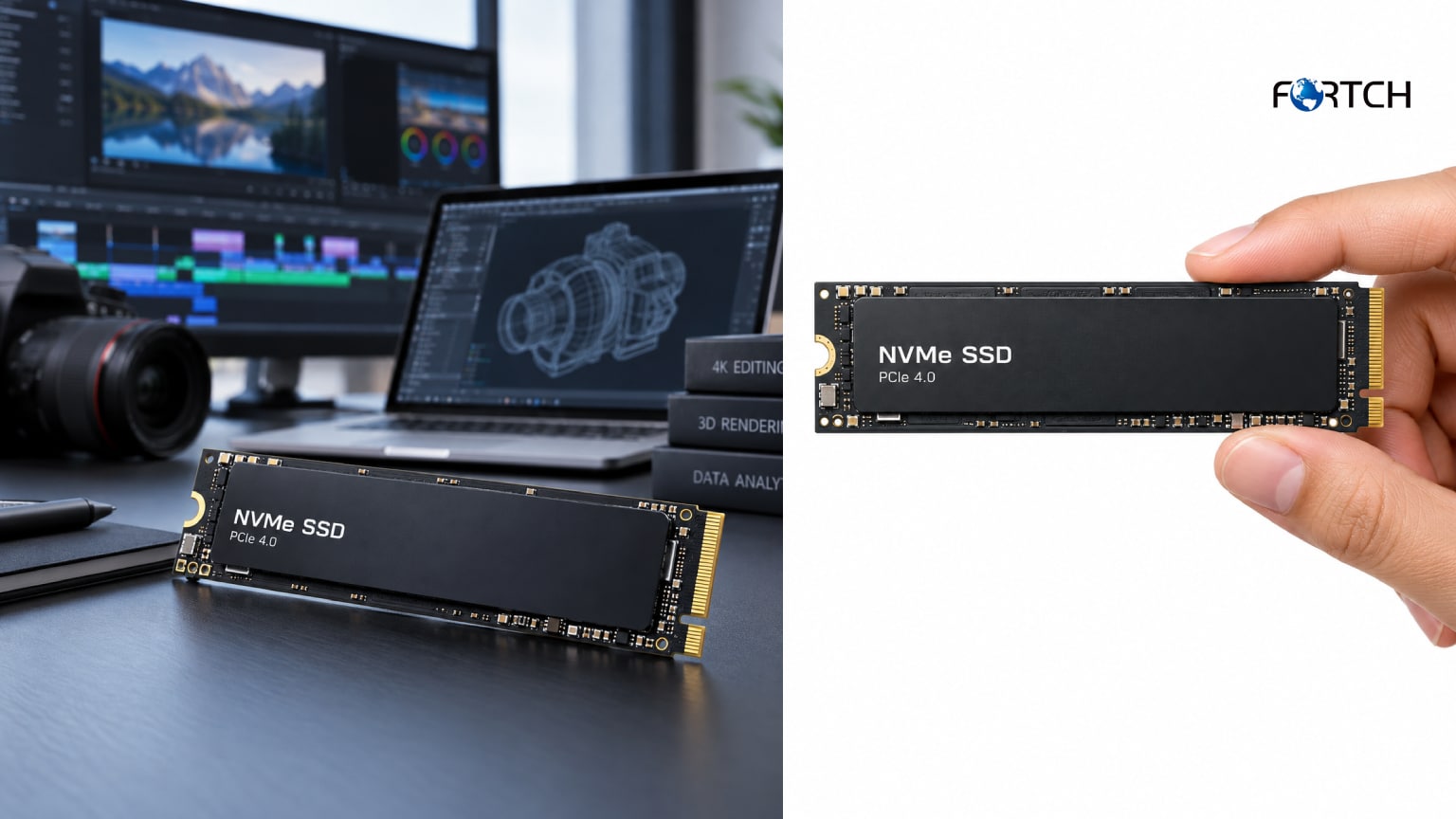
The landscape of data storage is undergoing a rapid transformation as professional applications demand higher bandwidth, lower latency, and greater reliability. Selecting the right internal SSD drive is no longer just about capacity; it is about ensuring seamless workflow continuity for video editing, 3D rendering, and complex database management. As businesses look toward 2025 and 2026, the criteria for what constitutes top-tier storage are shifting, emphasizing the need for wholesale solutions that offer bespoke performance tuning. Understanding these nuances allows procurement managers and system integrators to make informed decisions that align with their specific technical requirements and long-term scalability goals.
Professional environments cannot afford the bottlenecks associated with traditional hard drives or even consumer-grade solid-state technology. The stakes are higher when data integrity and transfer speeds directly impact productivity and revenue generation. Consequently, the focus has shifted toward enterprise-grade internal SSD drives that leverage advanced NAND flash technologies and robust controllers. By prioritizing wholesale options that allow for hardware and firmware customization, businesses can secure a competitive advantage. This approach ensures that the storage infrastructure is not merely a component but a tailored asset that enhances overall system performance and operational efficiency.
Identifying the best internal SSD requires a deep dive into technical specifications such as IOPS (Input/Output Operations Per Second), sustained write speeds, and thermal management capabilities. It is essential to look beyond peak performance metrics and evaluate how the drive handles sustained workloads over extended periods. For wholesalers and system builders, the ability to specify these parameters means delivering a product that perfectly matches the end-user’s profile. Whether for high-frequency trading platforms or creative production studios, the right SSD storage solution acts as the backbone of the entire computing ecosystem, dictating the speed and reliability of data processing.
The market for enterprise storage is projected to expand significantly through 2026, driven by the explosion of unstructured data and the adoption of AI-driven analytics. Industry reports suggest that the demand for customizable, high-performance internal SSD drives will outpace generic consumer products as businesses seek to optimize their IT infrastructure. This trend underscores the importance of partnering with manufacturers who offer flexible wholesale and Original Equipment Manufacturer (OEM) services. Such partnerships empower businesses to configure storage solutions that meet rigorous professional standards, ensuring longevity and consistent performance under pressure.
1. Why Speed and IOPS Define the Best Internal SSD
1.1 Why Sequential Read and Write Speeds Matter
Sequential speed is often the headline number advertised by manufacturers, representing how quickly large files can be read from or written to the internal SSD drive. For professionals working with 4K and 8K video files, large CAD drawings, or virtual machine images, high sequential speeds are non-negotiable. A drive that offers throughput exceeding 7,000 MB/s via the PCIe Gen4 or Gen5 interface drastically reduces the time required for file transfers and rendering. This efficiency translates directly to faster project turnaround times and the ability to handle multiple large-scale tasks simultaneously without system stuttering.
The relevance of sequential speed extends beyond mere file movement; it influences the responsiveness of data-heavy applications. When an application launches or loads a massive dataset, it relies on the ability of the SSD storage to stream data continuously. In a wholesale context, businesses can prioritize drives with specific sequential speed ratings to match the throughput requirements of their clients’ software suites. By 2025, the standard for professional sequential speeds is expected to rise further with the mainstream adoption of PCIe 5.0 technology, making future-proofing a key consideration for bulk procurement strategies today.
Furthermore, the architecture of the best internal SSD often includes features like DRAM cache and HMB (Host Memory Buffer) to sustain these high speeds during heavy workloads. Without these components, performance can throttle significantly once the cache is filled, leading to inconsistent user experiences. Professional buyers should look for wholesale options that include these performance-enhancing features, ensuring that the advertised speeds are maintained over long periods of intensive use. This consistency is what separates professional-grade equipment from consumer alternatives, providing the reliability needed for mission-critical business operations.
Investing in high-speed internal SSD drives also prepares infrastructure for the increasing data loads anticipated in 2026. As software becomes more resource-intensive, the bottleneck will inevitably shift back to storage if the hardware is not capable of keeping pace. Wholesale agreements that allow for upgrades or scaling to faster接口 standards as they become available offer a strategic advantage. By understanding the direct correlation between sequential speeds and productivity, businesses can justify the investment in premium storage solutions, knowing that the return on investment comes from enhanced operational velocity.
1.2 How Random IOPS Affect Workflow Efficiency
While sequential speed handles large files, Random IOPS (Input/Output Operations Per Second) is the critical metric for active workloads, such as database queries, operating system operations, and multitasking. High random IOPS ensure that the internal SSD drive can access and modify small blocks of data scattered across the disk quickly. For professionals running complex databases, virtualization environments, or even heavy multitasking on a workstation, a high IOPS rating is essential for maintaining system fluidity. A drive with low IOPS will cause the system to hang or lag whenever it tries to access numerous small files simultaneously, severely hampering productivity.
The impact of IOPS on user experience is profound, particularly in scenarios where latency is the enemy of efficiency. In financial trading or real-time data analysis, microseconds matter, and the best internal SSD will deliver millions of IOPS to ensure instantaneous data retrieval. Wholesale buyers must consider the IOPS requirements of their specific industry; for instance, a database server requires vastly different performance characteristics compared to a video editing workstation. Customizing SSD storage configurations to prioritize random read/write performance can therefore yield significant performance gains tailored to specific business applications.
Modern NVMe drives have exponentially increased IOPS capabilities compared to older SATA-based SSDs, leveraging the parallel nature of the PCIe bus to handle multiple queues of data requests. This architectural improvement is vital for professional applications where concurrency is the norm. By 2025, advancements in controller technology are expected to push IOPS limits even higher, enabling more complex computational tasks to run smoothly on local storage. Businesses engaging in wholesale procurement should focus on drives that utilize advanced controllers capable of sustaining high IOPS under load, ensuring that the storage subsystem does not become the limiting factor in complex workflows.
Moreover, the consistency of random performance is just as important as the peak IOPS number. Some drives may offer high peak performance but suffer significant drops when subjected to sustained random writes. For professional applications, consistency ensures predictable performance, which is crucial for Service Level Agreements (SLAs) and deadline-driven work. Custom firmware solutions, available through specialized wholesale channels, can tune the drive’s over-provisioning and garbage collection algorithms to maintain stable IOPS over time. This level of customization ensures that the internal SSD drive delivers reliable performance day in and day out, regardless of the intensity of the workload.
1.3 Which NVMe Generations Offer the Best Value
The transition from SATA to NVMe was a watershed moment for storage technology, and the evolution continues with successive generations of the NVMe protocol. Currently, PCIe Gen4 NVMe drives represent the sweet spot for many professional applications, offering a substantial leap in performance over Gen3 without the extreme cost and thermal requirements of the bleeding-edge Gen5 drives. For wholesale buyers, selecting the right generation involves balancing current performance needs against budget constraints and future upgrade paths. The best internal SSD for a given business is one that maximizes the throughput of the existing system architecture without unnecessary over-provisioning.
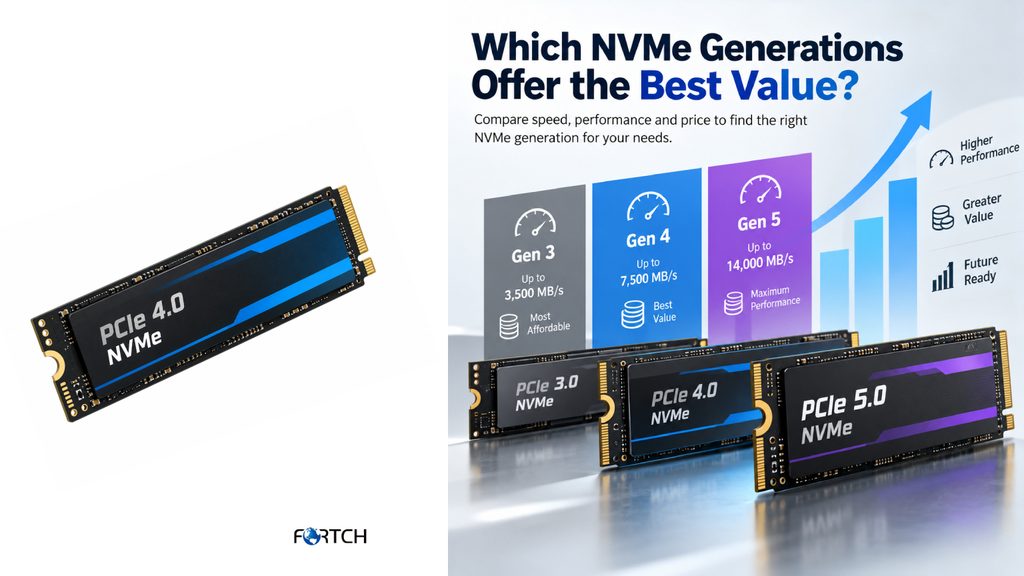
Looking ahead to 2026, PCIe Gen5 is poised to become more prevalent, offering theoretical speeds double that of Gen4. While this is enticing, these drives often require sophisticated thermal management solutions that may not fit into all form factors. Businesses planning long-term infrastructure deployments might consider Gen5 for future-proofing, but for immediate needs, high-end Gen4 drives often provide better stability and value per gigabyte. A focused wholesale strategy involves auditing the current hardware capabilities of the target systems and selecting SSD storage that complements rather than overwhelms the motherboard and CPU capabilities.
The choice of NVMe generation also impacts power consumption, a critical factor for data centers and mobile workstations. Higher bandwidth drives typically consume more power, which can affect battery life in laptops and increase cooling costs in server farms. Professional buyers must analyze the performance-per-watt metric when sourcing internal SSD drives in bulk. Customization options may include low-power states tuned for specific usage patterns, helping enterprises manage their operational expenditure (OPEX) more effectively while still benefiting from high-speed data access.
Ultimately, the decision rests on the specific use case. For read-intensive tasks like content delivery networks (CDNs), a slightly older but highly reliable Gen3 or Gen4 drive might suffice and offer better endurance. Conversely, for write-intensive creative work or AI training data pipelines, the bandwidth of Gen4 or upcoming Gen5 is indispensable. Wholesale suppliers that offer a range of generations allow businesses to mix and match storage solutions within their inventory, deploying the best internal SSD for each specific role within the organization. This granular approach to procurement optimizes the overall cost-efficiency of the IT infrastructure.
2. How Reliability Standards Impact Professional SSD Storage
2.1 Why Endurance and TBW are Critical Metrics
Endurance, measured in Terabytes Written (TBW), indicates the total amount of data that can be written to an internal SSD drive before it is likely to fail. For professional applications where data is written and rewritten constantly—such as in video editing scratch disks or log servers—endurance is a paramount concern. A drive with a higher TBW rating utilizes higher-quality NAND flash memory, often 3D TLC or MLC, which is designed to withstand the rigors of heavy professional use. Wholesale buyers must prioritize TBW ratings to ensure that the selected drives offer a lifespan that aligns with the replacement cycles of their clients’ hardware.
The correlation between endurance and cost is significant, but the total cost of ownership (TCO) is lower when drives last longer and require less frequent replacement. In a professional setting, drive failure can result in costly downtime and potential data loss, making high-TBW drives a form of insurance. By 2025, advancements in NAND layering are expected to improve endurance even as densities increase, but professional buyers should still scrutinize the TBW specifications carefully. Custom SSD storage solutions can be ordered with specific write-intensity grades, ensuring that the drive is perfectly matched to the workload, whether it is write-heavy or read-heavy.
Furthermore, the “Mean Time Between Failures” (MTBF) is another reliability metric that works in tandem with TBW to provide a holistic view of drive longevity. A high MTBF suggests that the internal SSD drive is built with robust components and has undergone rigorous testing. For businesses managing large fleets of workstations, a high aggregate TBW and MTBF are essential for maintaining operational continuity. Wholesale suppliers often provide detailed reliability statistics for their enterprise lines, allowing procurement teams to model drive lifecycles accurately and budget for replacements well in advance.
It is also important to consider how over-provisioning—the practice of reserving a portion of the drive’s capacity for background maintenance—affects endurance. Some of the best internal SSD options for professionals come with increased over-provisioning, which spreads write operations across a larger number of NAND cells, thereby extending the drive’s life. Through customization, businesses can request specific levels of over-provisioning to suit their critical applications, ensuring that reliability is never compromised for the sake of maximizing usable capacity. This tailored approach is key to building a resilient storage infrastructure.
2.2 How Power Loss Protection Safeguards Data
Power Loss Protection (PLP) is a feature found in high-end professional internal SSD drives that protects data in the event of a sudden power outage. This is achieved through a combination of onboard capacitors that provide enough power for the drive to flush data from the volatile cache to the non-volatile NAND flash. For enterprise environments, database servers, and financial systems, where even a single bit of data corruption can have catastrophic consequences, PLP is non-negotiable. Wholesale sourcing for these sectors must focus on drives that explicitly include this hardware-level protection mechanism.
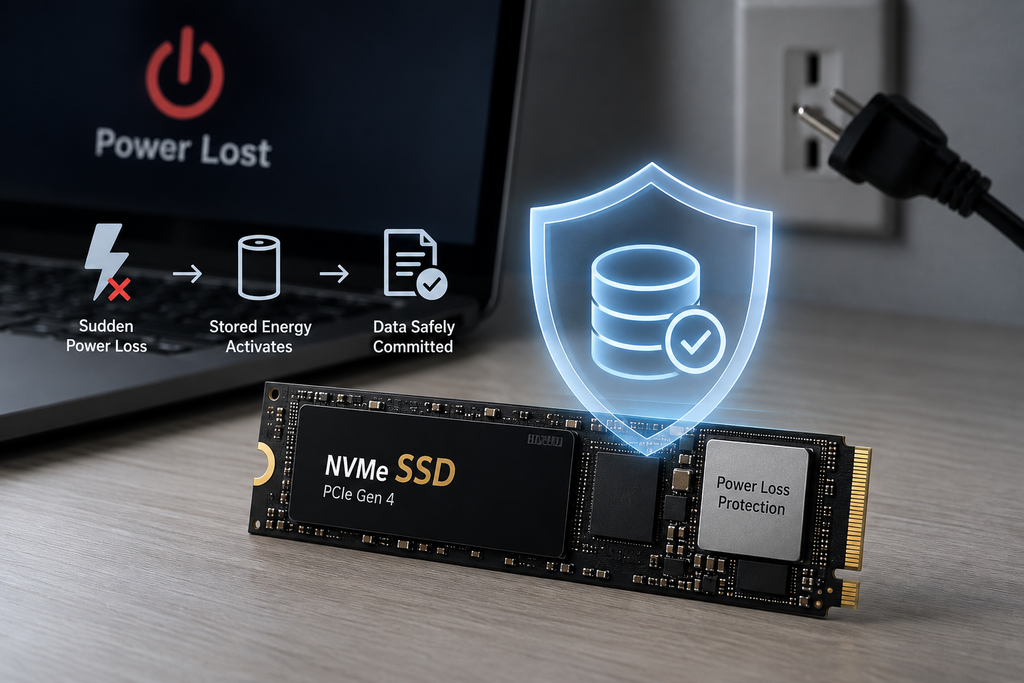
The absence of PLP in consumer-grade drives poses a significant risk in professional settings. If power is cut while data is in the cache, that data is lost, and the drive’s file system may become corrupted, leading to total drive failure. Professional applications often involve continuous write operations, increasing the window of vulnerability. Therefore, selecting SSD storage with PLP is about mitigating risk and ensuring business continuity. As we move into 2026, regulatory compliance in industries like healthcare and finance is expected to tighten, making data integrity features like PLP a mandatory requirement for IT procurement.
Integrating PLP requires additional components and engineering, which adds to the cost of the internal SSD drive. However, this cost is negligible compared to the potential financial impact of data corruption or system recovery efforts. When engaging in wholesale contracts, businesses should verify the PLP capabilities of different drive tiers. Some manufacturers offer varying levels of protection, such as full capacitor-backed protection or firmware-based recovery solutions. Understanding these distinctions allows buyers to choose the appropriate level of security for their specific risk profile and application requirements.
Moreover, the presence of PLP is often a marker of overall drive quality. Manufacturers who include this feature typically subject their products to more stringent quality control and validation processes. By focusing on drives with PLP, wholesale buyers are effectively filtering for higher-quality, more reliable hardware overall. This focus on quality assurance is crucial for building a trusted supply chain and delivering products that professional clients can rely on for their most critical data storage needs.
2.3 Which Thermal Management Solutions Ensure Longevity
Heat is the enemy of electronic components, and high-performance internal SSD drives are no exception. As data transfer rates increase with PCIe Gen4 and Gen5, so does the amount of heat generated by the controller and NAND chips. Excessive heat can lead to thermal throttling, where the drive intentionally slows down to cool off, negating its performance benefits. In extreme cases, prolonged exposure to high temperatures can degrade the NAND cells and shorten the drive’s lifespan. Therefore, effective thermal management is a defining characteristic of the best internal SSD for professional use.
Professional workstations and servers often employ active cooling solutions, but the drive itself must also be designed to dissipate heat efficiently. This includes the use of high-quality thermal interface materials and, in some cases, integrated heatsinks. For wholesale buyers, the physical design of the SSD storage is a critical consideration. Custom solutions can include bespoke heatsinks designed to fit specific chassis layouts, ensuring optimal airflow and thermal transfer. This level of integration is essential for maintaining peak performance in compact, high-density environments such as blade servers.
Market trends in 2025 indicate a move towards standardized thermal management protocols that allow the system to actively monitor and adjust drive temperatures. The best internal SSD drives support these standards, communicating with the host system to modulate power consumption based on thermal conditions. For businesses deploying large numbers of drives, this dynamic management helps prevent localized hotspots and reduces the load on facility cooling systems, contributing to overall energy efficiency. Wholesale procurement should prioritize drives that offer smart thermal management features as part of their firmware package.
Furthermore, the material quality of the drive’s PCB and components plays a role in thermal resilience. Industrial-grade SSDs often use components rated for wider temperature ranges, making them suitable for harsh environments. Whether for field operations or factory floors, customized internal SSD drives can be sourced to meet specific thermal tolerances. By addressing thermal management at the component level, businesses can significantly extend the operational life of their storage investments, ensuring consistent performance even under the most demanding thermal loads.
3. Which Form Factors and Interfaces Suit Enterprise Needs
3.1 Why M.2 and U.2 Are Dominating the Market
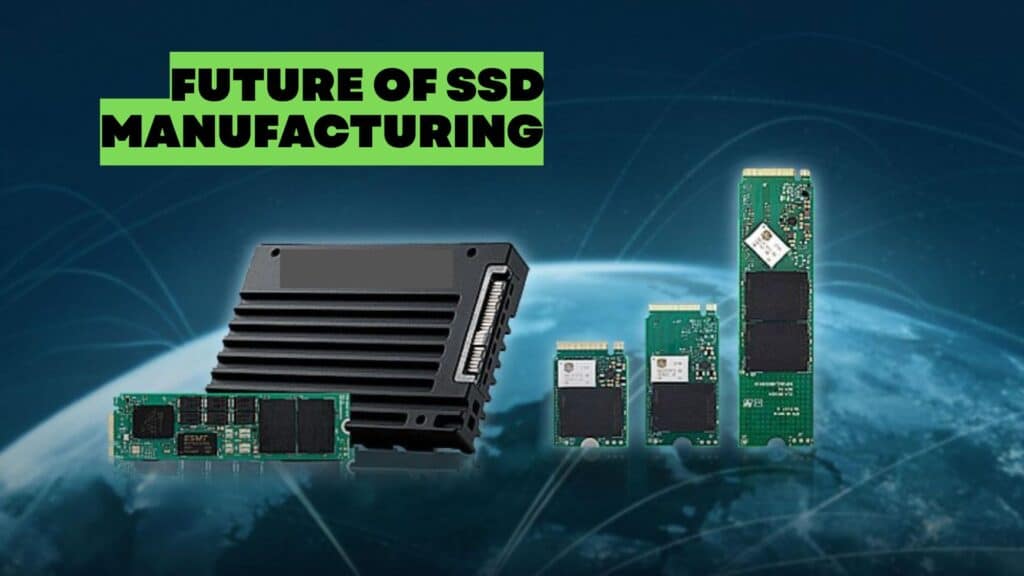
The physical form factor of an internal SSD drive dictates its compatibility and use case within enterprise infrastructure. The M.2 form factor, particularly the 2280 size, has become ubiquitous in workstations and laptops due to its compact size and direct integration with the motherboard. For space-constrained environments and high-density computing, M.2 offers an unparalleled balance of footprint and performance. Wholesale buyers supplying components for modern office builds and creative workstations will find M.2 to be the standard requirement, necessitating a robust inventory of various capacities and performance grades.
However, for servers and high-end enterprise storage arrays, the U.2 (formerly SFF-8639) form factor often holds the advantage. U.2 drives are typically 2.5 inches, resembling traditional hard drives, which makes them hot-swappable in many enterprise chassis. This hot-swap capability is crucial for data centers where maintenance must occur without downtime. Additionally, U.2 drives often support higher power envelopes and better thermal dissipation than M.2, allowing them to sustain high performance more reliably. The best internal SSD selection for enterprise clients, therefore, often includes a mix of M.2 for edge devices and U.2 for core server infrastructure.
Looking towards 2026, the industry is also seeing the rise of the E1.S form factor, designed specifically for data center efficiency. E1.S allows for better airflow and scaling in rack-mounted servers. While not yet as common as M.2 or U.2, forward-thinking wholesale strategies should begin to account for these emerging standards. By maintaining relationships with manufacturers who are innovating in form factors, businesses can ensure they are ready to supply the latest SSD storage solutions as data center architectures evolve. This adaptability is key to long-term success in the volatile hardware market.
Customization in form factors goes beyond the shape of the drive; it includes the connector interface and the specific pinouts required by the host system. Some industrial applications require proprietary or ruggedized connectors that differ from the standard consumer interfaces. A capable wholesale partner can facilitate the production of custom internal SSD drives that meet these specific mechanical requirements, ensuring seamless integration into specialized hardware. This capability to source bespoke form factors distinguishes a top-tier supplier from a generalist distributor.
3.2 How SATA Remains Relevant in Hybrid Environments
Despite the dominance of NVMe, the SATA interface continues to play a vital role in professional storage ecosystems. SATA SSDs offer lower costs per gigabyte and are sufficient for applications that do not require the extreme bandwidth of NVMe. In many hybrid environments, SATA internal SSD drives are used for bulk storage, archiving, and boot drives, while faster NVMe drives handle the active working data. For wholesale buyers, ignoring SATA would be a mistake, as it remains a volume driver for many IT departments looking to upgrade legacy systems without a complete platform overhaul.
The reliability and maturity of the SATA interface make it a dependable choice for critical but low-throughput tasks. For instance, a file server serving documents to an office network does not need NVMe speeds but benefits greatly from the durability and low latency of an SSD compared to an HDD. Furthermore, SATA drives typically consume less power than their high-speed NVMe counterparts, making them an energy-efficient choice for secondary storage roles. The best internal SSD strategy involves a tiered storage approach, where SATA drives handle the “cold” data, preserving the expensive NVMe bandwidth for “hot” data.
In 2025 and 2026, we expect to see SATA SSDs continue to increase in capacity while maintaining cost advantages. This makes them ideal for surveillance, digital signage, and point-of-sale systems where large amounts of data need to be stored reliably. Wholesale suppliers can leverage this by offering high-capacity SATA SSD storage bundles to clients in these sectors. By understanding the distinct roles of different interfaces, buyers can architect storage solutions that optimize performance while adhering to budget constraints.
Moreover, the transition from HDD to SATA SSD is often the first step in modernizing an older IT infrastructure. For many small to medium-sized businesses, this upgrade offers the most noticeable performance improvement per dollar spent. Wholesale channels that stock a wide range of SATA internal SSD drives are well-positioned to capture this segment of the market. By offering upgrade kits and consultation services, suppliers can add value and assist clients in navigating the complexities of interface compatibility and migration.
3.3 Which Interface Protocols Future-Proof Your Investment
The interface protocol determines the language and speed of communication between the SSD and the host system. While NVMe is the current standard for high performance, the evolution of the PCIe bus is crucial for future-proofing investments. PCIe Gen5 is currently entering the market, doubling the bandwidth of Gen4, and roadmap projections for 2026 already hint at Gen6 developments. For businesses investing in high-end workstations or servers, selecting an internal SSD drive that supports the latest available PCIe protocol ensures that the storage subsystem remains viable for years to come.
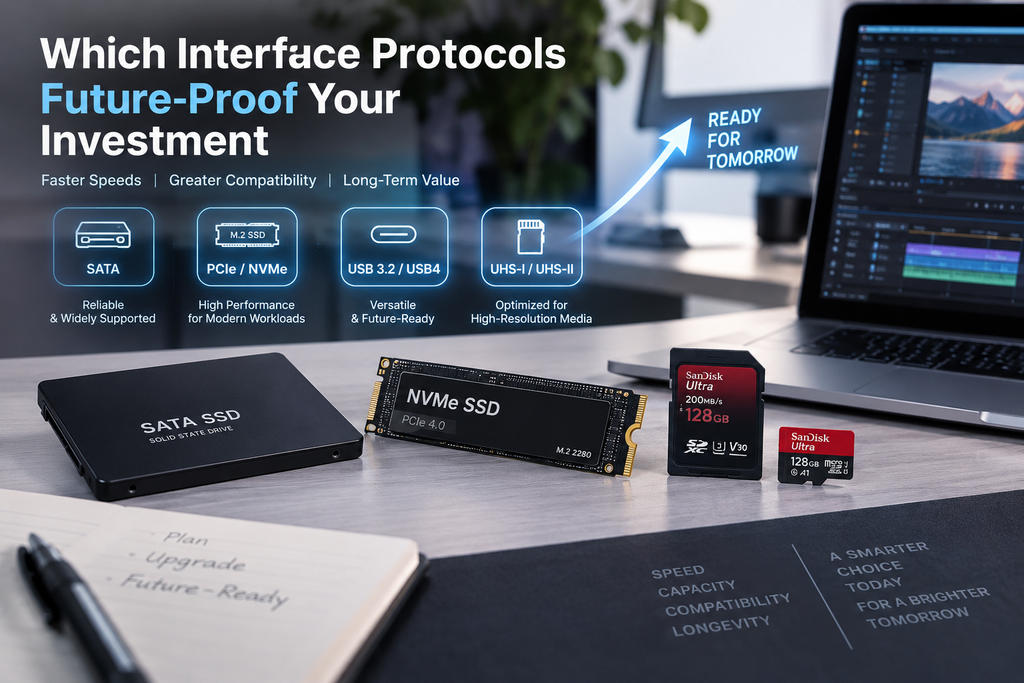
However, simply having the latest interface is not enough; the entire platform must support it to realize the benefits. Wholesale buyers must be knowledgeable about the compatibility matrices of motherboards and host bus adapters (HBAs). Selling a Gen5 SSD to a client with a Gen3-only system results in wasted potential and unhappy customers. Therefore, a consultative sales approach that pairs SSD storage with compatible hardware solutions is essential. This holistic view of the system architecture enables suppliers to provide genuine value rather than just moving boxes.
Firmware support is another aspect of interface protocol longevity. The best internal SSD manufacturers provide regular firmware updates that optimize performance and compatibility with new operating systems and chipsets. When sourcing wholesale drives, it is important to consider the manufacturer’s track record for support and updates. This is particularly relevant for enterprise clients who maintain hardware for five to seven years. A drive with excellent long-term support reduces the total cost of ownership and mitigates security risks associated with outdated firmware.
Ultimately, future-proofing is about balancing current needs with an eye on scalability. While cutting-edge interfaces command a premium, they offer a longer useful life. Wholesale strategies should offer a tiered product line that includes established interfaces for immediate value and bleeding-edge protocols for early adopters. By catering to both segments, suppliers can navigate the rapid pace of technological change and ensure their clients always have access to the most appropriate SSD storage solutions for their specific timelines and performance goals.
4. Why Customization is Critical for B2B SSD Storage Solutions
4.1 Why OEM Branding Builds Client Trust
For many B2B resellers and system integrators, the hardware they supply is an extension of their own brand identity. Utilizing generic, unbranded internal SSD drives can dilute the brand value and suggest a lack of quality control. Conversely, engaging in wholesale programs that offer OEM (Original Equipment Manufacturer) branding allows businesses to market SSD storage under their own logo. This customization builds trust with end clients, who see a cohesive, branded solution rather than a collection of disparate parts. It signals that the integrator stands behind the quality of the entire system, including the storage components.
The process of OEM branding extends beyond simply printing a logo on the sticker. It encompasses custom packaging, serial number schemes, and product documentation tailored to the reseller’s specifications. This level of detail reinforces the professional image of the supplier. In competitive markets for 2025, where technical specifications are often similar across brands, the strength of the relationship and the assurance of a trusted brand name become key differentiators. Wholesale suppliers that facilitate seamless OEM integration empower their partners to leverage this brand equity effectively.
Furthermore, customized branding allows for better inventory management and warranty support. When drives are branded specifically for a particular company, RMA (Return Merchandise Authorization) processes are streamlined, as the origin of the product is indisputable. This reduces administrative overhead and speeds up service times for end-users. For the best internal SSD experience in a B2B context, the ease of support is just as important as the drive’s performance. Custom branding creates a closed loop of accountability between the supplier, the reseller, and the customer.
As we look towards 2026, the demand for white-label solutions in the enterprise sector is expected to grow. Large corporations and institutions often prefer to standardize on internally branded hardware for security and consistency. Wholesale manufacturers with flexible production lines can accommodate these needs, running batches that meet specific aesthetic and labeling requirements. By offering these services, suppliers become strategic partners rather than mere vendors, deeply embedded in their clients’ go-to-market strategies.
4.2 How Firmware Tuning Optimizes for Specific Workloads
While hardware dictates the maximum potential of a drive, firmware determines how that potential is utilized in real-world scenarios. Off-the-shelf internal SSD drives are configured for average consumer use, which may not be ideal for specialized professional applications. Through wholesale customization, businesses can request firmware modifications that tune the SSD storage for specific workloads, such as video surveillance, data logging, or high-frequency trading. This tuning can adjust parameters like write-caching algorithms, wear leveling strategies, and read prefetch to maximize performance for the target application.
For example, a drive intended for a video surveillance system needs to be optimized for continuous sequential writes, whereas a drive for a database server needs to excel at random IOPS. Generic firmware attempts to balance these, often resulting in mediocre performance in both areas. Custom firmware removes this compromise. By 2025, the sophistication of firmware tuning is expected to increase, with AI-driven algorithms that can adapt to workload patterns in real-time. Wholesale partners that offer these advanced customization options provide immense value to clients with demanding and specialized computing needs.
Security is another critical aspect of firmware customization. Professional clients often require advanced features such as TCG Opal 2.0 compliance, secure erase, or cryptographic erasure for data sanitization. Custom firmware can lock down features that are not needed and enhance those that are critical for security compliance. This is particularly relevant for government and healthcare sectors, where data privacy regulations are stringent. Supplying the best internal SSD with pre-configured security settings ensures that clients are compliant out of the box, reducing deployment time and risk.
The ability to customize firmware also extends to power management. For mobile or remote deployments, such as in ruggedized laptops or IoT gateways, firmware can be tuned to minimize power consumption while maintaining acceptable performance levels. This customization is vital for applications where battery life is a primary constraint. Wholesale suppliers that possess deep firmware engineering expertise can collaborate with B2B clients to develop bespoke storage solutions that are perfectly aligned with their operational requirements, thereby solving complex engineering challenges at the storage layer.
4.3 Which Supply Chain Strategies Ensure Consistency
In the wholesale market for internal SSD drives, consistency of supply is as important as the quality of the product itself. The global semiconductor supply chain has faced significant disruptions in recent years, highlighting the risk of relying on spot markets for critical components. For B2B clients, particularly those in manufacturing and enterprise IT, a disruption in the supply of SSD storage can halt production lines or delay critical infrastructure upgrades. Therefore, wholesale strategies must focus on securing allocated capacity and long-term supply agreements with manufacturers.
Building a resilient supply chain involves diversifying sources while maintaining strict quality control. The best internal SSD suppliers have relationships with multiple NAND flash manufacturers and controller vendors, insulating their clients from shortages affecting a single supplier. Additionally, they offer buffer stock programs or vendor-managed inventory (VMI) systems to ensure that clients always have drives available when needed. This logistical support is a key component of the wholesale value proposition, transforming a simple transaction into a strategic partnership that mitigates supply chain risk.
Forecasting demand is becoming increasingly complex as technology cycles accelerate. By 2026, the industry expects rapid transitions between NAND generations and interface standards. A proactive wholesale partner helps clients navigate these transitions by providing advance notice of end-of-life (EOL) products and facilitating smooth cross-over programs to newer technologies. This ensures that clients are not caught with obsolete inventory and can seamlessly upgrade their SSD storage solutions without architectural overhauls.
Customization also extends to the supply chain configuration itself. Some clients may require kitting services, where the internal SSD drive is pre-installed in a chassis or bundled with other components. Others might require specific shipping configurations or labeling for global distribution. A flexible wholesale operation accommodates these logistical nuances, acting as an extension of the client’s own operations. This level of service ensures that the physical delivery of the product is as efficient and tailored as the technical configuration of the hardware itself.
Conclusion
Selecting the best internal SSD for professional applications involves a comprehensive analysis of speed, reliability, form factors, and the strategic value of customization. As we progress through 2025 and look toward 2026, the role of storage in the enterprise ecosystem will continue to grow in complexity and importance. By prioritizing SSD storage solutions that offer high endurance, advanced thermal management, and the appropriate interface protocols, businesses can build robust infrastructures capable of handling the data demands of the future. The focus must always remain on matching the technical specifications of the drive to the precise requirements of the professional workflow.
For wholesale buyers and system integrators, the opportunity lies in moving beyond generic commodities. Embracing OEM branding, firmware tuning, and resilient supply chain strategies allows businesses to differentiate themselves in a crowded market. The internal SSD drive is no longer just a component; it is a configurable asset that can be optimized to deliver superior value. By partnering with manufacturers who understand these nuances and offer deep customization capabilities, B2B clients can secure a competitive edge and deliver exceptional performance to their end-users.
The evolution of technology dictates that businesses must remain agile, constantly evaluating new standards and innovations. However, the fundamental principles of quality, reliability, and fit-for-purpose design remain constant. Whether upgrading existing infrastructure or deploying new systems in 2026, the decisions made today regarding SSD storage will have a lasting impact on operational efficiency. Investing in high-quality, customizable internal SSD drives is an investment in the future stability and success of any professional endeavor.
To explore how our wholesale and customization services can meet your specific needs for professional SSD storage, contact our team today. We are dedicated to providing the best internal SSD solutions tailored to your unique business requirements, ensuring you stay ahead of the curve in a data-driven world. Let us help you build the storage infrastructure that will power your success for years to come.
Frequently Asked Questions
1. Why is the IOPS rating important for professional SSDs?
High IOPS ensures smooth multitasking and fast database access in busy work environments. It prevents system lag when handling numerous small data operations simultaneously.
2. What distinguishes the best internal SSD for professional use?
Professional drives prioritize sustained write speeds, high endurance, and thermal stability over peak consumer performance. They also offer customizable firmware for specific enterprise workloads.
3. How does power loss protection benefit business data?
It safeguards critical data by flushing cached information to non-volatile memory during sudden outages. This feature prevents data corruption and ensures system integrity in enterprise environments.
4. Why is PCIe Gen4 considered the standard for professional workflows?
It offers an optimal balance of high bandwidth, cost-effectiveness, and thermal management for current applications. Gen4 drives provide ample speed for demanding tasks without the excessive heat of Gen5.
5. What role does TBW play in selecting SSD storage?
TBW measures the total data a drive can write before potential failure, indicating its lifespan. Higher TBW ratings are essential for write-intensive professional operations to ensure long-term reliability.
6. How can wholesale customization improve my IT procurement?
Customization allows you to tailor drive specifications, branding, and firmware to exact business requirements. This approach optimizes performance while strengthening your brand identity and supply chain.
7. Which form factor is best for high-density server environments?
The U.2 form factor is often preferred for servers due to its hot-swap capability and better thermal dissipation. It fits standard 2.5-inch bays, making it ideal for scalable enterprise infrastructure.
8. Why is thermal management critical for internal SSD drives?
Effective cooling prevents thermal throttling, which can significantly reduce performance during heavy workloads. Proper thermal solutions also extend the lifespan of the drive by protecting components from overheating.
9. How does OEM branding add value to B2B products?
It creates a cohesive brand experience that builds trust with your end clients. Custom branding also simplifies warranty processes and inventory management for resellers and system integrators.
10. What makes SATA SSDs relevant in modern hybrid environments?
SATA drives offer a cost-effective solution for bulk storage and archiving where extreme speed is not the priority. They provide reliable performance for boot drives and secondary storage at a lower price point.