
How to Choose the Best SATA III SSD for Speed, Storage, and Value

1. How to Approach the Market for the Best SATA III SSD
The landscape of enterprise data storage continues to evolve, yet the demand for reliable, cost-effective solutions remains a constant priority for B2B buyers. Selecting the best SATA III SSD requires a strategic approach that moves beyond basic consumer reviews, focusing instead on bulk scalability, component longevity, and supply chain stability. Wholesale buyers must navigate a complex market where technological advancements compete with the practical reality of legacy system maintenance. Understanding the fundamental drivers behind this sustained demand ensures that procurement teams make investments that yield long-term operational stability.
This trend is happening because a massive installed base of global enterprise infrastructure cannot easily transition to newer interfaces without complete, costly hardware overhauls. For businesses operating on strict capital expenditure budgets, retrofitting existing hardware with a high-quality sata iii internal ssd provides an immediate, measurable boost in system responsiveness. The cost-to-performance ratio of this specific technology makes it an incredibly attractive proposition for large-scale IT refreshes. Consequently, distributors and system integrators are actively seeking bulk purchasing agreements that align perfectly with these operational realities.
The impact on buyers is significant, as the wrong procurement choice can lead to high failure rates, increased warranty claims, and severely damaged client relationships. When sourcing a 2.5 inch sata ssd for enterprise deployment, buyers must evaluate the underlying NAND flash quality, the robustness of the controller, and the thermal management capabilities of the drive. A drive that performs adequately in a consumer laptop may fail catastrophically in a continuous industrial environment. Procurement strategies must therefore prioritize enterprise-grade validation over consumer-facing marketing metrics.
Businesses should respond by partnering directly with manufacturers that offer comprehensive customization and rigorous batch testing capabilities. By establishing direct supply lines for the best sata iii ssd models, B2B buyers can dictate the specific components used, ensuring absolute consistency across massive deployments. This approach mitigates the risks associated with off-the-shelf retail products, where internal components can change from one production batch to another without notice. A proactive, specification-driven procurement strategy ultimately protects the buyer’s brand reputation and bottom line.
1.1 How Legacy Infrastructure Drives Sustained Wholesale Demand
Industrial PCs, medical devices, and legacy servers form the backbone of many global enterprises, and these systems heavily rely on traditional storage interfaces. Upgrading these machines with a reliable 2.5 inch sata ssd extends their viable lifecycle by several years, deferring massive capital expenditures. System integrators specifically target this installed base because the upgrade path is simple, non-disruptive, and highly profitable. The sheer volume of these aging yet functional systems guarantees a steady, high-volume demand stream for wholesale distributors.
The reason this specific demand persists is that the financial burden of replacing entire systems often outweighs the performance benefits of migrating to newer form factors. A sata iii internal ssd delivers a transformative performance increase to systems originally designed for mechanical hard drives. IT departments recognize that the primary bottleneck in these older machines is almost always the storage read and write speed. Addressing this single bottleneck restores workstation efficiency at a fraction of the cost of a full system replacement.
Buyers are affected by this dynamic because they must accurately forecast the longevity of this legacy demand to avoid inventory shortages or overstock situations. Underestimating the need for the best sata iii ssd can result in lost contracts with major enterprise clients who require standardized, multi-year rollouts. Conversely, overstocking as the market eventually shifts could lead to depreciating assets. Buyers must develop deep relationships with their end-users to accurately map out hardware refresh cycles and anticipate volume requirements.
Businesses should respond by establishing framework agreements with original design manufacturers that guarantee fixed pricing and component consistency for extended periods. Securing a dedicated production line for a specific sata iii internal ssd configuration ensures that supply remains stable even as the broader market shifts toward newer technologies. Distributors can also respond by offering comprehensive installation kits and migration services, adding value beyond the physical hardware. This end-to-end service model solidifies client loyalty and maximizes the revenue extracted from the legacy upgrade market.
1.2 Why Standardization Matters for B2B Procurement
Standardizing on a specific storage model allows enterprise IT departments to streamline their imaging, deployment, and troubleshooting processes. When a wholesale buyer commits to purchasing a single, tested configuration of a 2.5 inch sata ssd, they eliminate the variables that often cause software conflicts and driver issues. This uniformity is particularly critical in environments like call centers or educational institutions where hundreds of identical workstations must be deployed rapidly. Standardization reduces the total cost of ownership by minimizing the labor hours required for system administration.
This need for uniformity is happening because heterogeneous computing environments create exponential increases in technical support overhead. Helpdesk technicians must be trained on multiple drive types, and spare parts inventories become bloated and inefficient. By standardizing on the best sata iii ssd, organizations can stock a single spare part that is guaranteed to work across various machine types within their fleet. The operational friction created by mixed hardware environments is a hidden cost that B2B buyers are increasingly eager to eliminate.
Buyers are impacted because they must convince their clients to look past superficial specifications and focus on long-term operational harmony. Selling a standardized sata iii internal ssd solution requires the buyer to act as a consultant, demonstrating how a single, reliable drive model reduces downtime and simplifies IT asset management. If a buyer fails to secure a reliable, long-term supply of that specific standardized drive, the entire deployment strategy falls apart. The buyer assumes the responsibility of ensuring that the chosen standard remains available and consistent over the lifespan of the client’s hardware.
Businesses should respond by negotiating long-term supply contracts that lock in the exact bill of materials for their chosen drive standard. They should work with manufacturers to create a bespoke SKU that is exclusive to their distribution network, preventing competitor crossover and ensuring pricing stability. Responding to the need for standardization also involves offering advanced replacement services, where defective drives are swapped out seamlessly without requiring the client to troubleshoot. This level of dedicated support transforms a simple hardware transaction into a strategic IT partnership.
1.3 Which 2025 Statistics Highlight the Continued Market Dominance
Recent 2025 industry analyses reveal that the 2.5 inch sata ssd still commands a 34% share of the global enterprise storage shipment volume. Despite the aggressive marketing surrounding PCIe Gen 4 and Gen 5 interfaces, the actual unit sales of SATA-based drives remain remarkably resilient in the B2B sector. These statistics demonstrate that the transition away from SATA is happening much slower in commercial applications than consumer technology media often suggests. The data proves that wholesale buyers are still prioritizing compatibility and cost over maximum theoretical bandwidth.
The reason these statistics hold true in 2025 is the lingering impact of extended hardware lifecycles caused by recent global supply chain disruptions. Many organizations that extended the life of their IT equipment during the pandemic are now performing delayed refresh cycles using the same legacy chassis. Deploying the best sata iii ssd into these existing chassis is the most logical financial decision for CIOs managing constrained 2025 budgets. The sheer inertia of the installed corporate user base continues to generate massive, quantifiable demand for this specific interface.
Buyers must use these 2025 statistics to justify their inventory investments to stakeholders and financial partners. Carrying a deep inventory of sata iii internal ssd stock is no longer viewed as a risky bet on outdated technology, but rather as a strategically sound decision backed by current market data. These numbers empower buyers to push back against vendors who are prematurely trying to force a transition to more expensive NVMe solutions. The statistics provide the empirical evidence needed to confidently negotiate large-volume SATA purchases.
Businesses should respond by integrating these statistical trends into their marketing and sales collateral to educate their own customer base. Sharing 2025 market data positions the wholesale distributor as a knowledgeable industry authority rather than a simple hardware reseller. Businesses should also align their quarterly purchasing targets with these market share percentages, ensuring their inventory mix accurately reflects the realities of current enterprise demand. Leveraging this data effectively allows businesses to capture a larger portion of that proven 34% market share.
1.4 How 2026 Forecast Trends Shape Current Inventory Strategies
Looking at 2026 market insights, analysts forecast a strategic bifurcation in NAND flash production that will directly impact B2B procurement. As fabrication plants prioritize high-margin enterprise NVMe and automotive-grade flash, the production capacity dedicated to SATA-specific controllers and firmware is expected to contract slightly. This anticipated tightening of dedicated SATA production lines means that wholesale buyers cannot afford to rely on just-in-time inventory models. Forward-thinking buyers are already adjusting their 2025 purchasing strategies to buffer against the projected 2026 supply constraints.
This forecast is happening because NAND flash manufacturers must allocate their limited wafer starts to the most profitable product categories. The 2.5 inch sata ssd is increasingly viewed by foundries as a mature, low-margin product, leading to reduced investment in expanding its specific production capacity. While overall NAND supply may be sufficient, the specialized tuning and testing required for reliable SATA drives will become a bottleneck. This structural shift in manufacturing priorities is a predictable outcome of the technology lifecycle.
The effect on buyers is an urgent need to secure future inventory now, before the anticipated 2026 contraction begins to inflate prices or extend lead times. Buyers who wait until the market tightens will find themselves competing for limited production slots, severely compromising their ability to fulfill enterprise contracts. Recognizing this impending shift allows proactive buyers to lock in favorable pricing and guarantee availability for their clients. The 2026 forecast essentially acts as a warning signal for immediate procurement action.
Businesses should respond by converting their 2025 spot-purchasing habits into strategic, forward-contracted agreements that span into 2026. Engaging directly with ODMs to reserve manufacturing capacity for the best sata iii ssd ensures that the buyer is insulated from the expected market fluctuations. Businesses should also consider stocking up on critical components like SATA controllers independently, providing an extra layer of supply chain security. Taking decisive action based on 2026 insights transforms a potential supply crisis into a distinct competitive advantage.
2. Why the 2.5 Inch SATA SSD Remains the Optimal Form Factor
The physical architecture of the 2.5 inch sata ssd represents one of the most universally adopted and understood form factors in computing history. Its continued dominance in B2B channels is driven by its unparalleled compatibility with decades of existing computing chassis, external enclosures, and industrial mounting brackets. For businesses managing vast fleets of mixed-generation hardware, standardizing on this form factor drastically simplifies inventory management and deployment logistics. The enduring nature of this physical design ensures that it remains a cornerstone of hardware distribution strategies.
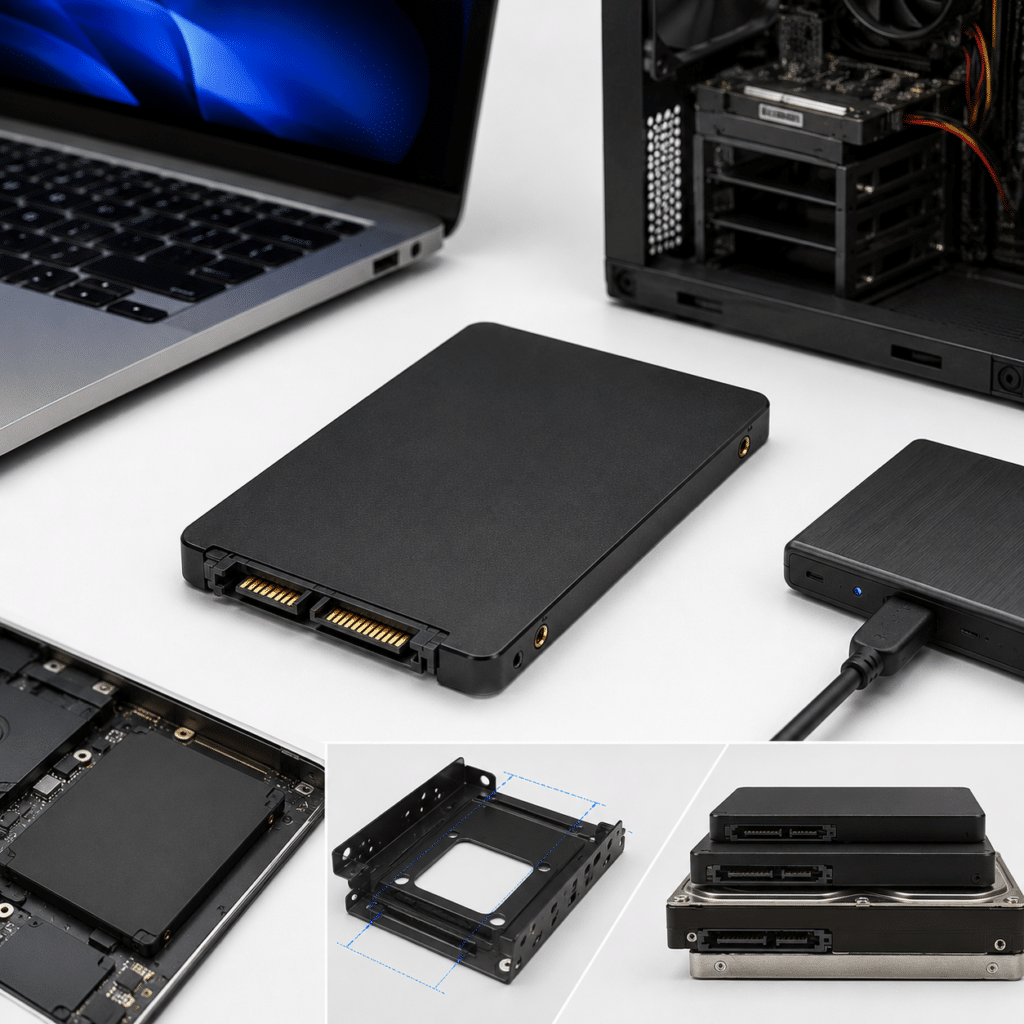
This sustained preference is happening because alternative form factors often require mechanical adapters or specialized mounting hardware that introduces points of failure. The 2.5 inch standard provides a rigid, secure fit in almost all legacy drive bays, ensuring proper grounding and physical stability in environments subject to vibration. Unlike delicate M.2 sticks that can snap or unseat, the traditional enclosure offers inherent physical protection for the internal circuitry. System integrators appreciate the robustness and predictability of this time-tested physical design.
Buyers are affected by this reality because deviating from the standard form factor introduces unnecessary complexity and cost into large-scale deployments. Sourcing a non-standard sata iii internal ssd requires additional training for field technicians and increases the likelihood of installation errors. When a buyer can guarantee that every drive fits perfectly into the existing infrastructure without modification, the deployment speed increases exponentially. The form factor choice is therefore a critical determinant of operational efficiency and total project cost.
Businesses should respond by ensuring that their core wholesale offerings are heavily weighted toward the standard 2.5 inch configuration, resisting the urge to prematurely push alternative sizes. They should also work with manufacturers to explore subtle physical customizations, such as specialized heat spreaders or ruggedized casings, that enhance the standard form factor without breaking compatibility. Maintaining a deep, readily available inventory of this standard size is the most effective way to serve the broadest possible B2B customer base.
2.1 How Universal Chassis Compatibility Reduces Deployment Costs
The primary advantage of the 2.5 inch sata ssd is its ability to drop seamlessly into existing hardware without requiring chassis modifications or adapter brackets. In large enterprise rollouts, the labor cost associated with installing storage often exceeds the cost of the storage itself. Eliminating the need to source, inventory, and fit specialized mounting hardware results in immediate, quantifiable savings. Universal compatibility ensures that field technicians can execute upgrades rapidly, minimizing system downtime and labor overhead.
This cost reduction mechanism is happening because IT departments are consistently asked to do more with less, driving a relentless focus on operational efficiency. When a sata iii internal ssd arrives on-site and immediately slides into the existing bay, the deployment timeline shrinks dramatically. There is no need to consult complex installation manuals or troubleshoot physical fitment issues. The simplicity of the standard form factor directly translates to a lower total cost of ownership for the end-user.
Buyers experience this benefit directly through increased customer satisfaction and higher repeat order rates. When clients realize that a wholesale purchase is saving them thousands of dollars in hidden deployment labor, they are highly likely to consolidate all future storage purchases with that specific buyer. Conversely, buyers who supply awkward form factors risk alienating their client base by creating unnecessary operational friction. The choice of form factor is therefore inextricably linked to the buyer’s long-term sales success.
Businesses should respond by prominently featuring the universal compatibility of their storage solutions in their B2B sales pitches. Creating detailed, client-facing documentation that highlights the zero-modification installation process adds significant perceived value to the hardware. Businesses should also ensure their sales teams are trained to calculate and present the labor cost savings associated with the standard form factor. Positioning the drive as a comprehensive cost-saving solution, rather than a mere component, accelerates the sales cycle.
2.2 Why Thermal Dynamics Favor the Traditional Enclosure
Thermal management is a critical, often overlooked factor in enterprise storage reliability, and the traditional enclosure offers distinct advantages in this area. The larger surface area of a 2.5 inch sata ssd allows for more efficient passive heat dissipation compared to densely packed M.2 modules. In enterprise environments where systems run 24/7, preventing thermal throttling is essential for maintaining consistent performance. The physical space inside the standard enclosure acts as a natural buffer against localized heat spikes.
This thermal advantage is happening because the SATA III interface inherently limits the maximum data transfer rate, preventing the extreme heat generation associated with high-speed PCIe drives. A well-engineered sata iii internal ssd operating within a 2.5-inch metal casing can often sustain steady-state workloads without requiring active cooling fans. The casing itself acts as a heatsink, drawing heat away from the sensitive NAND flash and controller chips. This passive cooling capability is highly valued in industrial and embedded computing applications.
Buyers are affected because thermal failure is one of the leading causes of premature drive degradation in enterprise environments. By selecting a form factor that naturally mitigates heat, buyers can reduce the number of thermal-related warranty claims they must process. Understanding thermal dynamics allows buyers to distinguish between a cheaply made drive that will overheat and a robustly designed best sata iii ssd built for continuous operation. This technical knowledge empowers the buyer to make smarter, more reliable sourcing decisions.
Businesses should respond by demanding detailed thermal profiling data from their manufacturing partners before committing to large wholesale purchases. They should inquire about the specific materials used in the drive casing, favoring aluminum alloys over cheaper plastics for enterprise-grade deployments. Businesses can also respond by offering custom-branded thermal pads or heat spreaders as value-added accessories with their bulk orders. Providing a thermally optimized storage solution demonstrates a deep commitment to enterprise reliability.
2.3 Which Industrial Applications Rely on This Specific Form Factor
The industrial sector represents a massive, highly lucrative vertical for wholesale storage distributors, and it relies heavily on the standard form factor. Applications such as factory automation controllers, CNC machines, medical imaging equipment, and in-vehicle computing systems almost universally utilize the 2.5 inch sata ssd. These environments require storage that can withstand extreme temperatures, continuous vibration, and intermittent power loss. The robust physical construction of the traditional enclosure is uniquely suited to meet these harsh operational requirements.
This reliance is happening because industrial hardware design cycles are significantly longer than consumer electronics, often spanning five to ten years. An industrial control system designed in 2018 will not suddenly adopt an M.2 slot in 2025. To upgrade the storage in these critical systems, integrators must use a sata iii internal ssd that matches the original physical and electrical specifications. The longevity and stability of the industrial market provides a consistent, recession-resistant revenue stream for savvy wholesale buyers.
Buyers must understand the stringent certification and testing requirements associated with industrial applications. A standard consumer drive, even in the correct form factor, will fail rapidly in a factory floor environment. Buyers looking to serve the industrial sector must source the best sata iii ssd specifically engineered with extended temperature tolerances and vibration resistance. Failing to recognize the specialized nature of industrial storage can lead to catastrophic field failures and severe financial liabilities for the distributor.
Businesses should respond by developing specialized industrial-grade SKUs that are rigorously tested against specific environmental standards. Partnering with a manufacturer to customize a 2.5 inch sata ssd with industrial-grade NAND and conformal coating on the PCB creates a highly defensible, high-margin product. Businesses should also invest in targeted marketing to industrial system integrators, showcasing their specialized testing protocols. Capturing the industrial market requires a deliberate shift from selling generic components to providing engineered solutions.
2.4 How Custom Enclosure Designs Add Wholesale Value
While the internal dimensions of the storage interface are fixed, the external enclosure of a 2.5 inch sata ssd offers significant opportunities for B2B customization. Wholesale buyers can differentiate their product offerings by specifying unique enclosure materials, colors, or branded laser engravings. A custom enclosure transforms a generic commodity into a proprietary product that competitors cannot easily replicate. This physical differentiation is a powerful tool for building brand identity in a crowded marketplace.
This trend toward physical customization is happening because B2B buyers are constantly searching for ways to protect their margins against relentless price competition. When a sata iii internal ssd features a custom-branded enclosure, it becomes much harder for a client to directly compare prices against a generic alternative. The custom design implies a higher level of quality control and exclusivity. Manufacturers are increasingly offering flexible tooling and low minimum order quantities for custom casings, making this strategy accessible to mid-tier distributors.
Buyers benefit from this approach because it allows them to build a recognizable brand presence in the field. When technicians open a server chassis and see a distinctly branded best sata iii ssd, it reinforces the distributor’s value proposition. Custom enclosures also serve an anti-counterfeiting function, making it easier for buyers to verify the authenticity of their inventory and protect their clients from fraudulent hardware. The visual distinctiveness provides both marketing and security benefits.
Businesses should respond by working closely with their manufacturing partners to design enclosures that reflect their corporate identity and emphasize the quality of the internal components. Even minor details, such as customized screw colors or tamper-evident stickers, can enhance the perceived value of the 2.5 inch sata ssd. Businesses should view the enclosure not just as a protective shell, but as a prime piece of real estate for brand communication. Investing in custom physical design is one of the most effective strategies for escaping the commodity pricing trap.
3. Which Performance Metrics Define a High-Quality SATA III Internal SSD
Evaluating the true performance of solid-state drives in a B2B context requires looking far beyond the sequential read and write speeds advertised on retail packaging. While the theoretical maximum bandwidth of the interface is capped, the real-world performance of a sata iii internal ssd is dictated by the efficiency of its flash management algorithms. Metrics such as steady-state write speeds, random input/output operations per second (IOPS), and latency consistency are the true indicators of enterprise-grade quality. Wholesale buyers must demand detailed technical datasheets that outline these specific metrics under varying workloads.
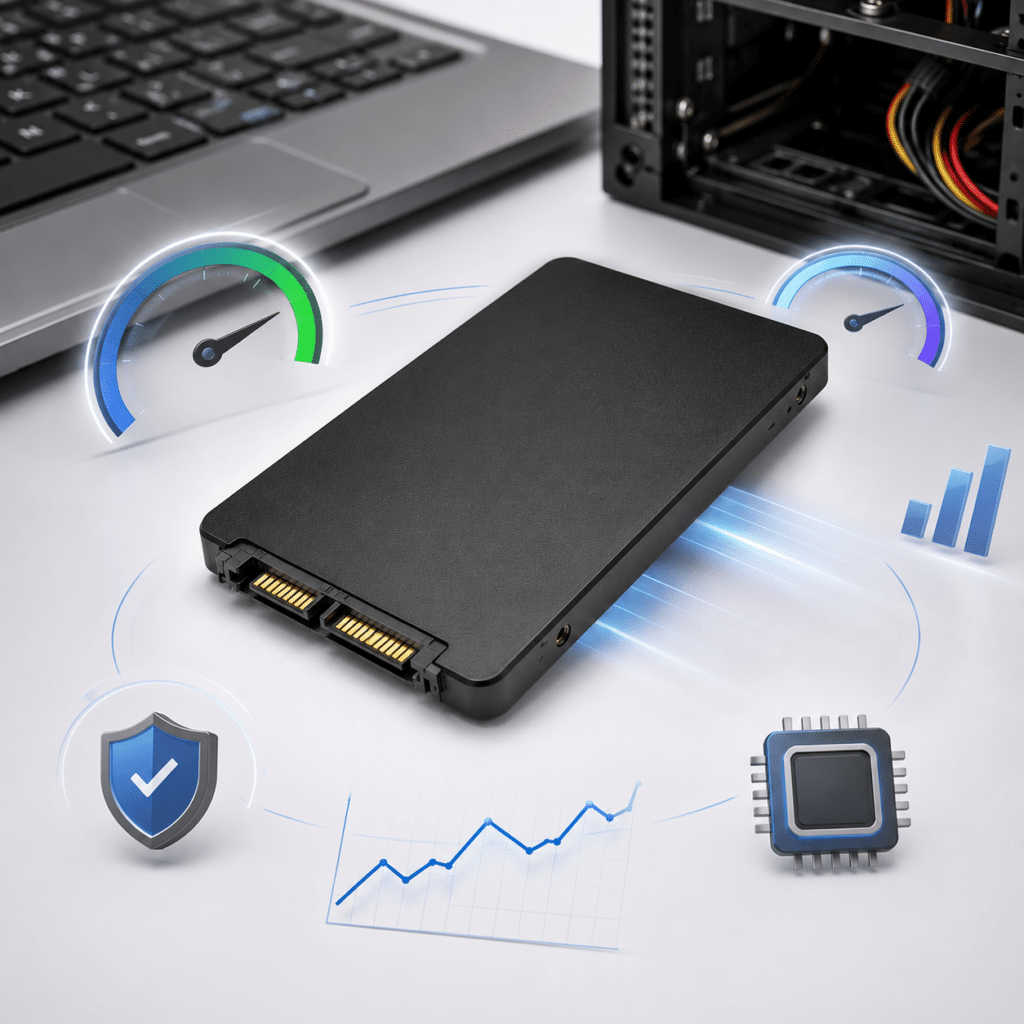
This focus on deeper metrics is happening because modern operating systems and enterprise applications rely heavily on rapid, small-block data access rather than massive, contiguous file transfers. A drive that boasts high sequential speeds but poor random read performance will feel sluggish during everyday business operations and database queries. The best sata iii ssd models utilize advanced caching algorithms and sophisticated wear-leveling techniques to maintain high IOPS even when the drive approaches capacity. Understanding these underlying technologies is essential for buyers who want to avoid purchasing drives that degrade severely under sustained use.
The effect on buyers is a much more complex procurement process, as two drives with identical interfaces and capacities can perform vastly differently in real-world deployments. A cheaply manufactured 2.5 inch sata ssd might perform adequately in a light-use scenario but will bottleneck an entire network when subjected to continuous logging tasks. Buyers who fail to scrutinize controller capabilities and NAND flash types risk inheriting massive technical support burdens. The hidden costs of troubleshooting and replacing underperforming drives quickly erase any initial upfront savings.
Businesses should respond by implementing strict benchmarking protocols for all sample batches before committing to large wholesale purchases. Procurement teams should request drives with specific controller models and NAND configurations, refusing to accept opaque units with unpredictable internal components. Establishing a baseline for steady-state performance ensures that the sata iii internal ssd being purchased will actually deliver the expected return on investment over its entire warranty period. This rigorous validation process is the only reliable way to separate high-performance enterprise drives from repurposed consumer-grade stock.
3.1 How Sequential Speeds Translate to Real-World Business Efficiency
Sequential read and write speeds measure how quickly a drive can transfer large, contiguous blocks of data, such as large databases, video files, or disk images. While the SATA III interface limits these speeds to approximately 550 megabytes per second, achieving and sustaining this speed is crucial for certain enterprise workflows. A high-quality 2.5 inch sata ssd that consistently hits its sequential limits will drastically reduce the time required for system cloning, data backups, and large file rendering. These time savings directly translate to increased employee productivity.
The reason this matters in B2B environments is that bottlenecks in data transfer can idle expensive human resources and delay critical business processes. If a sata iii internal ssd cannot maintain sequential write speeds during a heavy backup window, the backup extends into working hours, disrupting normal business operations. The best sata iii ssd models maintain their sequential speeds even when the drive is nearly full, thanks to efficient garbage collection routines. Consistent sequential performance is a hallmark of a well-engineered storage solution.
Buyers are affected because they must match the sequential speed capabilities of the drive to the specific workflows of their end-users. Overpaying for极致 sequential speeds for a client who only processes small text files is a misallocation of budget. Conversely, under-specifying sequential performance for a media production studio will result in immediate client complaints. Buyers must possess a deep understanding of their clients’ data profiles to make appropriate recommendations.
Businesses should respond by segmenting their wholesale inventory based on sequential performance tiers, creating targeted SKUs for different use cases. They should provide their sales teams with clear guidelines on which performance tier is appropriate for specific industries. Businesses can also respond by conducting their own independent sequential speed tests on incoming batches, publishing the results to build trust with technically savvy B2B clients. Providing transparent, verified performance data elevates the buyer from a simple reseller to a trusted technical advisor.
3.2 Why IOPS and Latency Are Critical for Enterprise Environments
Input/Output Operations Per Second (IOPS) measures how many small, random data requests a drive can handle simultaneously, making it perhaps the most critical metric for enterprise operating systems. Latency measures the time it takes for the drive to respond to a single request. A sata iii internal ssd with high IOPS and low latency ensures that servers running virtual machines or complex databases remain responsive even under heavy multi-user loads. These metrics dictate the subjective “snappiness” and reliability of an enterprise IT environment.
This focus on IOPS is happening because the vast majority of enterprise storage traffic consists of small, random reads and writes, not large sequential files. When dozens of employees access a central server simultaneously, the drive is bombarded with fragmented data requests. The best sata iii ssd models utilize advanced DRAM caches and optimized firmware to handle these random requests without stuttering. Drives that lack these features will experience severe latency spikes, causing applications to freeze or time out.
Buyers are profoundly affected by IOPS performance because it is the primary driver of end-user satisfaction in networked environments. A buyer who supplies low-IOPS drives to a corporate client will quickly face complaints about slow boot times, application lag, and unresponsive databases. These performance issues are often difficult to diagnose and can lead to costly, time-consuming troubleshooting engagements. Prioritizing IOPS over sequential speeds is essential for buyers serving the enterprise server and workstation markets.
Businesses should respond by demanding that their manufacturers provide detailed IOPS graphs at various queue depths, rather than relying on single, peak IOPS marketing numbers. They should establish minimum IOPS thresholds that must be met for a drive to be accepted into their wholesale inventory. Businesses should also educate their clients on the importance of IOPS, using it as a key differentiator to justify the premium pricing of higher-tier drives. Mastering the concept of IOPS allows businesses to sell based on technical value rather than capacity alone.
3.3 Which NAND Flash Types Dictate Long-Term Drive Reliability
The type of NAND flash memory used inside a 2.5 inch sata ssd is the single most important factor in determining its lifespan and reliability. Single-Level Cell (SLC) flash offers the highest endurance but is rarely used due to cost. Multi-Level Cell (MLC) provides a good balance of performance and durability. Triple-Level Cell (TLC) is the current mainstream standard, offering high densities at lower costs, while Quad-Level Cell (QLC) sacrifices endurance for maximum capacity. Wholesale buyers must understand these distinctions to avoid catastrophic failure rates.
This hierarchy of flash types is happening because manufacturers are constantly pushing the physical limits of silicon to increase storage densities and reduce costs. Storing more bits per cell physically degrades the cell faster, requiring increasingly complex error correction algorithms. A sata iii internal ssd built with cheap QLC flash may offer high capacity but will fail rapidly in write-intensive enterprise applications. The best sata iii ssd for B2B deployments typically utilizes high-quality TLC flash paired with robust controller technology to ensure a predictable lifespan.
Buyers are impacted because NAND type is often obscured or vaguely marketed by manufacturers trying to pass off inferior flash as enterprise-grade. A buyer who purchases QLC drives for a data-logging application will face massive return rates when the drives exhaust their write limits prematurely. The financial impact of unexpected drive mortality can destroy the profitability of a large wholesale contract. Buyers must possess the technical leverage to demand exact NAND specifications from their supply chain.
Businesses should respond by establishing strict, non-negotiable requirements for NAND flash type in their procurement contracts. They should refuse to purchase drives that do not clearly specify the NAND generation and manufacturer. Businesses can also respond by partnering with factories to source specialized, high-endurance TLC flash for their premium SKUs, clearly marketing the endurance advantage to their clients. Controlling and communicating the NAND flash type is the most effective way to guarantee product reliability in the wholesale market.
3.4 How Controller Algorithms Protect Data Integrity Under Stress
The storage controller is the brain of the drive, executing the complex algorithms that manage data placement, wear leveling, and error correction. A superior controller can make a standard 2.5 inch sata ssd outperform a drive with slightly better flash but an inferior controller. In enterprise environments, where drives are subjected to continuous, unpredictable workloads, the controller’s ability to maintain data integrity under stress is paramount. Advanced controllers utilize sophisticated LDPC (Low-Density Parity-Check) error correction to prevent data corruption.
This reliance on advanced controllers is happening because as NAND flash cells shrink in size, they become more prone to electrical interference and data retention errors. Without a highly capable controller, a sata iii internal ssd would quickly succumb to bit rot and data loss. The best sata iii ssd models feature enterprise-grade processors with dedicated SRAM caches to handle sudden power loss scenarios safely. The controller is ultimately responsible for translating the physical limitations of NAND into a reliable, seamless storage experience.
Buyers are affected because controller failures or firmware bugs can cause entire batches of drives to become unreadable, resulting in catastrophic data loss for the end-user. Buyers who do not scrutinize the controller architecture are essentially gambling with their clients’ data. A drive with an unproven or generic controller may perform well in short-term benchmarks but fail under the sustained stress of a 24/7 enterprise environment. The controller selection is therefore a critical fiduciary responsibility for the B2B buyer.
Businesses should respond by insisting on drives that utilize controllers from proven, reputable silicon vendors with a history of enterprise deployments. They should request detailed firmware change logs and validation reports from the manufacturer to ensure the software driving the controller is stable. Businesses should also respond by conducting extended stress tests on sample batches, specifically designed to trigger the drive’s error correction mechanisms. Verifying controller robustness through aggressive testing is the ultimate safeguard against field failures.
4. How to Maximize Value Through Customization and Supply Chain Resilience
In an increasingly commoditized hardware market, the ability to offer custom firmware and distinct branding is a powerful differentiator for wholesale buyers. Standard retail drives are configured for generic consumer use, but a tailored sata iii internal ssd can be optimized for specific applications, such as continuous video recording or industrial data logging. Custom firmware allows distributors to adjust parameters like power management, error correction levels, and garbage collection algorithms. This level of optimization transforms a generic component into a highly specialized, defensible solution.
This shift toward deep customization is happening because end-users are demanding hardware that seamlessly integrates with their specific software ecosystems without requiring constant manual intervention. Off-the-shelf drives may enter aggressive power-saving states that cause unacceptable latency drops in point-of-sale systems. By commissioning the best sata iii ssd with proprietary firmware, businesses can eliminate these friction points entirely. The factory-level programming ensures the drive behaves exactly as the end-user’s application requires, out of the box.
Buyers are profoundly affected by this capability because it allows them to transition from being mere hardware resellers to becoming trusted solution providers. Offering a custom-branded 2.5 inch sata ssd builds brand recognition in the field and creates a sense of exclusivity that protects against client poaching by competitors. However, this also means buyers must possess the technical acumen to specify firmware requirements accurately. A poorly configured custom firmware can be worse than a generic one, potentially leading to higher failure rates or compatibility issues.
Businesses should respond by investing in relationships with original design manufacturers that possess strong in-house firmware engineering teams. Instead of purchasing finished goods, businesses should collaborate with these manufacturers to develop unique firmware profiles that address documented pain points in their target industries. Coupling this optimized sata iii internal ssd with custom exterior branding and specialized packaging creates a highly profitable, unique product portfolio. This strategic shift from simple procurement to collaborative product development is essential for maximizing long-term B2B profitability.
4.1 Why Custom Firmware Elevates a Standard 2.5 Inch SATA SSD
Custom firmware allows a wholesale distributor to fine-tune the operational behavior of a drive to perfectly match a specific industry requirement. For example, a drive destined for a digital signage network can be programmed to prioritize read speeds and disable background garbage collection to prevent screen flickering. A standard 2.5 inch sata ssd lacks this level of targeted optimization, often attempting to perform generic maintenance tasks that interfere with specialized applications. Custom firmware bridges the gap between general-purpose hardware and specialized enterprise needs.
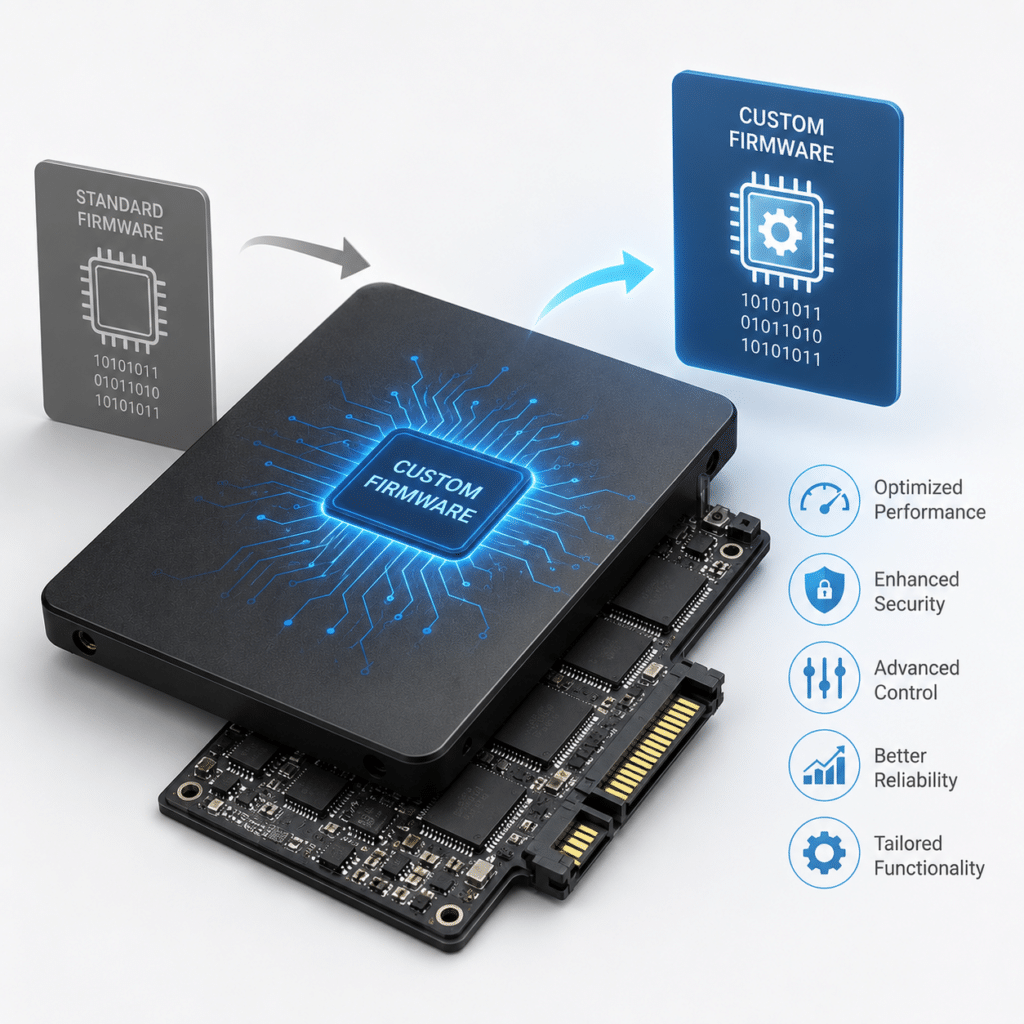
This demand for tailored firmware is happening because generic firmware is designed to please everyone, which ultimately means it excels in no specific environment. The constant background optimization performed by a standard sata iii internal ssd can cause unpredictable latency spikes that are disastrous for real-time systems. By stripping away unnecessary consumer features and hardcoding specific enterprise behaviors, the best sata iii ssd becomes a highly reliable, purpose-built tool. This targeted approach to drive management significantly reduces the technical support burden on the distributor.
Buyers benefit from offering custom firmware because it creates a massive moat around their customer accounts. Once a client’s infrastructure is tuned to rely on a specific custom firmware profile, switching to a competitor’s generic drive becomes technically difficult and risky. This lock-in effect provides incredible pricing power and long-term revenue stability for the buyer. However, the buyer must invest the time to thoroughly understand their client’s technical environment to specify the correct firmware parameters.
Businesses should respond by initiating pilot programs with their largest clients to identify specific firmware-related pain points in their current deployments. They should then work directly with their ODM partners to develop custom firmware builds that solve these exact problems. Businesses should also package this custom firmware as a premium “Enterprise Edition” or “Industrial Edition” upgrade, effectively creating a new, high-margin product tier. Leveraging custom firmware is the most technically sophisticated way to escape the commodity hardware market.
4.2 How White-Label Branding Captures B2B Market Share
White-label branding allows a wholesale buyer to present a manufacturer’s hardware under their own corporate identity, completely removing the original factory branding. Applying a custom logo, part number, and warranty contact information to a sata iii internal ssd transforms it into a proprietary product. This strategy is fundamental for distributors who want to build their own brand equity rather than simply acting as a logistics arm for a major manufacturer. White-labeling is the foundation of modern B2B hardware distribution.
This branding strategy is happening because the actual value of a storage drive often lies in the warranty support and supply chain reliability of the distributor, not just the silicon inside. End-users trust their local IT distributor to honor warranties and provide rapid replacements, regardless of which factory actually assembled the drive. By white-labeling the best sata iii ssd, the distributor captures all of this brand loyalty. The physical branding serves as a constant reminder to the end-user of the distributor’s value proposition.
Buyers are affected because managing a white-label program requires rigorous quality control and meticulous supply chain documentation. If a white-labeled 2.5 inch sata ssd fails, the buyer’s company is the one that looks bad to the end-user, even if the failure was a manufacturing defect. Buyers must implement strict incoming quality control protocols to ensure that only flawless drives carry their brand name. The success of a white-label strategy rests entirely on the buyer’s ability to police the quality of their supplier.
Businesses should respond by developing comprehensive brand guidelines that dictate exactly how their logo and information are applied to the drive and its packaging. They should invest in high-quality, tamper-evident packaging that reflects the premium nature of their brand. Businesses should also respond by building a dedicated, well-staffed RMA department capable of providing seamless warranty service for their white-labeled products. Delivering a premium white-label experience from production to end-of-life is the key to capturing and retaining B2B market share.
4.3 Which Quality Assurance Protocols Are Non-Negotiable
In the wholesale storage market, batch consistency is far more important than peak performance. A robust quality assurance protocol ensures that every single sata iii internal ssd in a shipment of ten thousand units performs identically and reliably. Non-negotiable protocols include 100% automated burn-in testing, rigorous vibration and temperature stress testing, and detailed SMART data verification. Skipping these steps to reduce unit costs is a guaranteed recipe for massive field failure rates and destroyed client relationships.
The necessity for these strict protocols is happening because the global supply chain for NAND flash is fraught with variability. B-grade flash chips, recycled components, and counterfeits constantly threaten to infiltrate the supply chain. Only a comprehensive, multi-stage testing regimen can identify and reject these substandard components before they reach the end-user. The best sata iii ssd is not defined by its marketing specifications, but by the rigor of the quality assurance process it undergoes before leaving the factory.
Buyers are impacted because they bear the ultimate financial and reputational risk for the quality of the products they distribute. A single bad batch of 2.5 inch sata ssd units can generate thousands of support tickets, overwhelming the buyer’s infrastructure and exhausting their warranty reserves. Buyers who do not explicitly define and enforce quality assurance protocols with their manufacturers are essentially outsourcing their quality control to chance. This lack of oversight is a critical vulnerability in any B2B distribution model.
Businesses should respond by requiring their manufacturing partners to provide detailed, batch-specific test reports for every shipment. They should mandate that every drive undergoes a minimum of four hours of burn-in testing at elevated temperatures to weed out early-life failures. Businesses should also consider deploying their own quality assurance personnel at the factory floor to oversee production and testing. Treating quality assurance as a core competency, rather than an afterthought, is the only sustainable path to B2B growth.
4.4 How to Finalize Your Procurement Strategy Today
Bringing together the elements of form factor compatibility, performance benchmarking, and supply chain resilience results in a comprehensive procurement framework. The ultimate goal is to secure a sata iii internal ssd that delivers uncompromising reliability and tangible value to the end-user while preserving the distributor’s profit margins. This finalization process requires a cross-functional effort, combining the technical insights of engineering teams with the financial rigor of procurement departments. Every specification must be documented, and every performance claim must be validated through empirical testing.
This holistic approach is necessary because the consequences of procurement failure extend far beyond the immediate financial loss of a bad batch of drives. In B2B environments, a failed 2.5 inch sata ssd can halt manufacturing lines, corrupt critical databases, or disable essential retail infrastructure, leading to cascading financial damages for the end-user. Distributors who supply subpar components face not only warranty replacement costs but also severe, often irreversible, damage to their market reputation. The stakes involved in enterprise hardware procurement demand a zero-tolerance policy for unverified components.
Buyers are ultimately empowered by adopting this meticulous, data-driven approach to sourcing the best sata iii ssd. By demanding transparency in component sourcing, insisting on customized firmware where applicable, and securing resilient supply chains, buyers shift the power dynamic in their favor. They transition from being passive recipients of whatever the retail market provides to becoming active architects of their product portfolios. This elevated position allows them to command higher margins and foster deeper, more loyal relationships with their client base.
Businesses should immediately initiate a comprehensive audit of their current storage supply lines to identify vulnerabilities in component consistency and pricing structures. The next logical step is to engage directly with established original design manufacturers to discuss bespoke wholesale and customization opportunities tailored to specific market segments. Contact our B2B solutions team today to request engineering samples, review detailed performance specifications, and discover how our factory-direct customization capabilities can elevate your hardware offerings in an increasingly competitive landscape.