

8TB External Hard Drive vs Cloud Storage: Which One Should You Choose?

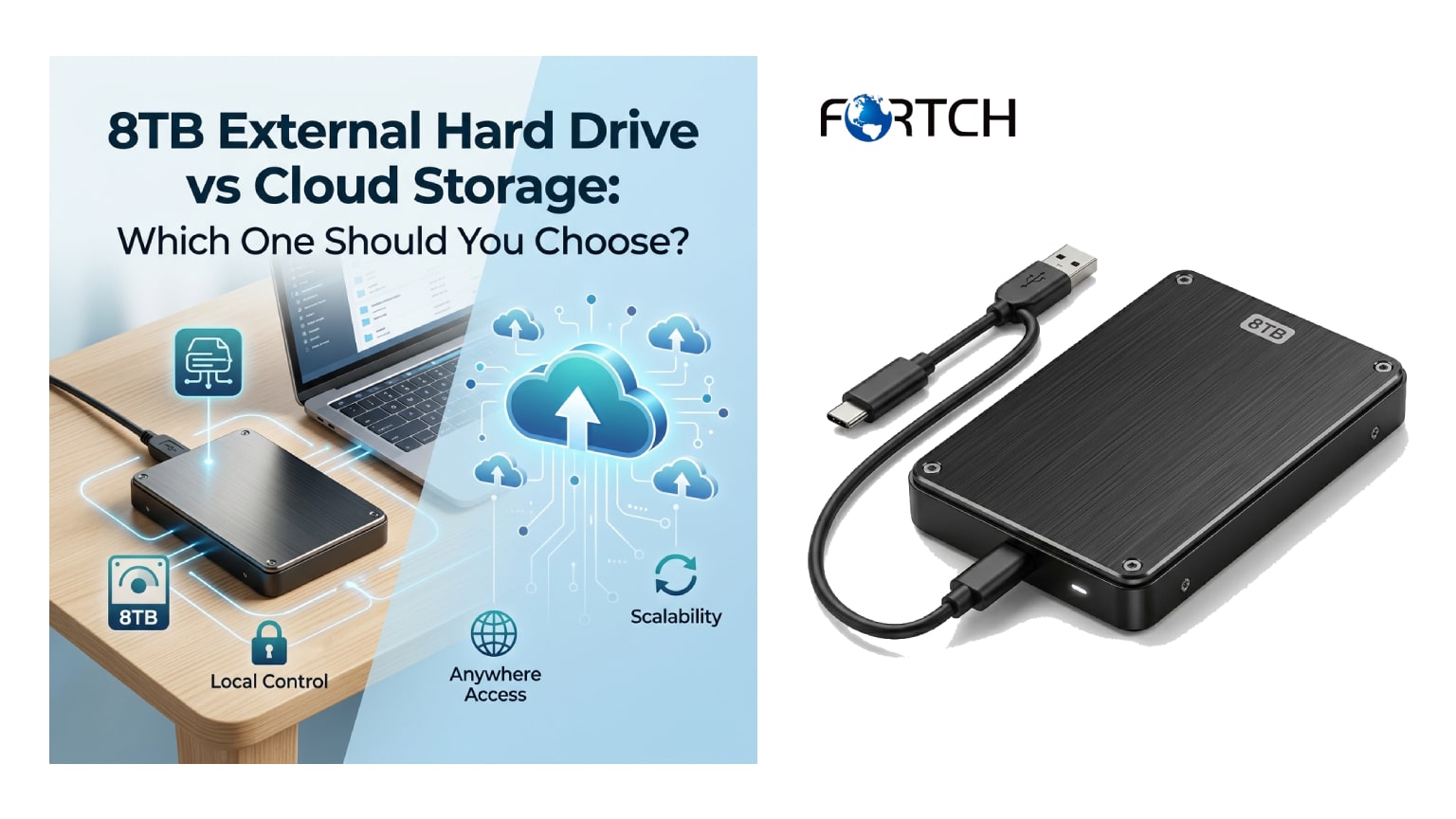
1. Why Strategic Data Management is Critical for 2025
The exponential growth of global data volumes has forced enterprises to re-evaluate their infrastructure strategies heading into 2025. With projections estimating the creation of over 180 zettabytes of data annually, businesses can no longer rely on a single storage method. The decision between physical hardware and cloud solutions is no longer just about capacity; it is about control, security, and operational continuity. Companies are realizing that a hybrid approach often yields the best results, yet the foundational need for reliable, high-capacity physical storage remains undeniable.
Cybersecurity threats are evolving rapidly, making data sovereignty a primary concern for wholesalers and B2B clients. While cloud services offer convenience, they also expose organizations to potential breaches, ransomware attacks, and third-party vulnerabilities. This reality is driving a significant shift back toward offline storage solutions for sensitive archives and critical backups. By retaining physical control over data, businesses eliminate the risks associated with shared cloud environments and ensure compliance with stringent data protection regulations.
The cost structure of data storage is undergoing a major transformation as cloud subscription fees continue to climb. For businesses managing massive libraries of high-definition media or extensive databases, the recurring operational expenditure (OpEx) of cloud storage becomes unsustainable. Capital expenditure (CapEx) on physical hardware, such as an 8TB external hard drive, offers a more predictable long-term financial model. This is particularly relevant for wholesale buyers who need to equip entire teams or product lines without worrying about monthly usage overages.
Operational efficiency is directly tied to data accessibility and transfer speeds. While cloud storage relies heavily on internet bandwidth, physical storage provides immediate access to files without latency. For creative agencies, engineering firms, and data-intensive sectors, this difference is crucial for maintaining productivity. As remote work persists, the ability to physically transport massive datasets without uploading or downloading them becomes a strategic advantage that cloud solutions simply cannot match.
2. Why an 8TB External Hard Drive is a Wholesale Favorite
An 8TB external hard drive represents the sweet spot for bulk storage requirements, offering unparalleled capacity for large-scale data archiving. In the wholesale market, high capacity is often synonymous with value, allowing businesses to store years of records, project files, and inventory data on a single device. The ability to consolidate vast amounts of information into a compact form factor simplifies inventory management and reduces the physical footprint required for storage solutions. This makes these drives ideal for B2B clients looking to streamline their IT infrastructure.
Durability and reliability have significantly improved in modern external storage, making them a trustworthy choice for long-term asset retention. Unlike cloud servers, which may suffer from service outages, a physical drive is always accessible as long as it is properly connected. For wholesale distributors, offering products with high shock resistance and robust casings ensures customer satisfaction. The tactile nature of an 8TB external hard drive provides a sense of security, knowing that critical business assets are physically within reach and safe from remote deletion.
Cost-effectiveness becomes immediately apparent when comparing the price per terabyte of physical drives versus cloud subscriptions. For a wholesale buyer purchasing in bulk, the initial investment is recovered quickly by the absence of monthly fees. This economic advantage is a key selling point for budget-conscious procurement managers. Furthermore, the longevity of a high-quality hard drive often spans several years, providing a better return on investment compared to the perpetual costs associated with cloud storage tiers.
Customization options for wholesale orders of large-capacity drives allow businesses to tailor hardware to their specific operational needs. Manufacturers can pre-load drives with specific software, encryption protocols, or marketing materials before shipping to clients. This value-added service transforms a simple storage device into a comprehensive business solution. By integrating custom branding or specific interface configurations, wholesalers can differentiate their offerings in a competitive market, making an 8TB external hard drive a versatile tool for client engagement.
3. How a Solid State External Hard Drive Enhances Performance
Speed is the defining characteristic of a solid state external hard drive, revolutionizing how data is accessed and transferred. Unlike traditional spinning disk drives, SSDs utilize flash memory to deliver read and write speeds that are exponentially faster. This performance boost is critical for businesses that handle large video files, complex databases, or real-time data processing. The reduction in file transfer times directly translates to increased productivity, allowing teams to complete projects faster without waiting for data to load.
The durability of a solid state external hard drive makes it superior for environments where physical shock or vibration is a concern. Without moving parts, these drives are inherently more resistant to drops and bumps, which is essential for field personnel and mobile workforces. For wholesalers and distributors, this reliability means fewer returns and lower warranty costs. Providing clients with a rugged storage solution ensures that their data remains safe even in demanding industrial conditions, thereby reinforcing the product’s value proposition.
Energy efficiency is another significant benefit that contributes to the total cost of ownership. SSDs consume less power than their mechanical counterparts, which is a crucial consideration for businesses deploying large numbers of drives. This lower power draw not only reduces electricity bills but also generates less heat, preventing thermal throttling in confined workspaces. As sustainability becomes a core corporate responsibility, offering energy-efficient solid state external hard drive options aligns with the green initiatives of many modern enterprises.
Silent operation is often an overlooked yet vital aspect of a professional workspace. The absence of mechanical noise from spinning disks creates a quieter, more focused environment for employees. In open-plan offices or recording studios, this silence is highly valued. Wholesale buyers can market these drives to premium clients who prioritize both performance and workplace comfort. The combination of speed, durability, efficiency, and silence makes the solid state external hard drive a premium choice for discerning B2B customers.
4. Why a Portable SSD Drive is Indispensable for Modern Teams
Mobility defines the modern workforce, and a portable SSD drive is the perfect enabler for this flexibility. Weighing just a few ounces, these devices allow professionals to carry terabytes of data in a pocket or laptop bag. This portability is crucial for consultants, sales teams, and creatives who need to access their work from various locations. The ability to move large assets quickly between the office, client sites, and home offices without dependency on internet connectivity represents a significant operational advantage.
The compact form factor of a portable SSD drive does not compromise its capacity, making it a marvel of modern engineering. For wholesale buyers, these devices are easy to ship, store, and distribute in large quantities. Their sleek design appeals to corporate clients who appreciate technology that is both functional and aesthetically pleasing. Customization can extend to the exterior finish, allowing companies to brand these drives with corporate logos or specific color schemes that align with their identity.
Data security on the go is a primary concern for businesses with mobile employees. High-end portable drives often come equipped with hardware encryption and fingerprint readers, ensuring that sensitive information remains protected even if the device is lost or stolen. For B2B procurement officers, specifying these security features is a standard part of risk management. A portable SSD drive with robust security protocols provides peace of mind, allowing teams to work remotely without fearing data breaches.
Collaboration is streamlined when team members can physically share large project files instantly. Cloud sharing can be cumbersome for massive files, often requiring download links or sync times that disrupt workflows. Passing a portable SSD drive between colleagues is instant and secure, facilitating a smoother creative process. This physical method of data transfer, often called “sneakernet,” remains relevant in high-bandwidth industries such as video production and 3D rendering, where speed and reliability are non-negotiable.
5. How Customization Drives Value in Storage Procurement
Customization is the key differentiator in the wholesale storage market, allowing suppliers to meet specific client demands beyond standard specifications. Businesses often require storage solutions that integrate seamlessly with their existing IT ecosystems, which may involve custom firmware, partitioning schemes, or pre-installed diagnostics tools. By offering these tailored solutions, wholesalers can position themselves as strategic partners rather than mere vendors. This deep level of engagement fosters long-term business relationships and increases customer loyalty.
Branding opportunities on physical storage devices serve as a powerful marketing tool for B2B clients. Companies can order bulk shipments of drives featuring their logo, corporate colors, and contact information. These branded drives are then used as promotional items, internal assets, or part of product packages for their own customers. A customized 8TB external hard drive becomes a billboard for the brand, providing ongoing exposure every time the device is used. This adds a layer of marketing value that generic cloud storage subscriptions cannot offer.
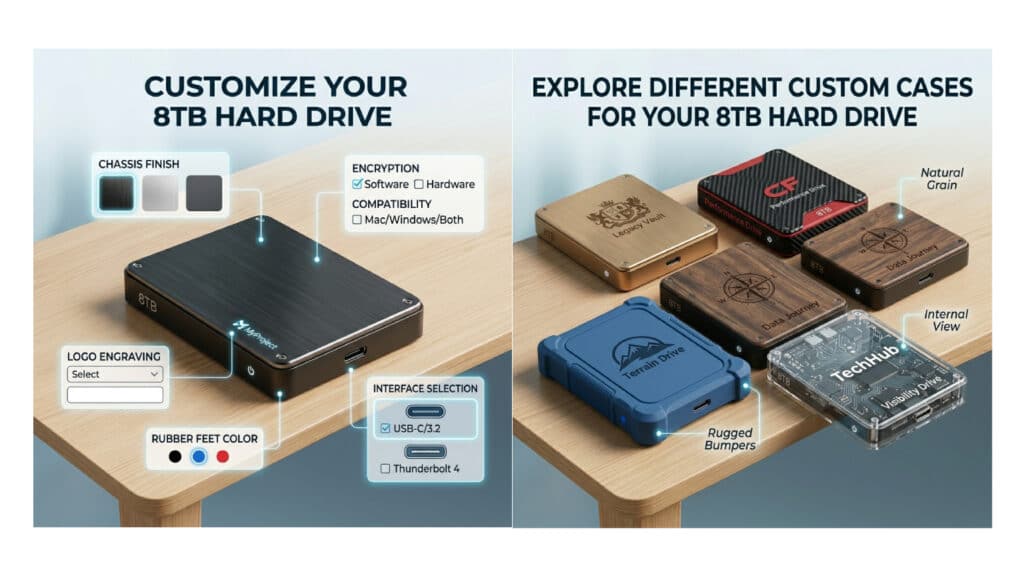
Pre-loading content is a highly effective customization strategy for distributors and media companies. A portable SSD drive can be pre-loaded with product catalogs, marketing videos, or software installers, ensuring that the recipient has immediate access to necessary materials. This service saves the end-user significant time and effort, enhancing the user experience right out of the box. For wholesale buyers, offering pre-loading services adds a margin-rich value-add to the product, increasing the overall profitability of the deal.
Custom packaging solutions further enhance the unboxing experience for corporate clients. Wholesale orders can be packaged in specific retail boxes, bulk packs, or gift sets depending on the intended use case. High-quality custom packaging protects the drives during transit and reinforces the premium nature of the product. When a client receives a well-packaged, customized solid state external hard drive, it validates their purchasing decision and strengthens their perception of the supplier’s professionalism and attention to detail.
6. Which Storage Model Offers the Best ROI?
Determining the best return on investment requires a detailed analysis of both direct and indirect costs. While cloud storage offers low initial entry costs, the long-term cumulative expense of subscriptions often surpasses the one-time purchase price of physical hardware. For businesses with stable or predictable storage needs, investing in an 8TB external hard drive provides a clear break-even point after which the storage essentially becomes free. This CapEx model is financially prudent for organizations looking to minimize recurring operational expenses.
Performance ROI is measured by the speed at which business operations can be conducted. The bottlenecks caused by upload and download speeds in cloud environments can result in significant labor costs over time. In contrast, a solid state external hard drive offers near-instantaneous data access, minimizing idle time for employees. The efficiency gained through faster file transfers and quicker data backups contributes directly to the bottom line. Therefore, for performance-critical applications, physical storage offers a superior ROI by enhancing workforce productivity.
Risk management plays a substantial role in calculating the true value of a storage solution. Data loss incidents can be catastrophic, leading to financial ruin and reputational damage. Physical drives provide an air-gapped backup solution that is immune to many cyber threats targeting cloud infrastructures. The cost of a potential breach often dwarfs the cost of maintaining a physical backup system. Consequently, incorporating physical drives into a disaster recovery strategy offers a high ROI by mitigating potentially ruinous risks.
Scalability costs must also be considered when evaluating the best financial model. Scaling up cloud storage usually involves moving to higher, more expensive tiers instantly. Scaling up with physical storage involves purchasing additional hardware only when necessary, often at decreasing market prices. For wholesale buyers, the ability to purchase storage capacity on demand allows for better cash flow management. This flexibility ensures that businesses only pay for the storage they actually need, when they need it, optimizing their capital allocation.
7. How to Navigate 2026 Market Trends for Storage Solutions
Industry forecasts for 2026 suggest a continued bifurcation of the storage market, with specialized solutions dominating general-purpose ones. The demand for massive capacity, such as the 8TB external hard drive, is expected to grow alongside the need for ultra-fast portable SSD drive units. Businesses are advised to diversify their procurement strategies to include both high-capacity archival drives and high-performance working drives. This dual approach ensures that they are prepared for the varying demands of future data workflows without over-investing in a single technology.
Sustainability is set to become a major purchasing criterion in the coming years. Manufacturers are increasingly focusing on producing drives with recyclable materials and lower energy consumption. Wholesale buyers should prioritize vendors who demonstrate a commitment to environmental responsibility, as this will resonate with their own end-customers. Selecting a solid state external hard drive that meets new energy-efficiency standards will not only reduce operating costs but also align the business with global sustainability goals, enhancing its corporate image.
The integration of advanced security features into physical hardware will accelerate as regulations tighten. By 2026, it is predicted that hardware-level encryption will be a standard expectation rather than a premium feature. Procurement managers should verify that future storage purchases include robust security protocols to protect sensitive data. Investing in secure hardware now prevents the need for costly upgrades later and ensures compliance with evolving data privacy laws across different jurisdictions.
Supply chain resilience will remain a critical factor for wholesale buyers. Geopolitical tensions and logistical challenges can lead to fluctuations in hardware availability and pricing. To mitigate these risks, businesses should establish relationships with reliable distributors and consider strategic stockpiling of essential storage components. Securing a steady supply of 8TB external hard drive units and other critical storage media ensures that operations continue uninterrupted regardless of global market volatility, providing a competitive edge in a unstable supply environment.
Conclusion
The choice between an 8TB external hard drive and cloud storage is not a binary decision but a strategic calculation of cost, speed, and security. For wholesale and B2B clients, the tangible benefits of physical storage—ranging from the one-time cost structure of an 8TB external hard drive to the blazing speeds of a solid state external hard drive—offer compelling advantages over subscription-based models.
Furthermore, the mobility and durability of a portable SSD drive provide operational flexibility that cloud solutions struggle to match. By leveraging customization and understanding market trends, businesses can build a robust storage infrastructure that maximizes ROI and ensures data longevity in the digital era. To explore tailored wholesale storage solutions and customization options for your organization, contact our sales team today.
Frequently Asked Questions
1. Why should a business choose an 8TB external hard drive over cloud storage for archiving?
Businesses should choose an 8TB external hard drive for archiving primarily to eliminate recurring monthly subscription costs associated with cloud services. For massive data archives that are accessed infrequently, the one-time capital expenditure of a physical drive offers a significantly higher return on investment over time. Furthermore, physical drives provide data sovereignty, ensuring that sensitive historical records are kept offline and safe from remote cyber threats or service outages that can plague cloud providers.
2. How does a solid state external hard drive improve workflow efficiency compared to cloud downloads?
A solid state external hard drive drastically improves workflow efficiency by utilizing flash memory to deliver read and write speeds that far exceed standard internet connections. When working with large files such as 4K video or complex engineering databases, waiting for cloud uploads and downloads can waste hours of productivity. Direct access via a high-speed SSD allows for near-instant file transfers and editing, ensuring that teams can maintain momentum without being bottlenecked by bandwidth limitations.
3. Which storage solution is more cost-effective for wholesale procurement: physical drives or cloud licenses?
For wholesale procurement, physical drives are generally more cost-effective due to the ability to buy in bulk at a fixed price point without recurring fees. Purchasing an 8TB external hard drive allows a business to amortize the cost over several years, whereas cloud storage requires ongoing operational expenditure that scales with data usage. This predictable pricing model is essential for B2B budgeting and protects companies from sudden price hikes in cloud subscription tiers.
4. Why is a portable SSD drive considered indispensable for mobile field teams?
A portable SSD drive is indispensable for mobile field teams because it combines high capacity with a rugged, lightweight form factor that does not require an internet connection to function. Field personnel often work in remote locations with poor connectivity, making cloud access unreliable. The durability of a portable SSD, which lacks fragile moving parts, ensures that data remains safe even during travel, while its compact size allows professionals to carry terabytes of critical data in a pocket.
5. How can wholesale buyers leverage customization when ordering external storage?
Wholesale buyers can leverage customization by requesting specific branding, pre-loaded content, and custom firmware configurations on the drives before they are shipped. For example, a company can order a solid state external hard drive pre-loaded with sales materials or diagnostic software, ready for immediate deployment. Custom branding with corporate logos on the drive casing also transforms the hardware into a powerful marketing tool, enhancing brand visibility every time the drive is used.
6. What are the security advantages of using an 8TB external hard drive for sensitive data?
The primary security advantage of an 8TB external hard drive is the ability to create an “air-gapped” backup that is physically disconnected from any network, making it immune to ransomware and hacking attempts. While cloud storage is perpetually connected and vulnerable to remote breaches, a physical drive can be unplugged and locked in a safe. This physical layer of security is critical for protecting intellectual property, financial records, and confidential client data from sophisticated cyber threats.
7. Which technology offers better long-term reliability for data retention: HDD or SSD?
Both technologies offer reliability, but they serve different longevity profiles; however, a solid state external hard drive is generally more resistant to physical shock and environmental hazards due to the lack of moving parts. For long-term retention in a stable environment, high-capacity HDDs remain a proven workhorse, but for drives that are frequently transported or accessed, the durability of SSDs prevents data loss from mechanical failure. Businesses often choose SSDs for active use and HDDs for deep cold storage to maximize reliability across their lifecycle.
8. How does the total cost of ownership (TCO) of a portable SSD drive compare to the cloud?
The total cost of ownership (TCO) for a portable SSD drive is typically lower than cloud storage over a period of two to three years. After the initial purchase, there are no further costs unless the drive needs replacement, whereas cloud storage continues to bill monthly indefinitely. Additionally, the SSD facilitates faster work, which indirectly saves money by increasing employee productivity, whereas slow cloud transfer speeds can result in billable hours lost to waiting for files to sync.
9. Why is pre-loading content on a portable SSD drive a valuable B2B service?
Pre-loading content on a portable SSD drive adds immense value for B2B clients by providing a ready-to-use solution that saves time and resources. Distributors can load product catalogs, software installers, or training videos onto the drives, ensuring that the end-user has immediate access to necessary materials without requiring downloads. This service streamlines the deployment process for large organizations and enhances the user experience, making the hardware a comprehensive delivery vehicle for digital assets.
10. How should businesses prepare their storage strategy for 2026 market trends?
Businesses should prepare their storage strategy for 2026 by diversifying their inventory to include both high-capacity 8TB external hard drive units for archiving and high-performance solid state external hard drive models for active work. Trends indicate a growing focus on data sovereignty and energy efficiency, so procuring drives with hardware encryption and low power consumption will be essential. By establishing a hybrid storage model now, companies can ensure they are resilient against supply chain fluctuations and rising cloud costs in the future.