
Why a High Speed Portable SSD Is Essential for Content Creators and Professionals: The Ultimate Performance Upgrade

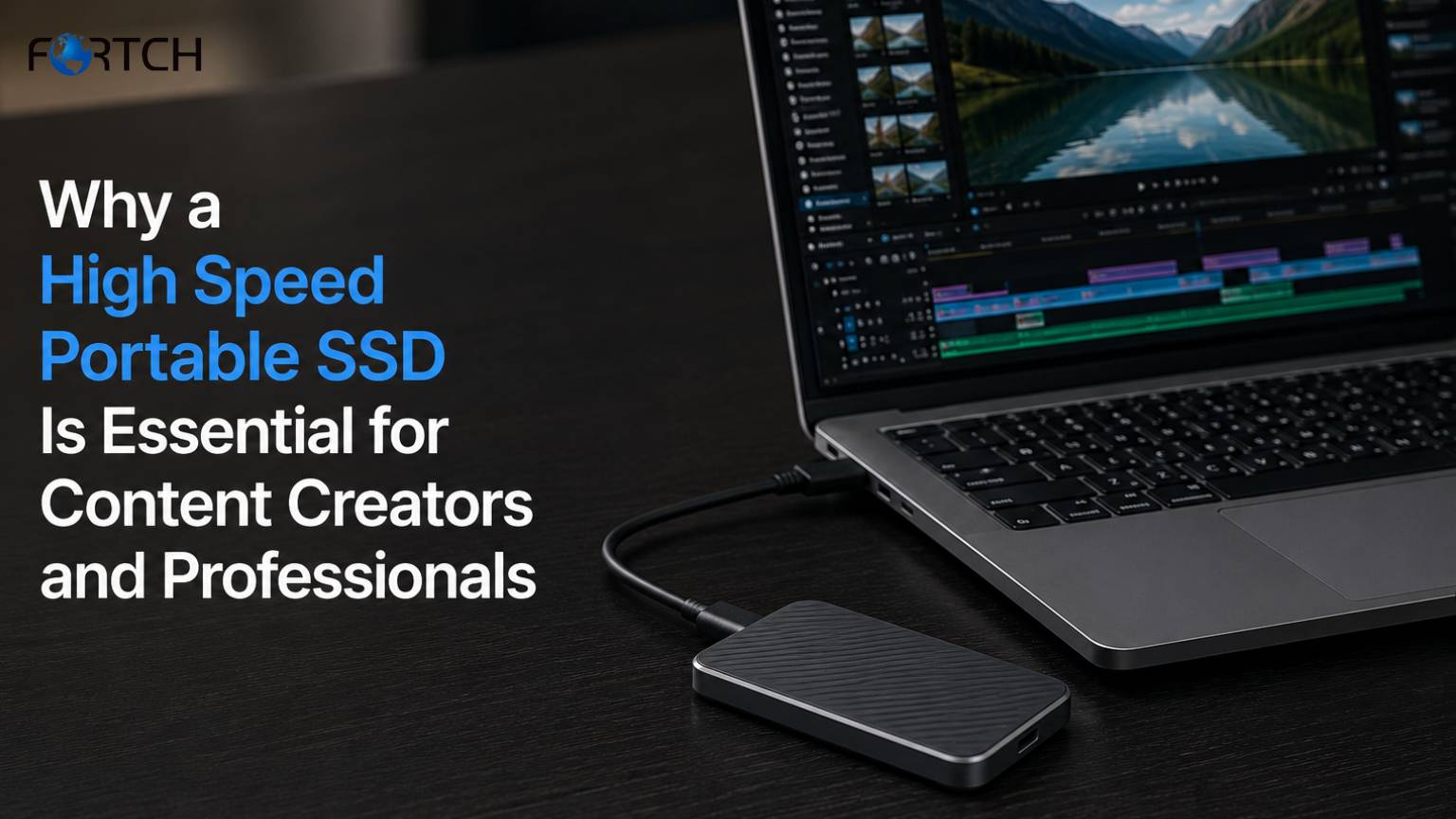
Global data creation is projected to surpass 180 zettabytes in 2025, forcing a massive shift in how professionals manage digital assets in the field. This explosive data growth means traditional storage methods are no longer capable of handling the massive file sizes generated daily. A high speed portable ssd has transitioned from a luxury tech accessory to an essential operational tool for any professional dealing with large-scale media, logistics software, or client databases. The sheer volume of information requires hardware that can keep pace without bottlenecking the creative or analytical process.
The impact on professionals is most visible in industries like video production, architecture, and engineering, where 4K and 8K media files dictate daily workflows. Transferring a hundred gigabytes of raw footage via older hard drives can stall an entire production schedule, leading to missed deadlines and inflated labor costs. An external ssd eliminates these bottlenecks by offering read and write speeds that dramatically reduce data transfer times. Professionals can offload, edit, and transport massive projects directly from the drive, transforming their mobile workstations into highly efficient hubs.
Enterprise procurement strategies have adapted accordingly, with IT departments systematically phasing out fragile, slow mechanical drives in favor of modern flash storage. The reliability and durability of a portable ssd make it ideal for fieldwork, as it lacks moving parts that can fail under extreme conditions. When B2B buyers equip their mobile workforces with these drives, they significantly reduce the risk of hardware-induced data loss. This transition represents a fundamental shift in corporate asset management, prioritizing speed and resilience over sheer storage capacity.
Wholesale distributors must recognize this procurement shift to remain competitive in a rapidly evolving hardware landscape. Stocking legacy drives poses a significant inventory risk as corporate buyers actively seek out faster, more reliable alternatives. By prioritizing a high speed portable ssd in their wholesale catalogs, distributors align themselves with the current demands of enterprise IT procurement. Failing to adapt to this hardware transition means losing lucrative B2B contracts to more forward-thinking competitors.
1.1 How Speed Translates to Direct Revenue for Creative Agencies
Time efficiency directly correlates with revenue generation in the fast-paced environment of creative agencies, making hardware speed a primary financial metric. When a creative professional spends hours waiting for files to transfer, the agency essentially pays for unproductive labor. A high speed portable ssd operating at 2000MB/s or higher can transfer a 100GB project folder in under a minute, compared to the tedious half-hour required by older drives. This reclaimed time allows agencies to take on more clients and deliver projects faster, directly improving their bottom line.
Looking toward 2026 market insights, industry analysts predict that client turnaround expectations will shrink by another twenty percent due to the proliferation of AI-assisted editing tools. These software advancements can render and process files at unprecedented speeds, but they require underlying hardware that can feed data quickly enough to avoid stalling. An external ssd provides the necessary bandwidth to keep pace with next-generation software. Agencies that fail to upgrade their storage infrastructure will find their expensive software investments rendered useless by slow data pipelines.
Operational workflow relies heavily on the seamless integration of hardware, particularly when creative teams are working on location or across multiple remote sites. A reliable portable ssd allows editors, colorists, and sound engineers to work directly from the drive without needing to duplicate files to a local desktop. This plug-and-play capability prevents version control errors and ensures that every team member accesses the most current assets. The elimination of these operational friction points translates into a smoother, more profitable production pipeline.
B2B sales teams can leverage these operational metrics to position a high speed portable ssd not as a mere accessory, but as a strategic ROI investment. By presenting case studies that demonstrate how much billable time is saved per terabyte of data transferred, wholesalers can justify premium pricing. Clients are far more willing to approve purchase orders when the sales pitch focuses on cost recovery and revenue acceleration. This consultative selling approach fundamentally changes how an external ssd is marketed to corporate buyers.
1.2 Which Industries Are Driving the Surge in Portable SSD Adoption
The media and entertainment sector remains the most visible driver of high-speed storage adoption, utilizing massive files for cinema, streaming, and digital advertising. Camera systems from brands like RED and ARRI generate uncompressed raw files that demand immediate, high-bandwidth offloading on set. A high speed portable ssd is the only practical solution for digital imaging technicians who must secure footage quickly between takes. This industry’s relentless pursuit of higher resolutions ensures a continuously renewing demand for faster external storage solutions.
Beyond traditional media, sectors like healthcare, geospatial surveying, and drone mapping have emerged as massive consumers of flash storage technology. Professionals in these fields capture highly detailed 3D scans, topographical maps, and high-resolution MRI data that require both massive capacity and rapid access. An external ssd allows field technicians to verify data integrity on-site before returning to the laboratory or office. The ability to process and transport these complex datasets in the field prevents costly return trips to redo failed captures.
Recent 2025 statistics indicate that enterprise adoption of the portable ssd in non-media sectors grew by thirty-five percent year-over-year, outpacing the traditional consumer electronics market. This shift is largely driven by the digitization of field operations across construction, oil and gas, and environmental sciences. Companies in these verticals are increasingly issuing ruggedized storage devices as standard equipment in their field kits. The expansion into these harsh environments requires drives that offer not only speed but also extreme durability against water, dust, and drops.
Wholesale buyers should strategically target these emerging verticals to maximize their market share and diversify their client base. By curating specialized bundles that pair a high speed portable ssd with specific industry accessories, distributors can create unique value propositions. For example, bundling an external ssd with drone carrying cases or medical imaging carts directly addresses the specific needs of these niche buyers. Understanding which industries are driving the demand allows wholesalers to tailor their marketing and inventory strategies with pinpoint accuracy.
2. How Wholesale Buyers Can Leverage the External SSD Boom
The macroeconomic dynamics of the global semiconductor market present a highly lucrative window for B2B buyers looking to capitalize on storage demands. As NAND flash production becomes more efficient, the cost-per-gigabyte for a portable ssd continues to drop, widening the profit margins for bulk purchasers. Wholesale buyers who negotiate large-volume contracts during periods of high production can secure highly favorable pricing. This strategic timing allows distributors to underprice competitors while maintaining robust profitability on every unit sold.
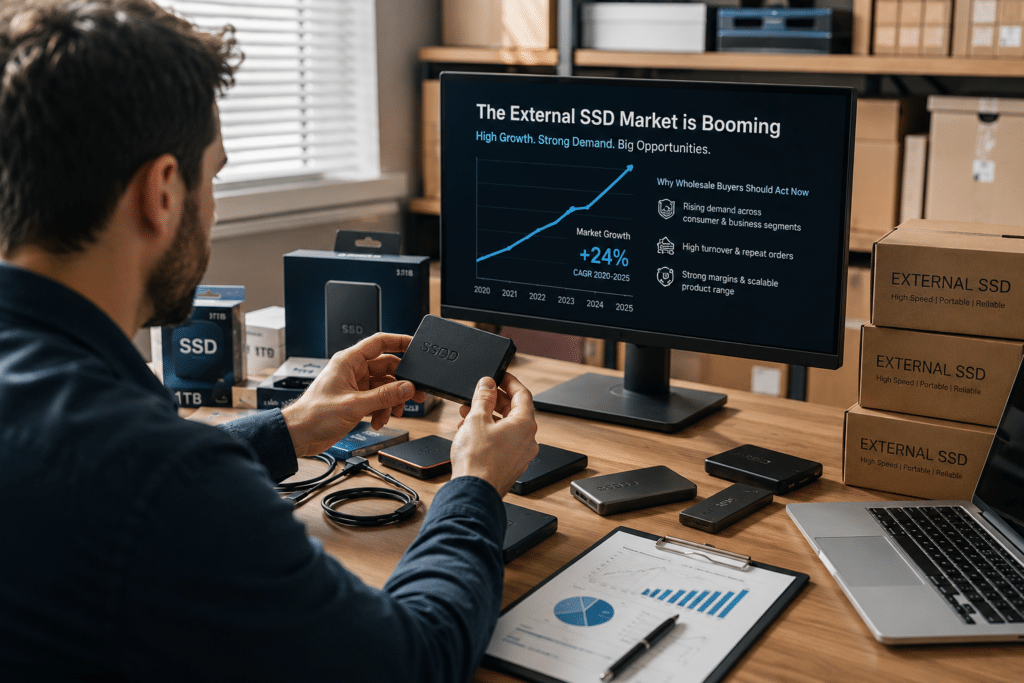
Industry forecasts for 2026 suggest an impending supply chain tightening for premium, high-bandwidth flash memory chips due to the exponential growth of AI data centers. While consumer-grade memory may remain plentiful, the specific components required to manufacture a high speed portable ssd could become constrained. Forward-thinking wholesale buyers are preemptively securing their supply chains by locking in long-term purchasing agreements now. This proactive approach guarantees inventory availability even if the broader market faces allocation shortages.
Margin optimization in the tech distribution space requires moving beyond simple buy-low, sell-high tactics and focusing on value-added services. When a wholesaler sources a standard external ssd and enhances it with custom packaging, pre-loading, or branding, they effectively create a proprietary product. This value addition insulates the distributor from direct price comparisons on wholesale marketplaces. The ability to offer a customized portable ssd transforms a commoditized tech component into a premium B2B solution.
Partnering directly with original design manufacturers (ODMs) rather than relying on tier-one retail brands provides unparalleled control over product specifications and costs. ODMs allow wholesale buyers to dictate the exact components used in a high speed portable ssd, ensuring a balance between peak performance and targeted cost savings. This direct-to-factory model eliminates middleman markups and grants buyers exclusive rights to specific product SKUs. Establishing these direct manufacturing relationships is the cornerstone of a resilient and highly profitable wholesale storage strategy.
2.1 Why Customization Is the Key to B2B Differentiation
The modern storage market is heavily saturated with generic, off-the-shelf hardware that offers zero brand differentiation for corporate buyers. When a creative agency or enterprise IT department purchases a standard portable ssd, they are essentially buying a faceless commodity. Offering customized hardware breaks this cycle of commoditization and elevates the distributor from a simple vendor to a strategic branding partner. Customization transforms an everyday external ssd into a powerful, tangible representation of a client’s corporate identity.
Brand reinforcement is a continuous challenge for B2B companies, particularly those whose digital services are invisible to the end-user. Providing a high speed portable ssd emblazoned with a corporate logo, brand colors, or specific messaging ensures that the client’s brand is physically present in the field. Every time a freelancer or employee pulls the drive from their bag, the brand is front and center. This subtle but persistent form of physical marketing yields high recall rates and reinforces professional credibility.
Perceived value is drastically altered when a piece of technology is tailored specifically for an organization, allowing wholesalers to command premium pricing. A customized portable ssd is no longer judged solely on its gigabyte-to-dollar ratio, but rather on its uniqueness and alignment with the buyer’s brand standards. Enterprises are consistently willing to pay a twenty to thirty percent premium for bespoke tech accessories. This willingness to pay more directly improves the profit margins for the wholesale distributor facilitating the customization.
Client retention becomes significantly more robust when a B2B supplier offers proprietary customization services that competitors cannot easily replicate. Once an enterprise integrates a custom external ssd into their standard on-boarding kits or IT provisioning processes, switching to a different supplier becomes operationally disruptive. The friction of changing branded hardware, updating internal IT documentation, and retraining staff acts as a powerful retention mechanism. Customization is therefore not just a sales tool, but a long-term defensive business strategy.
2.2 Which Customization Options Yield the Highest ROI for Resellers
Physical branding through laser engraving and full-color UV printing remains the most impactful and sought-after customization option for enterprise clients. Applying a precise, durable logo to the aluminum casing of a high speed portable ssd provides a premium, jewel-like finish that resists fading and scratching. This level of physical customization is highly visible and immediately communicates a sense of corporate prestige. For wholesale buyers, investing in in-house or partnered printing capabilities yields an exceptionally high return due to the low marginal cost per unit.
Software-level customization offers an entirely different avenue for adding value, particularly for clients with strict IT security policies. Pre-loading an external ssd with custom auto-backup software, branded partition names, or hardware-encrypted security protocols creates a bespoke user experience. A portable ssd that automatically launches a company-specific backup utility the moment it is plugged in saves IT departments immense configuration time. This functional customization turns a blank storage device into a plug-and-play enterprise tool.
Packaging design plays a critical role in how a customized high speed portable ssd is perceived upon delivery, especially when used for corporate gifting or executive on-boarding. Replacing the standard factory clamshell with a rigid, custom-printed magnetic box complete with branded inserts elevates the unboxing experience. High-quality packaging protects the external ssd during transit while reinforcing the premium nature of the product inside. Wholesale distributors who offer bespoke packaging solutions often see increased reorder rates due to the strong initial impression created by the physical presentation.
Ruggedization and specialized casing modifications cater to high-paying, niche industries that operate in extreme environments. Adding custom silicone bumpers, IP68 waterproof ratings, or integrated carabiner clips to a portable ssd targets sectors like military contracting, offshore drilling, and extreme sports media. These physical modifications require specialized manufacturing partnerships but allow wholesalers to bypass standard retail channels entirely. Offering highly specialized, custom-built drives commands the absolute highest profit margins in the B2B storage market.
3. Why Future-Proofing Your High Speed Portable SSD Inventory Is Critical
Technological acceleration in the flash storage sector is relentless, with interface standards evolving from USB 3.2 to Thunderbolt 4 and USB4 at a rapid pace. A portable ssd purchased even two years ago is significantly slower than the current generation of drives utilizing PCIe Gen 4×4 NVMe technology. Wholesale buyers who fail to track these incremental hardware improvements risk filling their warehouses with technically obsolete inventory. Future-proofing requires a commitment to sourcing only the most current bridge controllers and NAND flash architectures.
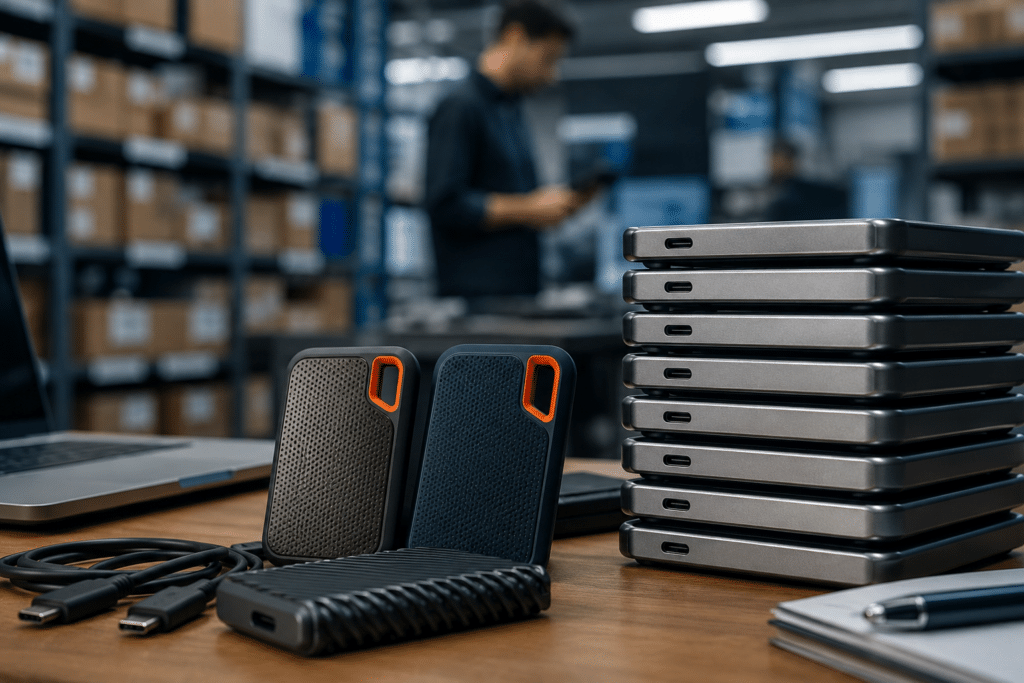
The data demands of 2026 will be largely defined by the widespread commercialization of artificial intelligence and machine learning in the field. Professionals will begin carrying localized, lightweight AI models that require rapid data ingestion to function effectively without cloud connectivity. A high speed portable ssd will be necessary to house and run these models directly from a laptop in remote locations. An external ssd lacking the necessary random read/write speeds will simply fail to function in these next-generation workflows.
Inventory devaluation is a silent profit killer in the wholesale technology sector, as older drives must be heavily discounted to clear shelf space. Holding onto legacy storage technology ties up working capital that could be better utilized to stock high-demand, premium products. As enterprise buyers become more educated on interface speeds and NAND flash types, their purchasing specifications become increasingly rigid. A distributor attempting to sell outdated portable ssd units to a knowledgeable IT procurement manager will inevitably face rejection or severe margin compression.
Strategic procurement planning must involve close collaboration with manufacturers to understand their upcoming product roadmaps and technology transitions. Wholesale distributors should structure their purchasing contracts to include clauses that allow for inventory swaps when a new generation of high speed portable ssd technology launches. This agile approach to supply chain management ensures that the distributor’s catalog remains at the cutting edge. Staying one step ahead of technological obsolescence is the defining characteristic of a market-leading storage wholesaler.
3.1 How to Evaluate a Reliable Manufacturer for Bulk External SSD Orders
The foundational quality of any flash storage device relies entirely on the grade of the NAND flash memory and the robustness of the controller chip. A reliable manufacturer of a high speed portable ssd will exclusively use enterprise-grade or high-end consumer TLC (Triple-Level Cell) NAND, avoiding cheaper QLC chips that suffer from severe speed degradation. The controller chip must be capable of sustaining peak read and write speeds under heavy, sustained workloads without thermal throttling. Wholesale buyers must demand full transparency regarding the component sourcing used in their custom orders.
Global compliance and certification are non-negotiable prerequisites for B2B buyers distributing hardware to corporate and international markets. An external ssd must carry certifications such as CE, FCC, RoHS, and potentially MIL-STD-810G if ruggedized claims are made. A reputable manufacturer will have these certifications readily available and will conduct rigorous in-house testing to ensure every batch meets these standards. Sourcing from unverified factories exposes the wholesale distributor to massive financial liabilities, product recalls, and irreparable damage to their brand reputation.
Customization infrastructure within the factory is a critical indicator of a manufacturer’s capability to handle complex, bespoke B2B orders. If a factory must outsource the logo printing, custom packaging, or software pre-loading of a portable ssd to a third party, quality control inevitably suffers. Wholesale buyers should prioritize manufacturers that maintain entirely in-house customization lines, including UV printing, laser engraving, and automated packaging assembly. This vertical integration ensures consistent quality across thousands of units and dramatically reduces lead times.
After-sales support and warranty management represent the final, yet most crucial, element of evaluating a manufacturing partner. A high speed portable ssd is a complex electronic device, and a small percentage of units will inevitably fail due to the inherent nature of flash memory. The manufacturer must have a clear, responsive RMA (Return Merchandise Authorization) process that does not burden the wholesale distributor or their end-users. A strong warranty policy backed by the factory protects the distributor’s client relationships and validates the premium pricing of the hardware.
4. How to Secure Your Wholesale High Speed Portable SSD Pipeline Today
Establishing a dominant position in the lucrative B2B storage market requires immediate, decisive action to secure reliable manufacturing partnerships. The gap between standard commodity hardware and high-value, customized enterprise solutions is where the greatest profits lie. By aligning with a manufacturer capable of producing a premium high speed portable ssd, distributors unlock entirely new revenue streams from corporate branding and IT provisioning. This strategic partnership elevates the distributor from a mere reseller to an indispensable supply chain asset for their clients.
Procurement managers must conduct a comprehensive audit of their current storage inventory to identify vulnerabilities and areas for margin improvement. Relying on off-the-shelf retail brands leaves massive amounts of potential B2B revenue on the table. Transitioning to a proprietary, customized external ssd offering allows the distributor to own the customer relationship and control the pricing structure. This internal audit should focus on identifying which existing clients could immediately benefit from branded, high-speed storage solutions.
The organizations that finalize their supply chain agreements in 2025 will be perfectly positioned to capture the enterprise spending surge anticipated throughout 2026. As AI integration and 8K workflows become standard practice across multiple industries, the demand for ultra-fast, branded storage will skyrocket. Having a customized portable ssd pipeline already established means the distributor can fulfill these emerging demands instantly, without the delays of sourcing new factories. Early movers in this space will secure the most lucrative enterprise contracts before the market becomes heavily saturated.
Taking the next step requires engaging directly with an experienced OEM/ODM manufacturer to discuss specific wholesale pricing, component selection, and customization capabilities. Initiating a dialogue about developing a bespoke high speed portable ssd line is a low-risk, high-reward strategy for any B2B technology distributor. Reaching out to a specialized factory today to request a sample kit, component specifications, and a custom branding mockup is the definitive action required to capitalize on this market transition. Secure your enterprise storage pipeline now to ensure long-term B2B growth and market dominance.
Frequently Asked Questions
Q: Why is a high speed portable ssd considered a revenue-generating tool for creative agencies rather than just an accessory?
A: Time efficiency directly correlates with revenue in creative environments. Transferring massive files at speeds of 2000MB/s or higher eliminates hours of unproductive wait times. This allows agencies to take on more clients and meet tighter deadlines, transforming the drive from a simple storage device into a strategic ROI investment.
Q: Which non-media industries are currently driving the surge in portable ssd adoption?
A: Beyond traditional entertainment, sectors like healthcare, geospatial surveying, drone mapping, and construction are rapidly adopting this technology. These professionals capture highly detailed 3D scans and topographical data that require massive capacity and rapid on-site verification, driving a 35% year-over-year enterprise growth in 2025.
Q: How does offering a customized external ssd help wholesale distributors retain B2B clients?
A: Customization breaks the cycle of commoditization by integrating the client’s corporate identity directly into the hardware. Once an enterprise integrates a branded, bespoke drive into their standard IT provisioning or on-boarding kits, the operational friction of switching to a non-customized competitor acts as a powerful retention mechanism.
Q: What specific customization options yield the highest return on investment for wholesale buyers?
A: Physical branding through laser engraving or UV printing provides the most visible ROI due to low marginal costs. Additionally, software-level customization—such as pre-loading auto-backup utilities or branded encryption—adds immense functional value, while bespoke rigid packaging elevates the product for corporate gifting.
Q: Why is future-proofing wholesale inventory critical in the current flash storage market?
A: Technological acceleration in interfaces like Thunderbolt 4 and USB4 rapidly renders older drives obsolete. Holding onto legacy technology ties up working capital and forces severe margin compression when enterprise IT procurement managers enforce strict, modern speed specifications.
Q: How will 2026 market trends and AI impact the requirements for a high speed portable ssd?
A: The commercialization of AI and machine learning means professionals will carry localized models requiring rapid data ingestion in the field without cloud connectivity. Next-generation workflows will demand the high random read/write speeds of modern NVMe drives to function effectively.
Q: What component specifications should wholesale buyers demand when evaluating a manufacturer for a portable ssd?
A: Buyers must ensure the manufacturer uses high-end TLC (Triple-Level Cell) NAND flash rather than cheaper QLC chips that suffer from speed degradation. The controller chip must also be robust enough to sustain peak speeds under heavy workloads without thermal throttling.
Q: Why are global compliance certifications non-negotiable for bulk external ssd orders?
A: Certifications such as CE, FCC, and RoHS are strict prerequisites for corporate and international distribution. Sourcing from unverified factories without these certifications exposes wholesale distributors to massive financial liabilities, product recalls, and irreparable damage to their B2B reputation.
Q: How does an external ssd improve operational workflows for remote creative teams?
A: It allows editors and technicians to work directly from the drive via plug-and-play capability without duplicating files to a local desktop. This prevents version control errors, ensures every team member accesses current assets, and eliminates the friction of managing multiple hard drives on location.
Q: What is the strategic advantage of partnering directly with an ODM rather than sourcing retail brands?
A: Partnering with an Original Design Manufacturer allows wholesale buyers to dictate exact component specifications, secure exclusive SKU rights, and eliminate middleman markups. This direct-to-factory model provides unparalleled control over product costs and ensures in-house customization capabilities.